If you’ve been dreaming of a DIY basement bathroom that doesn’t break the bank or the concrete, then welcome — you’re in the right spot. In 2026, SNFLEX macerating toilets are flooding the USA market as one of the best upflush toilet systems for homes where traditional gravity plumbing just won’t cut it. Whether you’re renovating a finished basement, creating that much‑needed guest bath, or building an ADU under your home, this SNFLEX 750W upflush toilet could be your game‑changer.
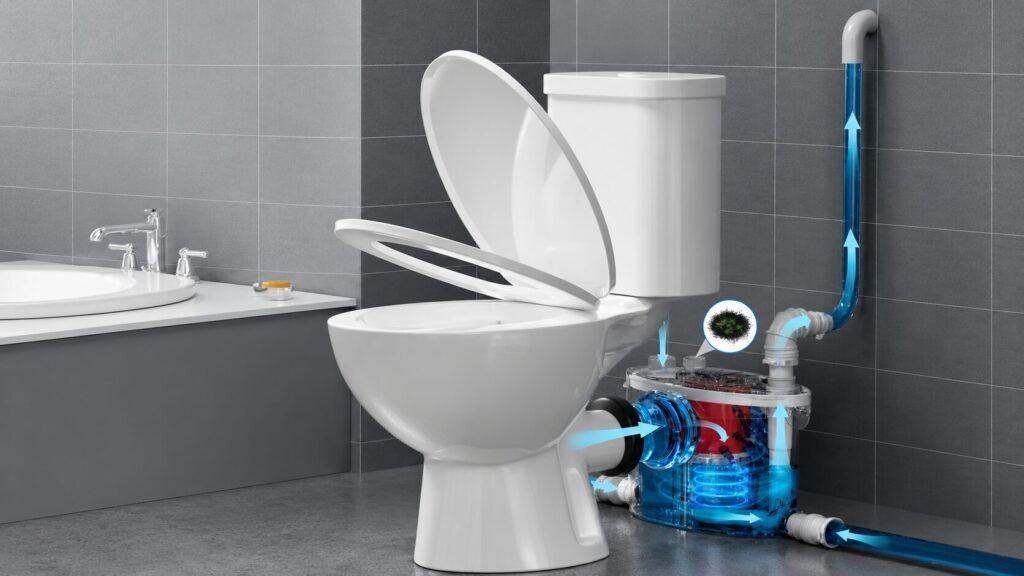
Let’s break it down in real‑world terms — what this system actually does, why DIYers and pro plumbers are buzzing about it, how it compares with traditional toilets, and what you need to know before installing.
The Ultimate Guide to Upflush Toilets: Everything You Need to Know
Thinking about adding a bathroom to your basement, garage, or that tight space under the stairs? If so, you’ve probably realized that traditional plumbing can be a nightmare. Jackhammering concrete slabs and rerouting sewage lines can turn a simple renovation into an expensive, messy headache.
Fortunately, there’s a smarter way to get the job done: the upflush toilet.
Also known as a macerating toilet, this plumbing innovation allows you to install a fully functional bathroom practically anywhere in your home—without breaking the bank or your floors. Here is everything you need to know about upflush toilets, how they work, and whether they are right for your next home improvement project.
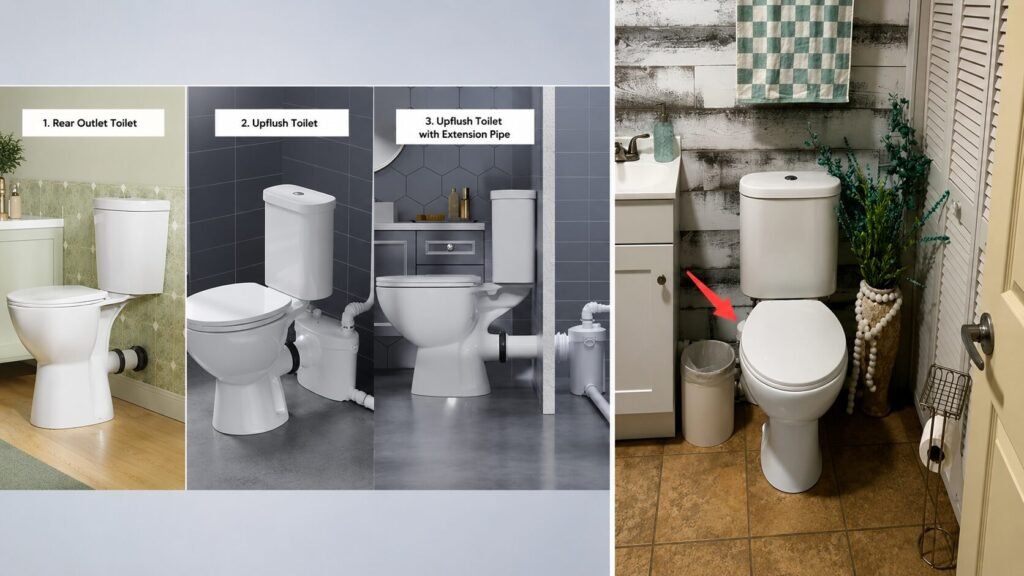
1. What is an Upflush Toilet?
At first glance, an upflush toilet looks just like the standard porcelain throne you use every day. However, the magic happens right behind the bowl.
Unlike standard toilets that rely entirely on gravity to pull waste down into the floor, an upflush toilet uses a specialized macerating pump system to move waste upward and outward.

Upflush vs. Traditional Toilets: What’s the Difference?
To understand why these systems are such a game-changer, let’s look at how they stack up against traditional rear-discharge and gravity-fed toilets.
| Feature | Traditional Toilet | Upflush (Macerating) Toilet |
| Drainage Direction | Downward (Gravity-fed) | Upward or Horizontally (Pump-driven) |
| Installation Prep | Requires breaking concrete/floors | No floor demolition required |
| Waste Treatment | Sent directly to sewage lines | Ground into a slurry before discharge |
| Pipe Diameter | Standard 3 to 4-inch pipes | Small 3/4-inch to 1-inch pipes |
| Location Flexibility | Limited by existing main lines | Can be installed anywhere (basements, attics, etc.) |
How Does an Upflush Toilet Work?
The secret to the upflush toilet is its multi-stage mechanical process:
- The Flush: When you flush, waste leaves the rear discharge of the toilet bowl and enters a sealed macerator pump box.
- The Grind: As the water level rises inside the box, a floating sensor switch triggers a high-powered pump. Stainless steel blades instantly spin up, acting like a heavy-duty blender to grind solid waste and toilet paper into a fine slurry.
- The Pump: Once the waste is liquified, the pump forces the slurry upward through a narrow, small-diameter pipe.
- The Discharge: The waste travels through your home’s framing and safely ties right into your existing main sewage line or septic tank.
Pro Tip: Want a ultra-clean, minimalist look? You don’t have to look at the pump box. You can easily use an extension pipe to hide the macerator unit completely behind a drywall panel.
2. The Pros: Why Choose a Macerating Toilet?
If you are on the fence about using an upflush system, these major benefits might just win you over.
- Effortless Installation: Installing a traditional bathroom in a basement can take days of grueling labor and thousands of dollars in plumbing costs. An upflush system can be installed over the existing floor layout. If the rough-in plumbing lines are already set, installation can take as little as 30 to 60 minutes.
- Ultimate Placement Flexibility: Because gravity isn’t dictating your layout, you can put a bathroom anywhere. Turn an old walk-in closet, a corner of the garage, a pool house, or a tight attic space into a convenient powder room.
- True Bathroom Versatility: Most modern upflush pump boxes feature multiple inlet ports. This means the pump doesn’t just handle the toilet; it can also drain water from a nearby bathroom sink, a walk-in shower, or even a washing machine.
- Massive Cost Savings & High ROI: Adding a bathroom is one of the best ways to boost your property value. While the National Association of Realtors notes that a traditional mid-range bathroom addition can average a steep investment, an upflush toilet slashes the upfront construction costs significantly, netting you a much higher return on investment (ROI).
- Eco-Friendly Water Conservation: Many modern upflush models are WaterSense-certified. They utilize high-efficiency flushing technology that can reduce your household water consumption by 20% to 50% compared to older, traditional models.
3. The Cons: Potential Drawbacks to Consider
No plumbing fixture is completely perfect. To make an informed decision, keep these few drawbacks in mind.
- Higher Upfront Equipment Cost: An upflush toilet kit costs more off the shelf than a basic gravity toilet because you are paying for the integrated motorized pump box. However, you quickly recoup this cost by avoiding major excavation and plumbing labor fees.
- Dependence on Electricity: The macerator requires a standard electrical outlet to run. If your home loses power, the toilet will not be able to pump waste out after a couple of flushes. Fortunately, many modern premium units can be paired with short-term battery backups.
- Operating Noise: Because there are spinning steel blades and an electric motor inside the box, it will make a distinct humming or buzzing sound for a few seconds during the flush cycle. Modern units are heavily insulated and much quieter than older generations, but they are still louder than a standard silent gravity flush.
- Strict Maintenance Rules: You must be careful about what goes down the drain. Flushable wipes, feminine hygiene products, and heavy paper can jam the macerator blades, requiring hands-on maintenance to clear.
4. Frequently Asked Questions (FAQs)
How long do upflush toilets last?
With proper care and routine cleaning, a high-quality upflush toilet system will easily last between 10 and 15 years.
Do upflush toilets smell?
No. Upflush systems are entirely sealed to prevent odors from escaping into your bathroom. If you notice a smell, it is usually a sign that the pump tank needs a quick descaling cleaner or that the plumbing vent needs checking.
Does an upflush toilet need a vent?
It depends on the model. Some modern macerating toilets feature built-in carbon filters that eliminate the need for an external vent. However, many local building codes still require a traditional vent line or an Air Admittance Valve (AAV) to ensure proper drainage pressure. Always check your local regulations.
Can any standard toilet be converted into an upflush?
No. Standard toilets drain straight down out of the bottom. To use an upflush pump, you must buy a dedicated rear-discharge (horizontal outlet) toilet bowl designed to connect directly to the pump box.
5. Top Upflush Toilet Brands on the Market
When shopping for a reliable system, a few major names dominate the industry:
- Saniflo: The undisputed pioneer of macerating technology. Models like the Sanibest Pro and Sanibest Plus are commercial-grade workhorses capable of handling accidental flushes of foreign objects without clogging. They typically run between $800 and $1,500.
- Liberty Pumps: A highly respected American manufacturer known for the Ascent II series. This system features excellent cutting technology and a sleek design, sitting in the $900 to $1,300 price bracket.
- Simple Project (SNFLEX): If you are remodeling on a strict budget, the SNFLEX Macerating Toilet is an excellent up-and-coming alternative. Clocking in at around $700 (and frequently found on sale), it offers fantastic maceration power and multi-fixture inlets at a fraction of the cost of the legacy brands.
The Bottom Line
An upflush toilet is the ultimate shortcut to adding convenience, comfort, and value to your home without dealing with the mess and expense of traditional plumbing. Whether you’re a DIY enthusiast tackling a weekend basement renovation or working with a contractor to build out a rental unit, an upflush system gives you the freedom to build a bathroom exactly where you want it.
How the SNFLEX Macerator Works: The Ultimate Under-the-Hood Guide (Part 1)
So, you’ve decided to skip the horror story of jackhammering your concrete floors and went with an upflush toilet system like the SNFLEX. Smart move. It looks like a standard porcelain throne from the front, but right behind the bowl sits the real MVP of your DIY bathroom expansion: the macerator pump box.
If you want to save thousands on contracting fees while turning a dark basement corner or an old walk-in closet into a fully functioning half-bath, mastering how this little machine operates is a total game-changer.
Let’s rip off the cover and look at exactly how the SNFLEX macerator works, how to tackle common quirks, and what to do if things aren’t running smoothly.
I. Under the Hood: Anatomy of a Macerator Pump
The SNFLEX macerator relies on three primary internal components working in perfect harmony to make gravity irrelevant.
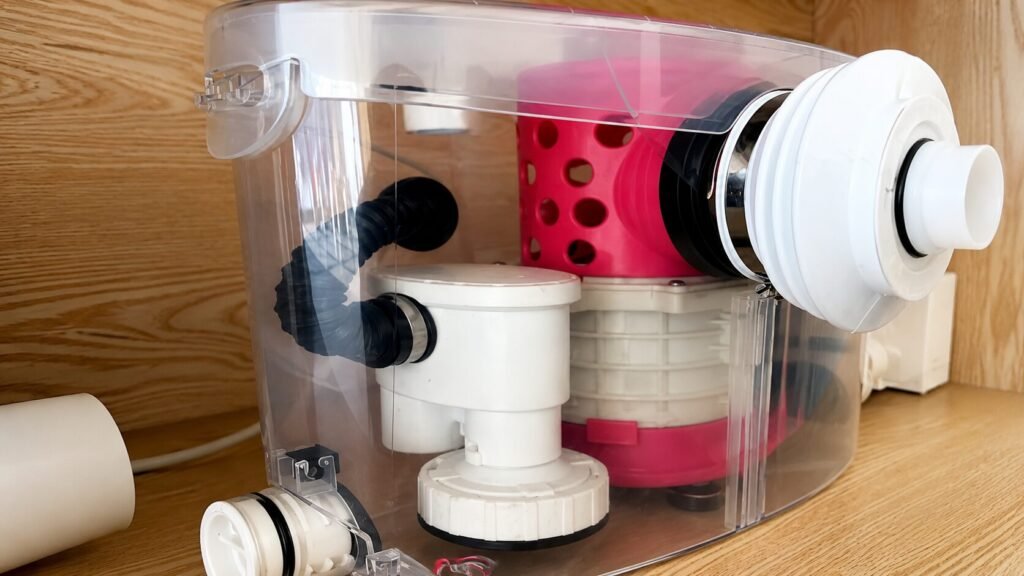
- The Float Switch (The Brains): This is a pressure-sensitive trigger. As wastewater fills the tank, the water level pushes the float upward. Once it hits a designated high-water mark, it flips a microswitch that wakes the motor up instantly. Once the tank drains back down, the float drops and cuts the power.
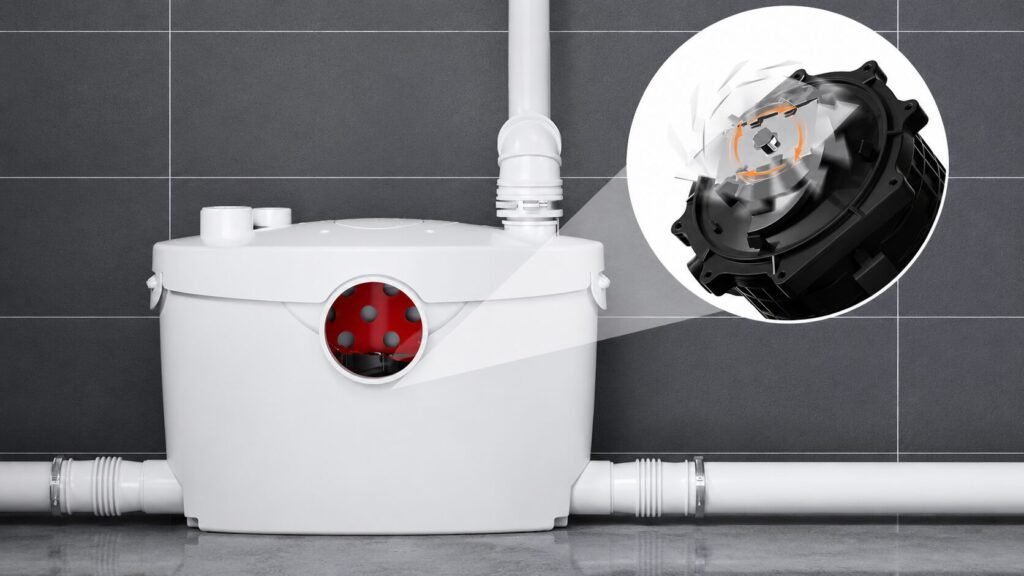
- The Stainless Steel Blades (The Muscle): Positioned right at the intake, these commercial-grade blades act like a heavy-duty blender on steroids. They rotate at incredibly high RPMs to instantly liquify solid waste and toilet paper into a fine slurry.
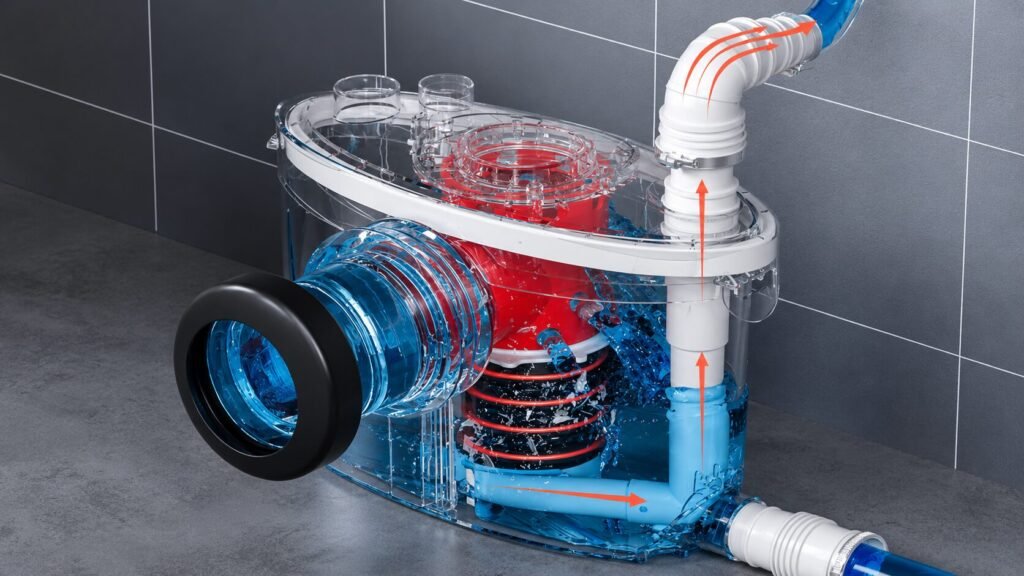
- The Impeller (The Force): Mounted on the same spinning shaft directly beneath the blades, the impeller generates the centrifugal kinetic energy required to pump the liquified waste out of the tank and send it flying uphill.
The Real-Time Flushing Process
When you press down on the flush handle, the process unfolds in a matter of seconds:
- Inflow: Water and waste dump out the rear discharge of the toilet bowl straight into the macerator box.
- Activation: The rising water lifts the internal float switch, kicking the motor into high gear.
- Maceration & Pumping: The blades blend the waste into a liquid slurry, while the impeller simultaneously forces that slurry upward through narrow 3/4-inch or 1-inch PVC lines.
- Shutoff: The tank empties completely, the float drops, and the motor shuts down until your next flush.

II. Quick-Fire Macerator FAQs
The pump turns on and off 3 or 4 times after a single flush. Is it broken?
Nope, that is totally normal. A high-efficiency macerator box is relatively compact and cannot swallow an entire gallon or two of toilet water in one single continuous breath. It will typically cycle or “pulse” 3 to 4 times in quick succession to fully evacuate the tank after one flush. However, if it pulses more than 10 times consecutively, your check valve might be stuck open, or a connected sink faucet is dripping water into the line.
Why don’t I hear a loud grinding sound when it handles solid waste?
Because the stainless steel blades and the pump impeller are locked onto the exact same spinning motor shaft, the grinding and pumping happen completely simultaneously. The rushing fluid dampens the acoustic vibration, meaning you will only hear a uniform mechanical hum rather than a distinct crunching sound.
Just how far can this pump push wastewater?
The SNFLEX packs a massive punch for its size. It can launch wastewater up to 29 feet vertically or a massive 295 feet horizontally, making it easily powerful enough to handle deep basements, attic lofts, or detached backyard garages.
What happens if the microswitch gives out?
If the internal microswitch fails or gets stuck, the impeller won’t receive the electrical signal to power on. Your pump will stay completely silent, and the tank will eventually overflow if you keep adding water.
III. Common Troubleshooting & Quick Fixes
Even the best plumbing setups can experience an occasional hiccup. If your system is acting up, use these simple diagnostic steps to get things back on track.
Issue 1: The Pump Keeps Running Non-Stop
If your macerator pump is constantly running or cycling more than 10 times without shutting down, check these two culprits:
- The Check Valve: Ensure your inline check valve is installed pointing in the correct direction. If it’s backward or clogged with debris, wastewater will slide straight back down into the pump tank the moment it turns off, re-triggering the float switch over and over.
- Continuous Inflow: Check that a connected sink, shower drain, or washing machine connection isn’t slowly leaking water into the auxiliary side inlets.
Issue 2: The Pump is Jammed or Dead Silent
If your pump isn’t draining, listen closely to the box when it’s plugged in. The sound it makes will tell you exactly what’s wrong.
If you hear a low, muffled buzzing sound:
This means electricity is reaching the motor, but the stainless steel blades or the impeller are physically jammed by foreign debris (like wet wipes, hair, or feminine hygiene products). You need to clear the obstruction immediately to keep the motor from overheating.
1.Kill the power completely:Step 1.
Unplug the macerator power cord from the wall outlet immediately. Never stick your hands near a motorized unit that is still connected to live electricity.
2.Isolate the plumbing lines:Step 2.
Turn off the water supply valve to the toilet tank and close any shutoff valves along your discharge pipe to prevent messy backflow.
3.Open the top maintenance access panel:Step 3.
The SNFLEX features an incredibly convenient access panel right on top of the box lid. Simply use a screwdriver to remove the 4 retaining screws and lift the hatch open.
4.Clear the tangled debris:Step 4.
Using a pair of needle-nose pliers or thick protective gloves, carefully pull out any hair, fibers, or foreign items wound tightly around the spinning blades or impeller hub.
If you hear absolutely no sound at all:
Double-check that the GFCI outlet hasn’t tripped. If the electrical outlet is live and working perfectly but the pump remains dead silent, the float switch or the motor assembly itself may need to be replaced under warranty. Keep your platform order number handy and snap a quick smartphone video of the issue to send to customer support for a speedy replacement part.
Ready to Complete Your Setup?
Understanding the internal mechanics of your pump is only half the battle. To ensure your new bathroom looks sleek and operates flawlessly for decades, you need to dial in your external layout and pipe placement.
Be sure to read through our comprehensive guide on external structural layouts and advanced installation tips to make sure your plumbing lines are perfectly optimized.
DIY Guide: How to Install a Macerating Toilet Like a Pro
Adding a bathroom to your basement, garage, or spare closet used to mean one thing: a massive construction bill. Breaking through concrete slabs to lay traditional drain pipes is loud, incredibly messy, and easily costs thousands of dollars.
But if you use a macerating (upflush) toilet system like the SNFLEX, you can completely bypass that plumbing nightmare. Because these systems pump waste horizontally and vertically through small-diameter pipes, you can install a fully functional bathroom right on top of your existing floors.
Whether you are installing the sleek SNFLEX One-Piece model or the classic Two-Piece setup, this step-by-step installation guide will walk you through the entire process.
The Pre-Game: Tools & Materials Needed
Before you turn off your water main, make sure you have all your gear ready to go. Luckily, upflush systems require far fewer heavy-duty tools than traditional plumbing.
- SNFLEX Macerating Toilet Kit (Includes the ceramic bowl, tank, and macerator pump box)
- Water Supply Line (With a dedicated shut-off angle valve)
- Small-Diameter Discharge Piping (Typically 3/4-inch to 1-1/4-inch PVC)
- Dedicated GFCI Electrical Outlet (To safely power the pump)
- Teflon Tape and Silicone Adhesive Caulk
- Hacksaw or Pipe Cutter
- Screwdriver and Adjustable Wrench
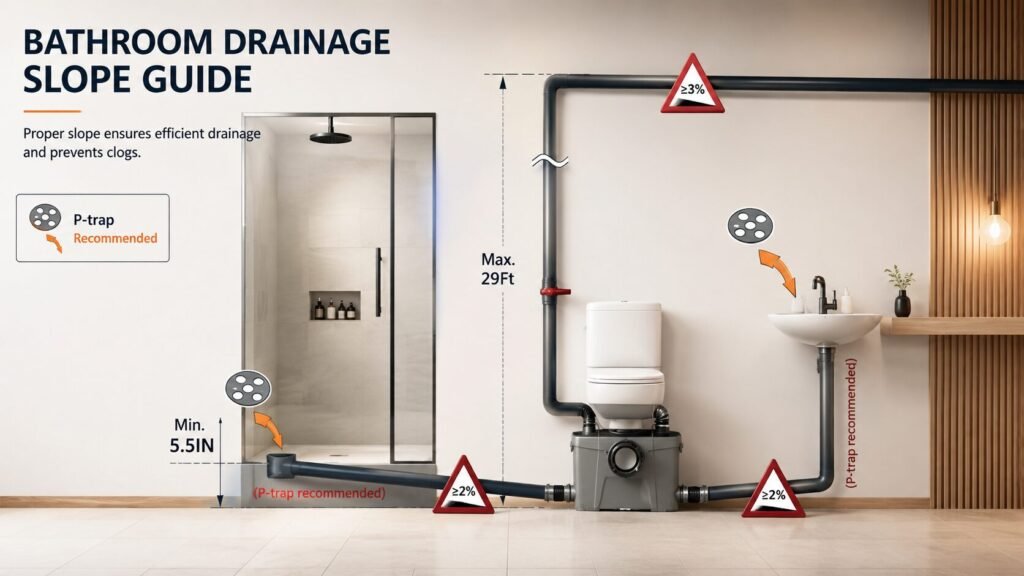
Typical Multi-Fixture Layout
One of the biggest perks of an upflush system is its ability to act as a drainage hub for an entire bathroom. The diagram below illustrates how wastewater from multiple fixtures flows into a single macerator unit before being pumped uphill to your main sewage line.
Step-by-Step Installation Guide
Because plumbing requires an exact order of operations to prevent leaks, follow these steps sequentially to guarantee a clean, worry-free setup.
1.Assemble the Macerator Pump Box:Step 1.
Familiarize yourself with your specific model’s ports. The SNFLEX Two-Piece features 4 inlets (for a toilet, sink, shower, and washing machine), while the One-Piece has 3 inlets.
Locate the main discharge outlet on the pump and install the included one-way check valve. Depending on your discharge pipe size, use a utility knife to carefully trim the rubber check valve boot to match your pipe diameter (sizes range from 7/8-inch to 1-3/4-inch). Secure it tightly with the provided stainless steel hose clamps.
2.Set and Anchor the Ceramic Toilet:Step 2.
For the Two-Piece Model: Position the ceramic toilet bowl over your finished floor and secure it using floor brackets and mounting screws. Next, assemble the internal flush valves inside the ceramic tank, mount the tank directly to the bowl using the rubber gasket and bolts, and connect your flexible water supply line to the angle valve.
For the One-Piece Model: This design is even simpler and doesn’t require drilling into your floors. Wrap Teflon tape around the horizontal rear-discharge outlet of the toilet, slide it firmly into the intake collar of the macerator pump, and apply a bead of high-quality silicone adhesive caulk around the base of the toilet bowl to lock it to the floor.
3.Bridge the Toilet to the Pump Box:Step 3.
If you are installing the Two-Piece model, position the pump box directly behind the toilet bowl. Slide the thick rubber accordion boot over the toilet’s rear discharge pipe and secure it tightly to the pump inlet using a screwdriver on the metal hose clamps.
Design Tip: If you prefer a completely hidden look where the plastic pump box sits inside an adjacent utility closet or behind a drywall partition, use an approved SNFLEX extension pipe kit with built-in leakproof rubber rings to bridge the gap through the wall.
4.Plumb Auxiliary Fixtures & Seal Unused Ports:Step 4.
If you are building a full bathroom, run 1-1/2-inch drain lines from your bathroom sink or walk-in shower directly into the lower side inlets of the pump box. Ensure your lines maintain a slight downward slope toward the pump so gravity can do its work.
If you are only installing a toilet, use the provided blank rubber plugs and hose clamps to completely seal every single unused inlet port to prevent future leaks or odors.
5.Address the System Venting:Step 5.
The SNFLEX macerator features an integrated internal activated carbon filter designed to trap and neutralize bathroom odors right out of the box. This makes external open-air venting completely optional for most standard home renovations. However, always verify your local building codes—if your municipality requires a structural vent, tie a dedicated vent line from the top of the pump box into your home’s existing structural vent stack or use an Air Admittance Valve (AAV).
6.Fire Up the Power:Step 6.
Double-check that all hose clamps are perfectly snug and that your plumbing glue has completely cured. Plug the macerator’s heavy-duty power cord directly into your dedicated GFCI electrical outlet. Turn on the water supply valve, let the toilet tank fill up completely, and perform 2 or 3 test flushes while watching the pipe connections closely for any stray water droplets.
Ready to Upgrade Your Home?
If you are looking for the best deals on premium upflush plumbing or want to browse detailed setup diagrams, make sure to check out the full catalog. For a deeper look at the complete installation layout and to view all product configuration setups, visit the supplier’s official product page here to grab everything you need for your upcoming remodel.
Do You Actually Need to Hire a Plumber?
It really comes down to your personal DIY comfort level. The beauty of the SNFLEX system is that it was engineered from the ground up for straightforward homeowner installation. If you can measure pipes, use a screwdriver, and follow a basic layout, you can absolutely knock this out over a weekend.
However, if you already have the discharge and supply lines pre-installed (“roughed-in”) by a professional, hiring a plumber to drop in the physical toilet and pump box is a breeze—a pro can typically finish the hookups in under 30 minutes, saving you a small fortune in standard labor fees.
3 Essential Tips for a Flawless Setup
To ensure your upflush toilet runs quietly and remains completely clog-free for the next decade, keep these professional best practices in mind:
- Keep Your Pipe Bends Smooth: When running your small PVC discharge lines up and out toward your main sewer trunk, keep the lines as straight as possible. If you absolutely have to navigate around structural framing or a wall corner, use smooth 45-degree elbows instead of sharp 90-degree turns to minimize friction and prevent potential clobs.
- Don’t Let the Pipes Freeze: If you are installing this system in an unheated garage, an insulated attic, or a seasonal cabin that gets locked up for the winter, make sure to wrap your discharge lines in foam pipe insulation. You should also winterize the macerator pump box by adding non-toxic marine antifreeze to the tank to prevent water expansion damage.
- Anchor Your Discharge Lines: Macerator pumps throw a lot of kinetic force down the line when they kick on. Make sure to anchor your PVC lines to your wall studs or floor joists every few feet using heavy-duty pipe straps to eliminate line vibration and ticking noises.
Macerating Toilets: The Ultimate Practical Solution for Adding a Bathroom Anywhere
Adding a new bathroom to your home is an absolute game-changer for your property value and your daily sanity. But if you’ve started talking to contractors, you already know the ugly truth: modifying traditional below-floor plumbing can turn into a total money pit. If you are looking to build out a basement, a spare closet, or an attic loft, a friend or contractor might have thrown out a wildcard suggestion: installing a macerating toilet system.
If you want to skip the thousands in plumbing fees and get your dream bathroom up and running this week, choosing a high-quality upflush toilet system is the smartest shortcut you can take.
But is an upflush toilet truly reliable, hygienic, and worth your hard-earned cash? Or are you just inviting a wave of mechanical complications into your home? To help you cut through the noise, we have put together a brutally honest breakdown of macerating toilets—explaining exactly what the supporters love, what the skeptics fear, and how to decide if it is the right move for your next home improvement project.
Why Supporters Love Macerating Toilets (The Pros)
For homeowners tackling tough structural layouts, macerating systems offer a massive breath of fresh air. Here is why DIYers and seasoned plumbers swear by them.
1. Zero Floor Demolition Required
Traditional gravity-fed toilets require a massive three-to-four-inch hole cut directly into your floorboards or, worse, jackhammered into a solid concrete basement slab. A macerator pump toilet bypasses all of that. It sits entirely above the floor layout, pumping waste away horizontally or vertically through tiny, easy-to-hide PVC lines.
2. Turn Unconventional Spaces into Real Rooms
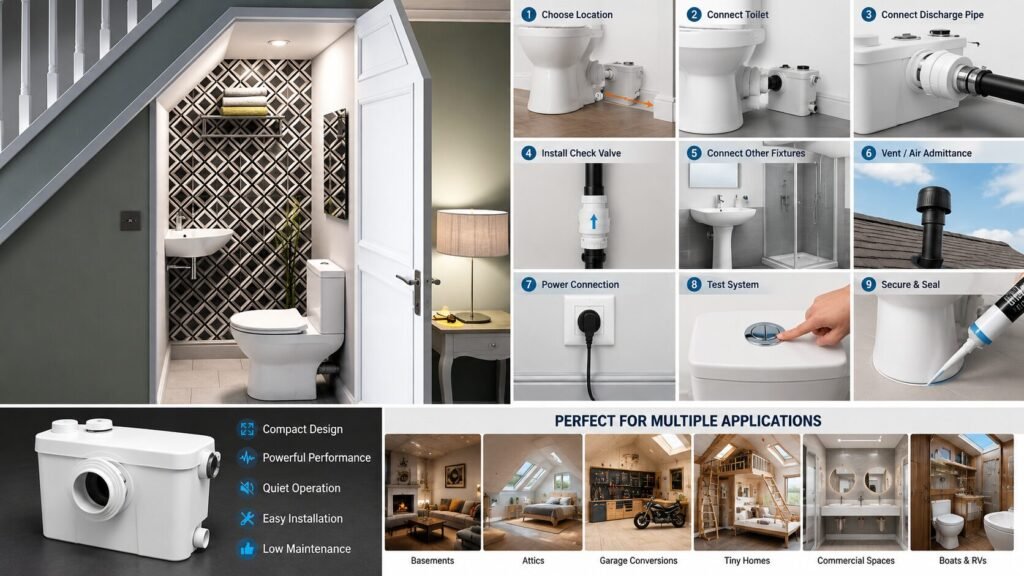
Got a weird, cramped space under the staircase? A cold corner of the garage? A dusty attic loft? The compact footprint of an upflush system means you can squeeze a powder room into spaces where standard plumbing is structurally impossible. It is also an excellent option for temporary setups, pool houses, or guest suites.
3. A Multi-Functional Drainage Hub
You aren’t just limited to a toilet. High-quality macerating pumps feature built-in auxiliary inlet ports on the side. This allows you to route drain lines from a bathroom sink, a walk-in shower, or even a washing machine directly into the same unit, giving you a full, multi-piece bathroom with a single pump box.
4. No External Venting Needed
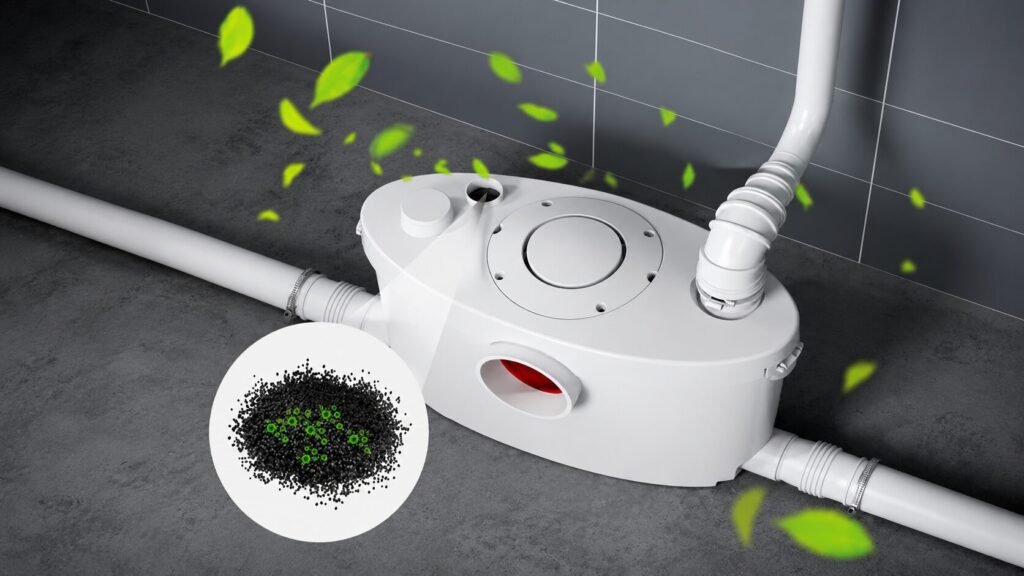
In tightly sealed rooms or deep basements where running a vent pipe all the way through your roof is a massive headache, many modern upflush toilets offer a saving grace. Models equipped with internal activated carbon filters trap and neutralize odors entirely indoors, making external open-air vents optional unless strictly mandated by your local building codes.
5. Massive Cost & Time Savings
While hiring a plumbing crew to excavate your floors can easily take a week and run into thousands of dollars, an upflush toilet drops into place seamlessly. For experienced DIYers or a local plumber, a standard installation takes just a few hours. If your rough-in water and discharge lines are already in place, you can have the toilet hooked up and running in as little as 30 minutes.
6. Serious Long-Distance Pumping Power
Just how far can these machines launch wastewater? Thanks to heavy-duty internal motorized impellers, top-tier units like the SNFLEX Macerating Toilet can push waste up to a staggering 29 feet vertically and a massive 295 feet horizontally. This massive range gives you total layout freedom to tie into your main sewage line or septic tank wherever it sits in the house.
Real Concerns Raised by Skeptics (The Cons)
To make a truly smart buying decision, you need to look at both sides of the coin. Here are the common pain points critics bring up regarding upflush systems.
1. Messy Repairs If You Ignore Maintenance
If a standard gravity toilet clogs, you grab a plunger. If a macerating toilet gets jammed because someone flushed a baby wipe, paper towel, or foreign object, you have to disconnect the system or open the access panel to manually clear the blades. To avoid these messy scenarios, you have to be strict about what goes down the bowl—stick strictly to toilet paper and use gentle, non-foaming cleaners for routine maintenance.
2. Upfront Equipment Sticker Shock
Off the shelf, a complete macerating toilet package usually runs between $700 and $1,000+. That is easily double or triple the price of a standard porcelain throne at your local hardware store. However, when you factor in the thousands of dollars you save by avoiding trenching, concrete cutting, and structural remodeling, the total project cost is almost always significantly cheaper.
3. Dependence on the Power Grid
Because the macerator requires an electric motor to grind and pump waste, the toilet cannot clear itself during a power outage. If your area is prone to frequent blackouts, you will need to pair the system with a short-term battery backup or limit usage until the grid comes back online.
4. Mechanical Operating Noise
Unlike standard gravity toilets that flush with a quiet splash, a macerating system uses spinning steel blades and an electric motor. It will emit a distinct mechanical hum every time it cycles. While older models were notoriously loud, modern upflush systems are heavily insulated and operate with a modest, muffled hum that won’t disrupt normal household conversations.
At-A-Glance: Upflush vs. Traditional Gravity Toilets
| Feature | Upflush Macerating Toilet | Traditional Gravity Toilet |
| Average Equipment Cost | $700 – $1,000+ | $150 – $400 |
| Floor Demolition Required? | No | Yes (Requires under-floor lines) |
| Installation Time | 1 to 3 hours | Days (If retrofitting plumbing) |
| Power Dependent? | Yes (Requires electrical outlet) | No (Relies entirely on gravity) |
| Max Vertical Pumping | Up to 29 Feet | 0 Feet (Must drain downward) |
Frequently Asked Questions (FAQs)
Are upflush toilets hygienic?
Yes, absolutely. Macerating toilets are completely sealed, highly engineered systems designed to handle waste cleanly and efficiently. The high-speed grinding process breaks down waste into a uniform liquid slurry, which is actually easier for your home’s main sewage line or septic tank to process than solid waste.
Do macerating toilets smell?
Not if they are installed and maintained correctly. Modern upflush units utilize tight rubber gaskets, sealed lids, and integrated activated carbon filters to completely isolate and trap sewer gases, ensuring your new bathroom stays completely fresh.
Can I install an upflush toilet myself?
If you have basic DIY experience, know how to join PVC pipes, and have access to a standard GFCI electrical outlet, you can absolutely tackle this project over a weekend. Most manufacturers provide highly detailed layout guides to walk you through the process step-by-step.
The Verdict: Is It Right For You?
If you are looking for an affordable, highly flexible, and stress-free way to add a second bathroom to a challenging layout, a macerating toilet system is a total no-brainer. It saves you thousands in upfront labor, keeps your foundation intact, and lets you build a full bathroom exactly where you need it. Just be sure to treat the system with respect, keep foreign objects out of the bowl, and enjoy the massive boost to your home’s equity and convenience!
In Part 1 of our SNFLEX deep-dive, we ripped off the cover to look at the heavy-duty blades, the high-speed impeller, and the smart float switch that makes upflush plumbing possible.
Now, it’s time to turn the unit around and look at the exterior. Knowing how the external ports, inlets, and valves function is the absolute secret to a leak-free, headache-free DIY bathroom installation. Let’s break down the exterior blueprint of the SNFLEX macerator pump so you can map out your next remodel like a seasoned pro.
I. Mapping Out the SNFLEX External Architecture
The physical pump unit is divided into two distinct structural halves: a heavy-duty upper cover and a lower holding tank container, sealed tightly together with industrial perimeter clips. Under normal operating conditions, the factory-installed rubber ring keeps everything 100% airtight and watertight, meaning you should never have to open the main casing clips.
Instead, your installation will focus entirely on the specialized connection ports built into the exterior of the unit.
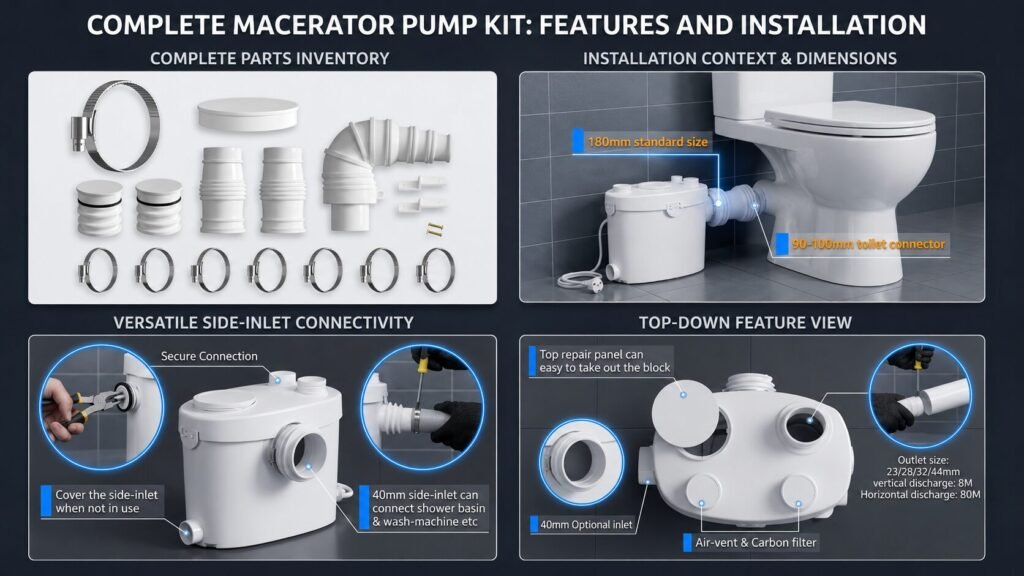
1. The Upper Cover: Venting, Discharge, and Maintenance
The top lid of your SNFLEX pump houses the critical mechanics for exhausting air pressure, discharging liquified waste, and managing routine maintenance.
- The Main Discharge Outlet: This is where the pressurized magic happens. Liquified waste is forced out of this port to travel uphill to your main sewer line. It comes equipped with a multi-size rubber check valve boot that can be carefully cut to fit common residential pipe diameters (9/10-inch, 1-1/10-inch, 1-1/4-inch, or 1-1/7-inch). The integrated one-way check valve prevents pumped sewage from sliding back down into the tank when the motor cycles off.
- The Dual-Purpose Vent Port: Right on top, you’ll find a dedicated vent opening. Behind it sits a pre-installed, replaceable activated carbon filter that actively traps and neutralizes odors right inside the room. If your local building codes strictly require a hard-piped structural vent stack, you can easily connect your vent line directly to this port.
- The Top Backup Water Inlet: Need to drain a fixture from directly above the unit? This sealed 1-1/2-inch port can be sliced open with a utility knife to accept gravity drain lines from an elevated vanity sink or laundry machine.
- The Circular Service Panel: This is an absolute lifesaver for long-term maintenance. Held down by 4 simple screws right in the center of the lid, this hatch gives you instant access to the internal blades. If a guest accidentally flushes a wet wipe or thick paper towel and jams the motor, you can clear the obstruction in minutes without disconnecting the toilet from the wall.
2. The Lower Container: Sinks, Showers, and the Porcelain Throne
The bottom half of the macerator acts as the low-profile collection basin for all your incoming raw wastewater.
- The Main Toilet Intake: Located squarely on the front of the unit, this large circular port connects directly to your rear-discharge toilet bowl. It features a thick, flexible rubber coupling that perfectly seals standard waste pipes with an outer diameter between 3-1/2 and 3-9/10 inches.
- Stealth Setup: If you want a minimalist, ultra-clean look, you can run an extension pipe through this port to hide the plastic pump box completely behind a drywall panel. If you are using the pump solely for greywater and not connecting a toilet at all, simply seal it off with the included decorative cap.
- Left and Right Auxiliary Inlets: Flanking the lower container are two 1-1/2-inch inlet ports designed to handle graywater from a walk-in shower, bathtub, or vanity sink.
- Pro Tip: These side inlets feature built-in internal check valves to prevent wastewater from back-flowing into your shower basin. For flawless drainage, ensure your incoming drain lines maintain a slight downhill slope (about 2 to 3 degrees) and always install a standard p-trap on your sink and shower lines to lock out sewer gases.
- Sealing Unused Ports: If you are only building a half-bath, leave the unused ports sealed with the provided twist-and-lock blank plugs. Just insert them with the alignment notch facing downward, give them a firm twist, and the system is completely leak-proof.
II. Rapid-Fire FAQs: Everything You Need to Know
Does the system include all necessary check valves?
The side water inlets come with built-in check valves pre-installed at the factory. For the main vertical discharge outlet on top, a specialized multi-fit check valve is included in your accessory kit and must be manually clamped on during installation.
Is it better to use a sharp 90-degree elbow or two 45-degree elbows for the discharge line?
Always opt for two 45-degree elbows. A sharp 90-degree turn creates massive fluid friction and hydraulic resistance, forcing the motor to work harder and increasing the risk of long-term clogs. Two 45-degree elbows create a smoother, sweeping curve that keeps things flowing beautifully.
Can a kitchen sink be routed into this pump?
Yes, absolutely. The heavy-duty 600W motor can easily handle hot, soapy graywater from a kitchen sink, laundry station, or wet bar alongside your standard bathroom fixtures.
How much electricity does the SNFLEX pump actually pull?
Surprisingly little. The pump runs on a 600W motor, but it only runs for a few seconds per flush. Even with a busy household using the bathroom consistently throughout the day (averaging roughly 30 minutes of total run time per day), the monthly power consumption is a negligible 9 kWh. At an average rate of $0.15 per kWh, it costs a mere $1.35 a month to run.
Does it require a dedicated electrical circuit?
No. Unlike heavy-duty household appliances, the SNFLEX pulls minimal amperage during its quick cycles, meaning you can safely plug it into any standard, existing GFCI bathroom outlet.
Wrapping It Up
Mastering the external setup of your macerator pump is the key to building an ultra-reliable, odor-free second bathroom practically anywhere in your home. By utilizing the built-in carbon filter, securing your multi-fit check valves, and maintaining a proper downhill slope on your auxiliary lines, you ensure your DIY project runs flawlessly for years to come.
Are you planning to install your upflush pump out in the open behind the toilet, or are you looking into framing out a hidden wall layout to keep the hardware completely out of sight?
Can You Use Any Toilet With a Macerator Pump? (The Honest Truth)
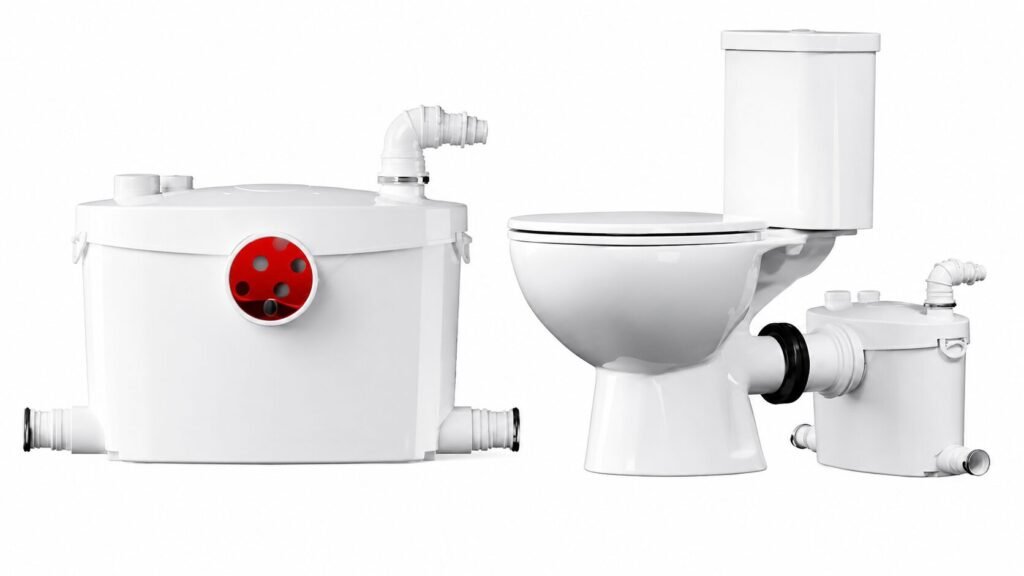
If you are planning a DIY bathroom addition or finishing out a tight space in your home, a macerating upflush pump system is an absolute lifesaver. It saves you thousands of dollars by eliminating the need to tear up your floors just to run drainage lines.
But as you start window-shopping for fixtures, one massive question always pops up: Can you just hook up any standard toilet to a macerator pump?
To put it bluntly: No, you absolutely cannot.
Trying to force a standard, off-the-shelf gravity toilet to work with an upflush pump box will lead to zero drainage, a massive mechanical mismatch, and a very messy cleanup situation. If you want to avoid a frustrating return trip to the hardware store, here are the three critical reasons why matching the right toilet to your pump is non-negotiable.
The Core Mismatch: How Upflush System Design Works
To understand why you can’t mix and match arbitrary fixtures, look at how an upflush system connects in real life. A macerating pump box sits directly behind the toilet bowl, acting as a direct baseline collection hub for your wastewater.
3 Reasons Why You Need a Dedicated Macerating Toilet
1. It Must Be a Rear-Discharge Bowl Only
Standard residential toilets are gravity-fed and feature a bottom-discharge outlet. They are designed to sit directly on top of a three-to-four-inch hole cut out of your floor, dropping waste straight down into the sewer line.
A macerator pump box sits entirely above the floorboards. Because of this, it requires a specialized rear-discharge (horizontal outlet) toilet bowl. Instead of dropping waste down, a rear-discharge toilet flushes waste straight back out of the rear of the ceramic basin, launching it horizontally into the intake collar of the pump. Traditional floor-drain models are physically incompatible with an upflush layout.
2. The Spigot and Pipe Diameters Must Match Perfectly
Plumbing requires an airtight, watertight seal to ensure zero leaking or odor escaping. The outer diameter of your toilet’s horizontal discharge pipe needs to align perfectly with the inner diameter of your pump box’s main inlet.
If there is even a fractional size difference between the two brands, you will end up with loose gaps. Even wrapping the joint in thick layers of Teflon tape or cranking down on heavy-duty hose clamps won’t save a bad structural fit from leaking over time due to the hydraulic back-pressure generated when the pump kicks on.
3. Hydraulic Flow Rates & System Balance Matter
Even if you find a random rear-discharge toilet that looks like it fits, the flushing volume has to match the evacuation capacity of the motor. Different manufacturers design their internal traps, flush valves, and siphons around specific water volumes.
If your toilet tank dumps too much water too quickly for your specific macerator to process, the holding tank will instantly back up. Conversely, if the toilet utilizes an ultra-low flow design that doesn’t provide enough water volume, the waste slurry inside the pump box won’t reach the float switch trigger level, leaving waste sitting around in the basin.
💡 Pro Tip: Skip the Guesswork and Buy a Complete Kit
The absolute safest way to guarantee a flawless installation is to buy a matched two-piece or one-piece upflush toilet kit directly from the same brand (like the complete SNFLEX bundles). These packages include the ceramic bowl, matching tank, and the macerator box engineered to seal together perfectly right out of the box.
If you are planning a stealth installation where the pump box is hidden behind a drywall panel, make sure to purchase the manufacturer’s approved matching extension pipe kit. This ensures you get a leakproof rubber ring connection that handles the high pressure without failing inside your walls.
The Bottom Line
When it comes to upflush plumbing, the toilet and the pump box are a package deal. To ensure your new half-bath or master suite runs flawlessly without leaks, clogs, or backpressure issues, always verify compatibility with your supplier before making a purchase. Investing in a fully integrated system is the single best way to ensure your DIY project goes off without a single hitch!
SNFLEX 750W Upflush Toilet — A 2026 USA Favorite
The SNFLEX 750W macerating toilet has emerged as one of the most talked‑about upflush toilets in the USA for 2026. It combines powerful performance, quiet operation, modern design, and WaterSense certification — which helps save water and lower utility bills.
Here’s what you get with the SNFLEX 750W:

750W Super‑Power Macerator Pump
This isn’t some wimpy little bathroom gadget — it’s a serious machine. The 750W pump shreds waste quickly and moves it up to 36 feet vertically and 360 feet horizontally, which gives you insane flexibility for where you place your bathroom.
Complete Full‑Bathroom Support
You don’t just get a toilet. The SNFLEX system has 4 built‑in water inlets, meaning you can hook up a sink, shower, or even a tub to the same macerator system. You’re basically building a full bathroom anywhere you need it — literally “bathroom anywhere” tech taken seriously.
WaterSense Certified — Saves Water & Cash
This SNFLEX dual‑flush toilet meets WaterSense efficiency standards. That means smart water use — less waste, reduced bills, and eco‑friendly performance in the USA.
Quiet Operation
One concern with traditional macerating toilets is noise. The SNFLEX design runs at a comfortable 35–45 dB, so you won’t be startled every time someone flushes at 2AM.
Made for Comfort
You can get versions with comfort‑height seats — around 19″ — which is great for seniors or taller folks. Some models even meet ADA compliance for universal usability.
Easy DIY Style Installation
If you’re handy, the system really cuts down on plumbing headaches. Many users report installation in under an hour if the rough‑in piping is ready, and the included extension pipes let you hide plumbing behind the wall for a clean finish.
Pros & Cons — Real Talk for Basement Bathrooms
No product is perfect — let’s get into the real benefits and what to watch for:
Why People Love It
✔ Install anywhere — No need to break concrete to connect to a sewer line.
✔ Full bath ready — Connect toilet, sink, shower in one system.
✔ Water savings — WaterSense certified = lower water usage.
✔ Strong pump — Great for basement bathrooms where gravity plumbing fails.
✔ Quiet & efficient — Doesn’t sound like a jet engine.
The Trade‑Offs
⚠ It needs power — Cut power and the toilet won’t pump. That’s just part of upflush tech.
⚠ Slight noise — Grinding tech will always sound a bit different than a gravity flush.
⚠ Parts & service — Macerators have moving parts — so they may need periodic attention.
Overall, for multipurpose basement bathrooms or unconventional installs, the SNFLEX 750W stands out in 2026 as one of the best upflush toilet options in the USA.
Basement Bathroom Installation — What You Should Know
One big appeal of a macerating toilet like this is no concrete cutting. You tap into existing drains with small‑bore pipes, run the discharge line up to the main sewer or septic line, and you’re golden.
Quick DIY Installation Steps (High‑Level)
- Prepare Location — Make sure your bathroom rough‑in is ready (sink/shower connections)
- Install Toilet — Level bowl, secure to floor
- Connect Inlets — Sink/shower lines into pump inlet ports
- Discharge Line — Run up to sewer line — no trenching needed
- Seal & Test — Turn on power, test for leaks and odor control
Pro tip: having a licensed plumber check your connections can save headaches down the road.
Best Use Cases — Why This System Is Blowing Up in 2026
Here’s where the SNFLEX upflush toilet really shines:
Finished Basements
Adding a full bathroom without ripping up concrete? That’s a huge win for home equity and convenience.
DIY Renovations
For folks building their dream bath on a budget, this system lets you get pro results without pro plumbing costs.
Senior & Accessibility Needs
Comfort‑height designs and quiet operation make this great for homes with seniors or mobility needs.
Anywhere Standard Plumbing Fails
Attic baths, garages converted to living space, tiny homes — if you can’t use gravity drains, this is the answer.
2026 Deals & Buying Tips
With demand up in the USA, many retailers are offering 2026 deals on SNFLEX macerating toilets — especially around New Year and spring renovation seasons. Remember:
- Look for WaterSense certified models — they save money long‑term
- Check if the model includes extension pipes & filters
- Ask about warranty and support options
When you are building out a basement bathroom, picking the right upflush system comes down to balancing three factors: motor raw power, pumping distance, and total out-of-pocket cost.
While legacy names like Saniflo have historically dominated the market, newer heavy-duty contenders like the SNFLEX 750W system are shifting the value curve by offering commercial-grade specifications at a fraction of the price.
let’s look at a deep, specification-by-specification comparison matrix matching the SNFLEX 750W Two-Piece Macerating Toilet against the top three market competitors.
Macerating Toilet Comparison Matrix
| Specification | SNFLEX 750W Two-Piece | Saniflo SaniPLUS (Full Kit) | DeerValley 700W Grinder | Saniflo SaniCOMPACT |
| Current Market Price | $724.00 (Was $1,289.00) | ~$1,250.00 – $1,400.00 | ~$663.00 – $762.00 | ~$1,050.00 – $1,200.00 |
| Motor Power | 750 Watts (~1.0 HP) | 0.5 HP (~500W draw) | 700 Watts (~0.9 HP) | 0.3 to 0.5 HP (~350W) |
| Max Vertical Lift | 36 Feet | 15 Feet | 23 Feet | 9 Feet |
| Max Horizontal Run | 328 Feet | 150 Feet | 230 Feet | 100 Feet |
| Extra Fixture Inlets | 4 Side Inlets | 3 Side Inlets | 3 Side Inlets | 1 Side Inlet |
| Flushing Style | 1.28 or 1.6 GPF Single | 1.6 GPF Single Flush | 1.1 / 1.6 GPF Dual Flush | 1.0 / 1.28 GPF Dual Flush |
| Best Used For | Deep basements, multi-fixture full baths, max value. | Full bathrooms where brand legacy is top priority. | Tough jobs needing industrial stainless steel cutting blades. | Half-baths and tight closets with zero room for a tank. |
| Warranty Coverage | 2-Year Limited | 2 to 3-Year Limited | 1-Year Limited | 2 to 3-Year Limited |
Deep-Dive Analysis: How SNFLEX Holds Up Against the Competition
1. SNFLEX 750W vs. Saniflo SaniPLUS (The Power vs. Legacy Matchup)
The Saniflo SaniPLUS is widely considered the industry benchmark for standard residential upflush bathrooms. However, looking closely at the pure technical layout, the SNFLEX 750W system drastically outperforms it on raw mechanical capability.
The Lift Advantage: Saniflo taps out at a 15-foot vertical lift, which is fine for standard shallow basements. But if your home features high ceilings, sub-basements, or requires an intricate path around overhead beams to reach your main stack, the SNFLEX 36-foot vertical lift offers more than double the clearance.
The Price Gap: Because Saniflo is a legacy name, you pay a steep brand premium. The SNFLEX provides a much larger 750W motor at a current sale price of $724.00, meaning you save roughly $500 to $600 compared to a full SaniPLUS kit while gaining far better pumping distances.
2. SNFLEX 750W vs. DeerValley 700W (The Heavy-Duty Grinder Battle)
DeerValley and SNFLEX are both designed for homeowners who want commercial-grade power without paying legacy plumbing markups. They both utilize robust, high-wattage motors instead of the lower-wattage motors found in basic upflush kits.
- Pumping Capacity: The SNFLEX edges out the DeerValley by utilizing an extra 50 Watts of motor force. This gives it a 36-foot vertical and 328-foot horizontal range, outclassing DeerValley’s 23-foot lift and 230-foot run.
- Versatility: While the DeerValley offers a sleek footprint and solid dual-flush economics, the SNFLEX includes 4 auxiliary inlets compared to the standard 3. This makes the SNFLEX highly adaptable if you want to connect a toilet, a vanity sink, a walk-in shower, and a washing machine or condensate line all into the same above-floor system.
3. SNFLEX 750W vs. Saniflo SaniCOMPACT (Power vs. Footprint)
These two units serve completely opposite design philosophies. The Saniflo SaniCOMPACT is a tankless, one-piece toilet where the macerator is packed directly inside the porcelain base.
- Space Limitations: If you are building a tiny half-bath out under a staircase or inside a shallow utility closet, the SaniCOMPACT wins on physical size because it doesn’t use a rear external pump box or a water tank.
- Performance Trade-off: The SaniCOMPACT is strictly built for a toilet and a light hand-sink. It lacks the plumbing capacity, basin size, and motor power to process heavy greywater from a shower or bathtub. If your basement project is a full-scale bath, the SNFLEX is structurally required to handle the volume.
Basement Bathroom FAQs: Everything You Need to Know About Upflush Toilets
Planning a basement remodel or adding a bathroom to a space without pre-existing plumbing below the floor? You probably have a ton of questions about what actually works, what costs the least, and how to avoid massive headaches down the road.
To help you skip the hours of digging through conflicting forum threads, we have compiled the absolute most-searched questions from homeowners, DIYers, and contractors. Here is your definitive, no-nonsense FAQ guide to basement plumbing and macerating systems.
The Definitive Basement Bathroom & Macerator FAQ
What is the absolute best type of toilet for a basement?
The best toilet for your basement depends entirely on your budget and whether you are willing to cut into your concrete foundation.
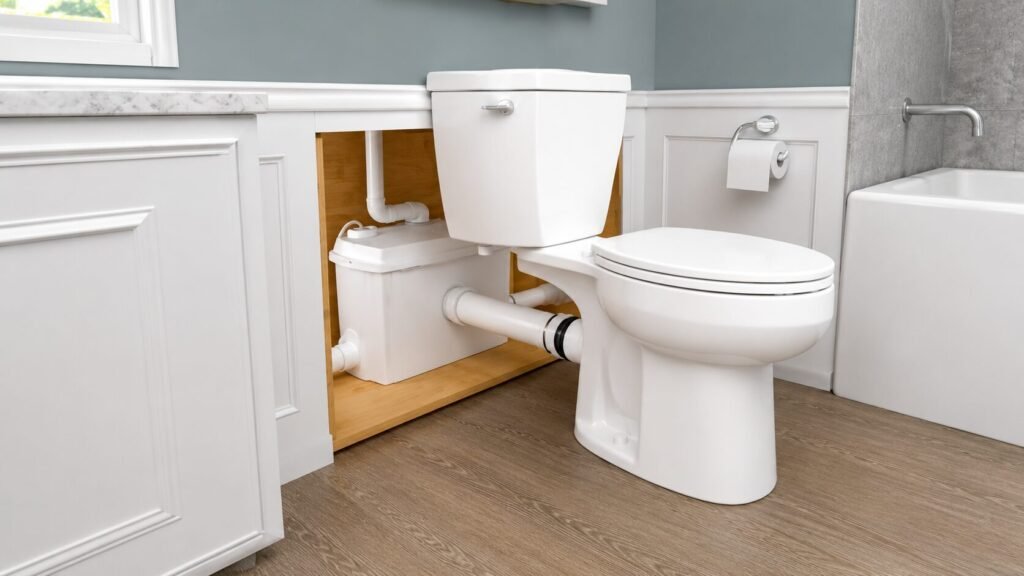
If you want to save thousands on plumbing fees and finish the job in a single weekend, an upflush (macerating) toilet is the hands-down winner. It sits right on top of the concrete and pumps waste away effortlessly.
However, if you are building a massive, heavy-use master suite and already plan to excavate the floors for a full sewage network, a traditional gravity toilet connected to a sewage ejector pump system is a highly durable choice.
What are the main disadvantages of a macerator or upflush toilet?
While upflush toilets are a lifesaver for challenging layouts, they do come with a few notable trade-offs:
- Grid Dependence: They require electricity. If your home loses power during a storm, the pump won’t work, meaning you can only flush a couple of times before the holding tank backs up.
- Operating Noise: Because there is an electric motor and rotating steel blades inside the box, the unit will make a distinct mechanical buzzing or humming noise for a few seconds every time it flushes.
- Strict Waste Rules: You cannot treat a macerator like a trash can. Flushing baby wipes, facial tissues, paper towels, or feminine products will physically wrap around the blades, jam the motor, and require a messy manual cleanup.
- Higher Equipment Cost: The upfront cost of buying the specialized toilet and motorized pump kit runs significantly higher than a standard big-box gravity toilet.
What are the best brands of macerating toilets on the market?
The macerating market is dominated by a few highly reliable standouts catering to different budgets:
- Saniflo: The gold standard and industry pioneer. Known for ultra-reliable, commercial-grade systems like the Sanibest Pro and Sanipro, they are highly durable but carry a premium price tag ($800 – $1,500).
- Liberty Pumps: A powerhouse American manufacturer. Their Ascent II series is highly praised by professional plumbers for its advanced razor-cutting technology and sleek profile.
- Simple Project (SNFLEX): The absolute best budget-friendly option for residential DIYers. Sitting comfortably around the $700 price point, it delivers premium multi-fixture drainage power and an easy-access maintenance panel without the steep legacy brand markup.
Can you connect a full shower and sink into an upflush toilet system?
Yes, absolutely! This is one of the biggest perks of choosing a high-quality macerator. Most residential units come equipped with multiple auxiliary greywater inlets on the lower sides of the pump box.
You can run your bathroom sink drain line and your walk-in shower drain directly into the sides of the pump. The unit will automatically collect, grind, and pump away the combined wastewater from all three fixtures simultaneously through a single discharge pipe.
Important Layout Tip: Because the side inlets rely on gravity to fill the pump basin, you must ensure your sink and shower lines slope downward toward the box at a steady 2 to 3-degree angle. Additionally, your shower pan will need to be raised slightly off the concrete floor (usually about 6 inches) to give the drain line enough drop to reach the pump intake cleanly.
How loud are modern upflush toilets compared to standard ones?
Older generations of upflush toilets were notoriously loud, but modern systems have come a long way. Well-insulated units like the SNFLEX operate at a modest 35 to 45 decibels (dBA) during their active cycle. To put that into perspective, it sounds like a standard household blender running in the next room or a quiet garbage disposal. The hum only lasts for roughly 5 to 10 seconds before shutting off completely, so it won’t disrupt daily life or conversations.
Do upflush toilets smell or leak sewer gases into the basement?
Not if they are installed correctly. Upflush systems are completely airtight and utilize tight-fitting rubber gaskets and heavy-duty seals to lock in wastewater.
Furthermore, units feature a built-in, integrated activated carbon filter directly inside the top lid. This filter naturally purifies and deodorizes the displaced air during a flush, keeping your basement bathroom smelling completely fresh without needing to drill a ventilation hole all the way through your home’s roof.
Adding a bathroom to your basement or converting an old utility closet into a powder room is a fantastic way to boost your home’s value. But when you realize you are working below your home’s main sewer line, traditional plumbing gets complicated fast.
To clear up the confusion, we have broken down the top five most critical questions homeowners ask when trying to figure out basement plumbing, water usage, and long-term system reliability.
The Core Basement Plumbing Questions, Answered
1. What are the most common problems with macerator toilets?
Macerator systems are incredibly reliable when treated properly, but because they rely on an electric motor and moving parts, they have failure points that traditional gravity toilets just don’t have. The most common issues include:
- Blades Jamming from Foreign Objects: These systems are engineered strictly for human waste and standard toilet paper. Flushing baby wipes, flushable wipes, paper towels, or feminine hygiene products will quickly clog the grinding mechanism, binding the blades and causing the motor to overheat or seize up.
- The Float Switch Getting Stuck: Macerators use an internal pressure switch or float sensor to detect when water enters the tank. Over time, heavy limescale, mineral deposits, or grease can coat this sensor. This leads to the pump either running continuously without stopping or failing to turn on entirely, risking an overflow.
- Total Power Dependency: Because the macerator requires electricity to run its motor, the system is completely useless during a power outage. If your grid goes down during a storm, you cannot use your basement bathroom until power is fully restored.
2. What is the best toilet for a basement?
The absolute best toilet for your basement comes down to how much work you want to do on your home’s foundation.
If you want an affordable, fast installation that doesn’t involve heavy construction, an upflush macerating toilet is the ideal solution. It installs completely above the floor, requires zero concrete demolition, and pumps waste straight up into your main stack.
However, if you are planning a massive, high-traffic living area and you are already hiring contractors to cut channels into your concrete slab, a below-floor sewage ejector pump system paired with a traditional gravity toilet is the superior long-term choice for heavy daily usage.
3. Which is better for an upflush system: 1.28 GPF or 1.6 GPF?
GPF stands for Gallons Per Flush. In a standard upstairs bathroom with traditional plumbing, a 1.28 GPF toilet is fantastic because it saves water while gravity handles the rest.
However, for a macerating upflush system, 1.6 GPF is almost always the better choice.
Macerator pump boxes require a healthy volume of water to properly liquefy solid waste into a smooth slurry. If you use an ultra-low flow 1.28 GPF tank, there often isn’t enough water volume to fully submerge and flush out the grinding chamber. This leaves thick residue behind, which leads to early clogs, stubborn odors, and short-cycling issues where the pump turns on and off rapidly.
4. What is the realistic life expectancy of a macerator toilet?
The ceramic porcelain bowl and tank itself will last a lifetime, but the motorized pump box has a finite operational lifespan.
On average, a high-quality, well-maintained macerator pump box will last between 10 to 15 years if it is installed in a light-use environment like a guest bathroom or a basement home office. If the system is installed in a high-traffic basement apartment where it serves as the primary bathroom for a full family, expect a lifespan closer to 5 to 7 years before the motor or seals require a rebuild or replacement.
Pro Tip to Extend Lifespan: Pour a specialized macerator descaler or white vinegar down the bowl once every few months to dissolve aggressive scale buildup on the blades and float switch, especially if your home has hard water.
5. What are the best alternatives to a macerator toilet?
If you don’t want to deal with an upflush system’s electrical needs or noise, you have three primary alternatives for a basement build:
- Sewage Ejector Pump System: This involves jackhammering your concrete floor, burying a large wastewater basin underground, and installing a heavy-duty submersible pump. It is expensive and labor-intensive upfront, but it behaves exactly like a standard home toilet and can easily handle multiple fixtures.
- Composting Toilet: A completely waterless system that separates liquid and solid waste, drying out the solids into an odorless compost material. It requires zero plumbing lines and zero water, making it incredibly eco-friendly, though it does require manual emptying every few weeks or months.
- Sewage Holding Vault: This is a static tank system installed below-floor that stores wastewater until a commercial vacuum truck comes to pump it out. This is typically restricted to detached cabins, workshops, or extreme situations where connecting to a main sewer line or septic system is physically impossible.
Elevate Your Entire Space: Top-Rated Home & Lifestyle Upgrades
Let’s be completely real—unboxing and expanding a brand-new prefab villa or finishing up a major room remodel is only step one. Curating a truly high-functioning, modern home ecosystem means upgrading everything from your daily schedule organization and remote work comfort to your actual home infrastructure and outdoor setups.
If you are looking for hands-on testing, honest assessments, and thoroughly vetted product breakdowns that will save you serious time and cash while you build out your space, check out our other definitive lifestyle guides:
Smart Home, Organization & Tech
- Stay Perfectly Synced: Say goodbye to premium app subscription fees. Keep your crew completely organized inside your new space with our deep-dive Apolosign Digital Family Calendar Review, or see how an alternative setup holds up over time in our Smart Digital Family Calendar 30-Day Reality Check.
- Next-Level Air Quality: Pair your beautiful new home vibes with real-time data using our Atmocube Review: Smart Indoor Air Quality Monitor for Healthier Homes & Offices. Want to clear the air even faster? See how high-density negative ion tech performs in our Ionbox 20m Review & 2026 American Household Guide.
Office Ergonomics
- Banish Back Pain: Turning one of your spare bedrooms into a dedicated remote workspace? Upgrade your office layout and alleviate daily physical strain with the specialized adjustments highlighted in our comprehensive Sunaofe Boss Pro Ergonomic Office Chair Review.
Indoor & Outdoor Gardening
- Scale Your Cultivation: Ready to maximize your yard or kitchen counter space? Go big with our commercial-grade 24 Plant Grow Room Kit Review, keep it simple on your countertop with the user-friendly Ahopegarden Hydroponic System Review, or construct a stunning backyard oasis right next to your container villa with our full Bloom cabin reviews
Health, Wellness & Home Infrastructure
- Clean Water Realities: Protect your family’s wellness and get a transparent look at what’s actually coming out of your tap with our essential Gravity Water Filter Buyer’s Guide.
- Smart Renovations: Bypass expensive, destructive plumbing tear-outs during your site setup by checking out our SNFLEX 750W Upflush Macerating Toilet Review—it is an absolute lifesaver for prefab builds and basement conversions.
- More Modular Strategies: If you are still weighing your options across different layout manufacturers, don’t miss our deep structural analysis on Portable Prefabricated Homes in the USA.
Outdoor Living & Travel Vibe Check
- Patio Upgrades: Build a durable, weather-resistant, and incredibly stylish outdoor layout to frame your new home using the highly rated seating options featured in our Serwall Outdoor Furniture Review.
- Road-Trip Fuel: Planning to keep your lifestyle mobile? Simplify your travel maintenance and ease heavy-duty plumbing tasks on the open road with the ultra-durable tank design featured in our YITAHOME 19.8 Gallon Portable RV Waste Tank Review.
Final Verdict — Is the SNFLEX 750W Upflush Toilet Worth It?
If your project involves a basement bathroom, small space, or unconventional install, the SNFLEX 750W macerating upflush toilet is a top contender in the USA in 2026. Combining real performance, eco‑friendly certification, and installation flexibility, it’s one of the best upflush toilet systems on the market right now.
This isn’t a luxury whim — it’s a practical, modern solution for homes that want a full bathroom anywhere. Whether you’re DIY‑savvy or working with a contractor, this system lets you turn wasted space into usable living space — and adds real value back to your home.
2026 USA NEW YEAR BATHROOM DEALS 🇺🇸
Upgrade your bathroom for less with these exclusive New Year deals on toilets, showers, and more — USA only!
Specialized Bathroom Solutions from SimpleProjectUS
- SNFLEX Macerating Toilets
- ELEMAZ Tall Toilets
- SKIFLEX Corner Toilet
- ADA Bathroom Vanities
- Lighted Medicine Cabinets
- CALYZ Shower Doors
- SLYDO Shower Bases
- Freestanding Tub Faucets
Simple Project Shopping Guide: Shipping, Returns, Warranty & Payments
Shopping for heavy bathroom fixtures online shouldn’t feel like decoding a legal textbook. To make things easy, we have broken down all of Simple Project’s operational policies—shipping speeds, return windows, warranty protections, and payment options—into a clear, straightforward guide.
Shipping & Delivery
Simple Project keeps things simple by offering free standard shipping on all products within the continental United States.
Shipping Timelines & Tracking
- Dispatch Speed: Orders ship out within 1 to 2 business days (Monday through Friday). If you order late on a Friday or over the weekend, your package will typically head out on Monday or Tuesday.
- Delivery Window: Most items arrive at your door within 2 to 7 business days after dispatch.
- Courier Partners: Shipments are handled via reliable national carriers, typically FedEx Ground for US addresses.
- Tracking & Security: You will receive a tracking number via email as soon as your order leaves the warehouse. Deliveries are signature-free, so keep an eye on your tracking link to ensure you are home to collect your packages.
Delivery Exclusions & Address Requirements
- Eligible Regions: Delivery is strictly limited to the continental United States. Simple Project cannot ship to Hawaii, Alaska, Puerto Rico, remote islands, military addresses (APO/FPO), or PO Boxes.
- Check Your ZIP Code: Use the “Delivery Options” tool on any product page to verify shipping eligibility before buying. If a remote area is accidentally processed, you will receive a cancellation email promptly.
- Double-Check Your Address: Ensure your shipping data is 100% accurate at checkout. If you catch an error after shipment, changing the address with the carrier is highly restricted: you only get one modification opportunity, and the carrier may charge an extra fee.
Backordered Items
If an item is out of stock, it will be clearly marked as “Backordered” on the product page. Full payment is required upfront to reserve your unit. Simple Project will email you within 24 hours with an estimated ship date. If you need to cancel a backordered item before it ships, email customer support to halt the process and secure a full refund.
Returns & Refund Policy
Simple Project offers a 30-Day Free Return Window starting from the exact date the carrier marks your package as delivered.
Return Eligibility Requirements
To qualify for a smooth return, items must meet the following strict conditions:
- Must be initiated within 30 days of delivery.
- Must be completely unused, undamaged, and in its original packaging with all accessories included.
- Items with installation marks, physical damage, missing parts, or items bought as part of a promotional bundle are not eligible for return.
The Return Process
| Step | Action Required |
| 1. Request | Email support@simpleprojectus.com with your order number, item details, and a clear description of the issue. |
| 2. Photos | Provide clear pictures of the outer box (if unopened) or photos showing the product inside the packaging. For smart toilets, include a photo of the barcode on the side of the lid. |
| 3. Label | Once approved, customer service will provide a prepaid return shipping label. |
| 4. Ship | Pack the item identically to how it arrived using clear tape, attach the label, and call the carrier to arrange the included pickup service. |
⚠️ Important Return Notes: Do not ship items back to the warehouse without prior authorization, and never mail items back to the original shipping address on the box. Unapproved returns will not be covered or refunded.
The Warehouse Address for Authorized Returns: 2075 Maple Ave, Atlanta, GA 30336
Shipping Costs & Restocking Fees
- If Simple Project Made a Mistake: If your item arrives damaged, defective, or incorrect, Simple Project covers 100% of the return costs to ensure you get a working replacement or full refund.
- If You Changed Your Mind: If you return an item for personal reasons (e.g., changed your mind, ordered the wrong size), you are responsible for the return shipping costs, restocking fees, and any carrier interception fees.
Refund Processing Timelines
Once your package is inspected at the Atlanta warehouse, refunds are issued back to your original payment method within 7 to 10 business days. Banking processing times vary by provider:
- PayPal: 3 to 5 business days
- Credit Cards / Buy-Now-Pay-Later (Klarna, Afterpay): 3 to 10 business days
💡 Pro Tip: Refrain from opening a formal dispute through PayPal or your bank during a standard return. Chargebacks and formal disputes significantly lock up processing systems and can delay your refund by several weeks. Working directly with support is always the fastest route.
One-Year Limited Warranty
Every Simple Project product comes backed by a one-year limited warranty starting from the original purchase date. This coverage applies exclusively to the original purchaser (or the first property owner if installed by a professional contractor/plumber) within the United States.
What is Covered?
- Toilets: 1-year coverage on the porcelain chinaware, toilet seat, interior mechanical valves, basic functionality, and the motorized macerator pump unit.
- Vanities, Sinks, Shower Doors, & Bases: 1-year coverage against factory defects in material quality and manufacturing craftsmanship.
What is NOT Covered?
- Normal wear and tear (loss of gloss, surface scratches, or hard-water staining over time).
- Damage caused by harsh cleaning chemicals (avoid bleach, chlorine, ammonia, alcohol, or abrasive metal scrubbers).
- Labor costs, project delays, plumbing installation fees, or accidental damage to surrounding property.
- Failure to meet local building and plumbing codes (always consult a contractor before purchasing below-grade systems).
If a verified defect is discovered during normal residential use, Simple Project reserves the right to prioritize sending free replacement parts or providing technical troubleshooting steps before replacing an entire fixture. To file a claim, email your order number, a detailed description, and clear video/photo proof of the failure to support.
Supported Payment Methods
All transactions are secured using advanced SSL encryption technology and strict PCI-DSS compliance protocols to protect your financial data. Simple Project charges zero transaction handling fees, though your bank may assess an international transaction fee depending on their specific terms.
- Credit & Debit Cards: Visa, MasterCard, American Express, Discover, Maestro, JCB, Diners Club
- Digital Wallets: PayPal, Apple Pay
- Installment Plans: Afterpay, Klarna (interest-free financing options)
Customer Support & Contact Info
Simple Project aims to respond to all inquiries within 24 hours. For the fastest response regarding technical issues, sending photo updates, or tracking questions, text messaging or WhatsApp is highly recommended.
- Customer Support Email: support@simpleprojectus.com
- Primary Support Text/WhatsApp Line: +1 (848) 469-5254
- Distributor After-Sales Phone Line: +1 (844) 379-1301 (Available 6:00 AM – 3:00 PM PST, Monday through Friday)