Let’s be completely real for a second—are you also sick of dropping six bucks on those pathetic, soggy plastic clamshells of greens at the grocery store, only to watch them turn into a slimy science project in your crisper drawer four days later? Indoor gardening has totally blown up, but if you’ve checked out most countertop units, they max out at 10 or 12 pods. That’s barely enough for a side salad, let alone feeding a whole family.
If you’re looking to expand your indoor growing setup, you’ve probably stumbled across the WooRoot Max 148-Pod Vertical Hydroponic Tower Garden.
When I first got my hands on this 5-tier vertical setup claiming to pack 148 planting pods into just 3.8 square feet of floor space, I wanted to see how it actually performs in a real home environment. Whether you’re trying to grow fresh produce at home, run a hands-on classroom project, or test out a larger indoor growing system, here is my honest, deep-dive review.
1. First Impressions & Design Specs: Maximizing Vertical Space
Space is always at a premium indoors. Traditional horizontal growing setups take up an entire room, but vertical hydroponics flips the script entirely.
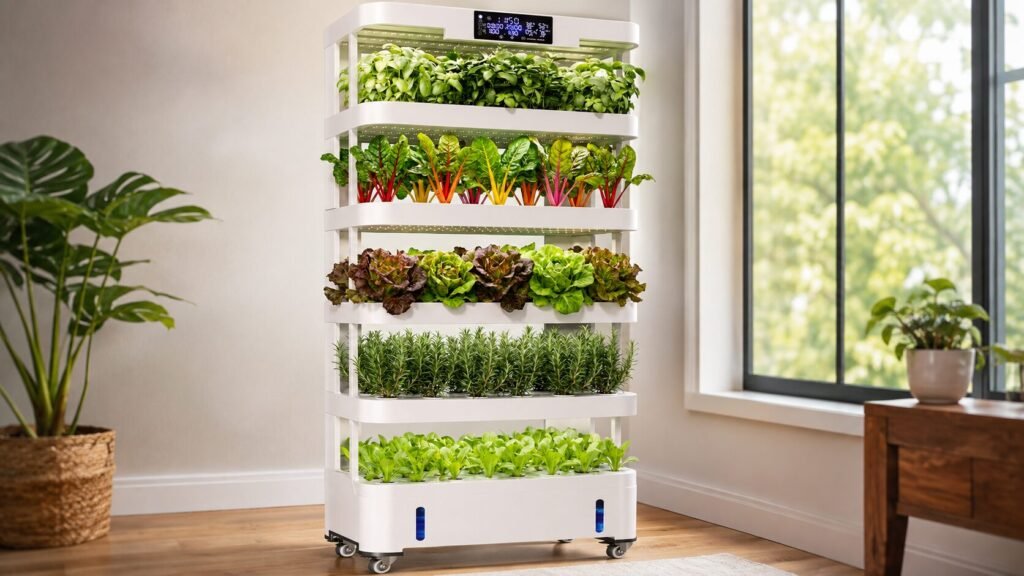
The WooRoot Max stands tall at 17″D x 32″W x 71″H with an 8.27″ planting height. Its sleek, minimalist matte white finish looks clean and modern in a kitchen, office, or learning space.
- The Pod Layout: It features a 5-tier grid split into 76 nursery/seedling sites on the bottom and 72 mature growing sites on the upper layers.
- Space Efficiency: Packing 148 plants into a tiny 3.8 square foot footprint helps maximize plant count in compact indoor areas.
- Mobility: It comes outfitted with 360-degree swivel casters so you can wheel it around easily, though you’ll want to lock those wheels down once the water tanks are filled to avoid any messy sloshing.
If you are looking to explore alternative high-efficiency growing setups, you might also want to check out this 24 Plant Grow Room Kit Review: Is This 1200W Commercial Beast The Secret To 46oz Yields? Save 65% On Pro Results (No Cap) for a garage-style perspective, or peek at backyard options like the EROMMY 7×11 FT Spruce Wood Greenhouse Review: Is This Pergola-Hybrid Kit Worth $1,440?.
2. Smart Controls & Daily Management: The 30-Day Setup
Managing a large system shouldn’t feel like a full-time job.
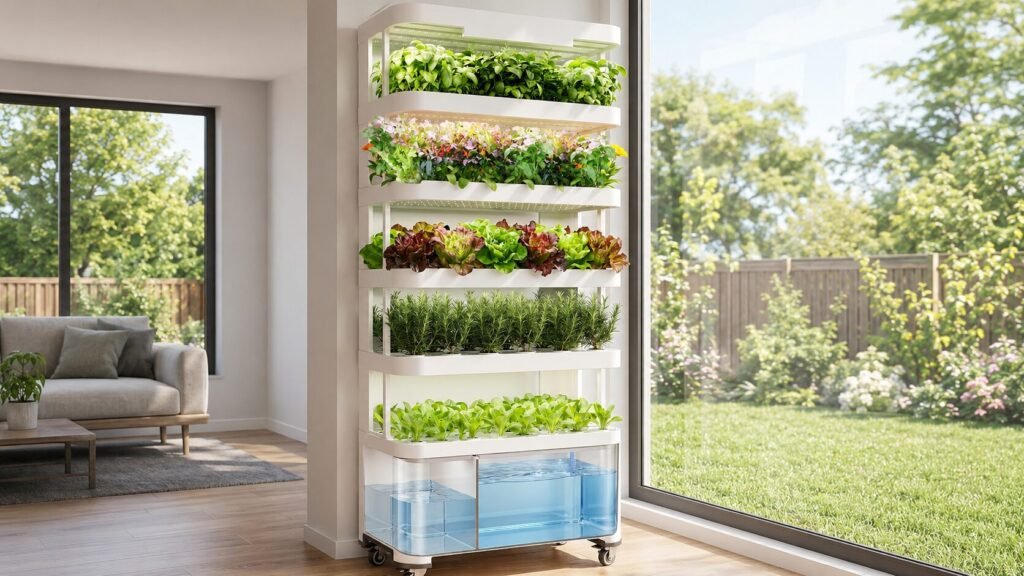
The WooRoot Max features an autonomous 34L nutrient water tank and a separate 9.5L misting tank designed to support up to 30 days of automated growing cycles depending on your plant types and environment.
- No Clunky Apps Needed: Instead of dealing with shaky Wi-Fi apps that drop connection, this unit features a straightforward onboard control panel and a physical remote control. You can easily adjust your schedules right on the machine.
- Smart Water Level Alerts: If your water levels drop too low in either tank, the system triggers a voice reminder (beeping every 20 seconds, four times total) and flashes a red warning light on the display.
- Independent LED Tiers: It packs a 100W full-spectrum LED system (using a balanced 3000K/5000K daylight mix) spread across five independently controlled tiers. You can customize lighting schedules for each layer based on your specific plants and growth stages.
[IMAGE PLACEHOLDER: Close-up shot of the digital control panel and remote control on top of the WooRoot Max tower]
3. Water Circulation & Misting Setup
Proper water and oxygen delivery is vital for healthy roots.
The WooRoot Max utilizes a Nutrient Film Technique (NFT) system powered by an ultra-quiet internal circulation pump.
- The pump pushes nutrient solution up to the upper layers, where it flows sequentially down an L-shaped drainage channel from layer to layer, eventually returning to the main reservoir.
- Dual spray nozzles and air convection outlets on every single tier help maintain consistent moisture and airflow across the tower.
Note: Actual water circulation and plant performance can vary based on your room’s temperature, lighting settings, and regular maintenance.
Pro Tip from the Manual: Make sure to clean your drain outlet filter screen about once a week. Skipping this can cause minor blockages and water backup.
If you are expanding your setup beyond indoor towers—perhaps looking into weather-resistant outdoor structures or alternative green housing solutions—take a look at this insightful The Ultimate Bloomcabin Greenhouse Review (2026): Which Luxury Kit is Worth Your Cash? or explore Portable Prefabricated Homes in the USA (2026): Affordable Housing Solution.
4. Planting, Sprouting, and Growing Experience
One of the neat design elements is the dual-zone workflow. While your mature greens finish up on the upper tiers, the bottom nursery layer lets you start new seedlings.
- Leafy Greens: Varieties like Baby Bok Choy, Arugula, Italian Lettuce, Glass Lettuce, and Red Maple Lettuce are commonly grown in these systems, with typical growth cycles ranging around 30 to 45 days depending on environmental conditions.
- Nutrient Management: The system includes custom A and B pre-measured nutrient formulas matched to the 34L tank capacity. It’s recommended to test your water’s pH and EC (Electrical Conductivity) levels using a digital meter to keep your water chemistry balanced.
- Scaling for Larger Plants: If you want to grow larger vining plants like tomatoes or peppers, configuring the system as a 2-tier setup provides better vertical clearance, and unused holes can be covered with the provided light shields.
If you are starting out smaller before investing in a 148-pod system, you can also read our take on the Ahopegarden Hydroponic System Review (2026): Urban Gardening Made Easy.
Technical Specifications & Features At-A-Glance
| Feature / Spec | Detail |
| Product Name / Model | WooRoot Max (Vertical Hydroponic Growing System) |
| Price | $890.00 USD |
| Customer Rating | 5.0 / 5.0 Stars (Based on 4 Global Ratings) |
| Total Planting Capacity | 148 Pods (76 Nursery/Seedling Sites + 72 Mature Growing Sites) |
| Footprint / Dimensions | 3.8 Square Feet Footprint (17″D x 32″W x 71″H) |
| Water Management | Autonomous 34L Nutrient Tank + 9.5L Spray/Misting Tank |
| Lighting System | 5-Tier Independent Full-Spectrum LED (100W, 3000K/5000K Balanced Daylight) |
| Circulation Technology | NFT (Nutrient Film Technique) with Ultra-Quiet Pump & Misting |
| Material Construction | Bisphenol A-Free (BPA-Free) Modular Materials |
| Warranty Coverage | 1-Year Machine Warranty + 5-Year Main Frame Warranty |
Pros and Cons
The Pros:
- Large 148-pod capacity packed into a compact 3.8 sq. ft. footprint.
- 34L nutrient tank and 9.5L misting tank support extended autonomous operation cycles.
- Customizable independent lighting schedules per tier.
- Includes a physical remote control without requiring smartphone app pairing.
- Backed by a 1-year machine warranty and 5-year main frame warranty.
The Cons:
- Ships in two separate boxes due to its physical size, so you’ll want to verify both boxes arrive before assembling.
- Requires consistent user maintenance (such as filter cleaning and pH testing) to ensure smooth operation.
Frequently Asked Questions (FAQ Section)
1. Do I need a Wi-Fi app or technical setup to run the WooRoot Max?
- No app or technical setup is required. The system features an onboard control panel and an included remote control, letting you independently program your lighting, pump cycles, and misting schedules directly.
2. How long can the system run autonomously before refilling?
- With its 34L nutrient reservoir and 9.5L misting tank, the system is designed to support up to 30 days of autonomous cycles depending on plant size and water consumption. Built-in sensors and voice alerts notify you when water levels get low.
3. What types of plants can I grow in this tower?
- It is well-suited for leafy greens and herbs (like lettuce, bok choy, arugula, and basil). For larger plants like tomatoes, configuring the system into a 2-tier setup is recommended for proper vertical spacing.
4. How does the system circulate water?
- The tower uses a Nutrient Film Technique (NFT) system powered by an ultra-quiet circulation pump that moves nutrient solution through the planting layers. Integrated ventilation and misting help maintain balanced humidity across the tiers.
Warranty, Shipping, and Support Info
- Shipping Note: Because of its size and modular design, the system ships in two separate packages. Make sure both boxes are delivered before starting assembly.
- Warranty Protection: The manufacturer backs the hardware with a 1-year warranty for the machine and a 5-year warranty for the main frame.
- Customer Support: Includes installation guidance, nutrient management support, and a 30-day replacement guarantee.
Final Verdict: Who Is This System Best Suited For?
Based on my hands-on evaluation, the WooRoot Max 148-Pod Vertical Hydroponic Tower is best suited for home growers, classrooms, offices, or urban gardeners looking to maximize plant count in a vertical footprint without needing complicated smart apps.