You buy a premium, thick-cut ribeye steak or a fresh fillet of Atlantic salmon. You drop it into your old non-stick pan, expecting a beautiful, restaurant-quality crust. Instead, the meat grey-boils in its own juices, the center cooks unevenly, and you’re left wondering if those tiny flakes missing from your pan’s coating are now part of your dinner.
Worse yet, traditional non-stick pans come with a ticking clock: a year or two of high heat, and their synthetic coatings fail, sending them straight to the landfill. If you are tired of fighting uneven hot spots and want to permanently eliminate toxic “forever chemicals” (PFAS, PTFE, and PFOA) from your kitchen, it is time to look at professional-grade clad metal.
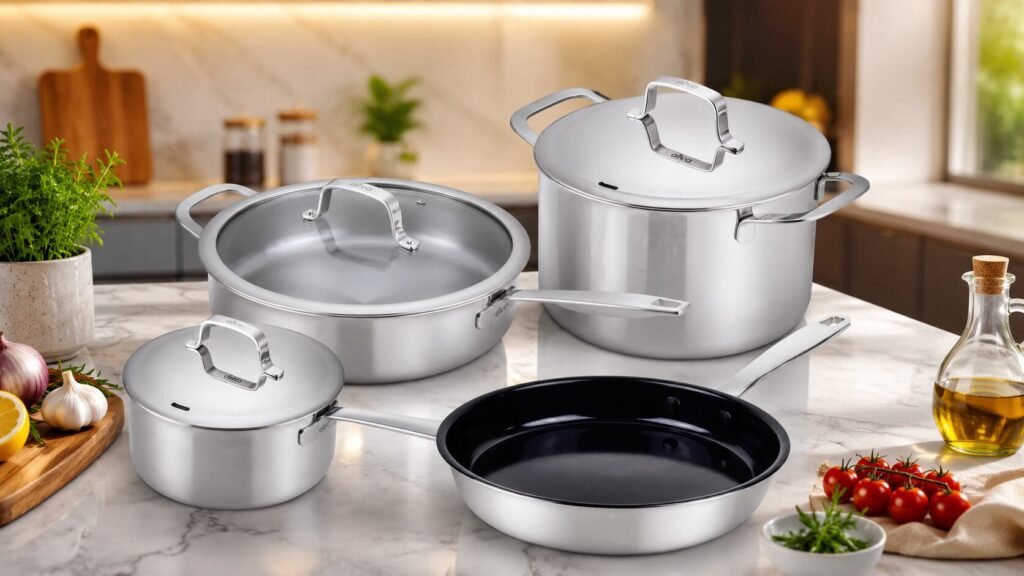
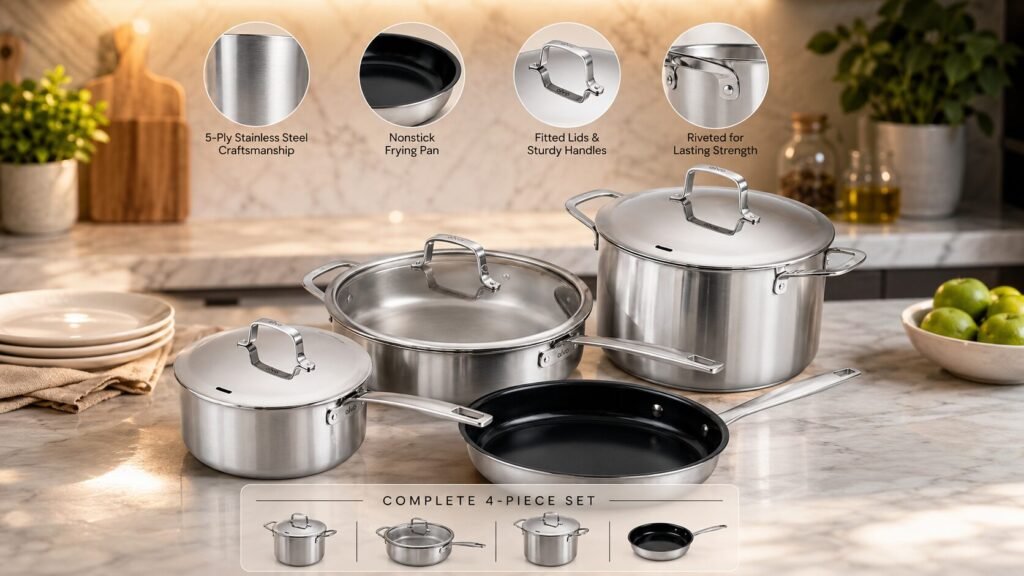
Enter the Alva Maestro 5-Ply Stainless Steel 7-Piece Cookware Set. Engineered in Oostrozebeke, Belgium, by a brand with a heritage dating back to 1949, this set promises edge-to-edge even heating, indestructible durability, and a lifetime warranty. But does it deliver on the daily grind? Let’s dive deep into the specifications, performance, and real-world value of this premium culinary system.
Alva Maestro 7-Piece Set: Core Specifications
Before looking at how it handles a searing flame, let’s break down the data, pricing, and exact items included in this direct-to-consumer package.
| Feature | Product Details & Logistics |
| Brand Heritage | Belgian-engineered since 1949 (Three generations of design) |
| Construction Type | Fully clad 5-ply stainless steel (Edge-to-edge metal bonding) |
| Core Material | Alternating aluminum cores for rapid, responsive heat distribution |
| Exterior / Cooking Surface | Non-reactive 18/10 stainless steel (No chemical coatings) |
| Current Market Price | $559 (Regularly $746 — Save $187 / 25% OFF) |
| Customer Performance Rating | 4.9 out of 5 Stars (Based on 111 verified reviews) |
| Cooktop Compatibility | Gas, Electric, Ceramic, and Induction compatible |
| Thermal Limits | Oven and broiler safe up to 500°F |
| In-Home Trial Period | 45-Day Risk-Free Kitchen Trial |
| Manufacturer Warranty | Performance-backed Lifetime Warranty |
| Shipping Terms | Free US Shipping (Orders over $150) |
What’s Included in the Box
- 9.5″ Frying Pan: The everyday workhorse, ideal for searing proteins, frying 2–3 eggs, or building quick pan sauces.
- 3-Quart Saucepan (with vented stainless steel lid): Engineered for pasta sides, grains, boiling vegetables, and reducing delicate reductions.
- 4-Quart Sauté Pan (with vented stainless steel lid): A deep, straight-sided pan built for one-pot dinners, braising, and shallow frying.
- 7-Quart Stockpot (with vented stainless steel lid): Large-capacity vessel for batch cooking, stews, bone broths, and family-sized pasta nights.
The Anatomy of 5-Ply Performance: Why It Beats Retail Competitors
Most cheap stainless steel pans utilize an “impact-bonded base.” This means a heavy disc of aluminum is slapped onto the bottom of a thin stainless steel shell. The result? Heat travels straight up the bottom but stops at the corners, creating scorching hot spots where your food burns along the edges.
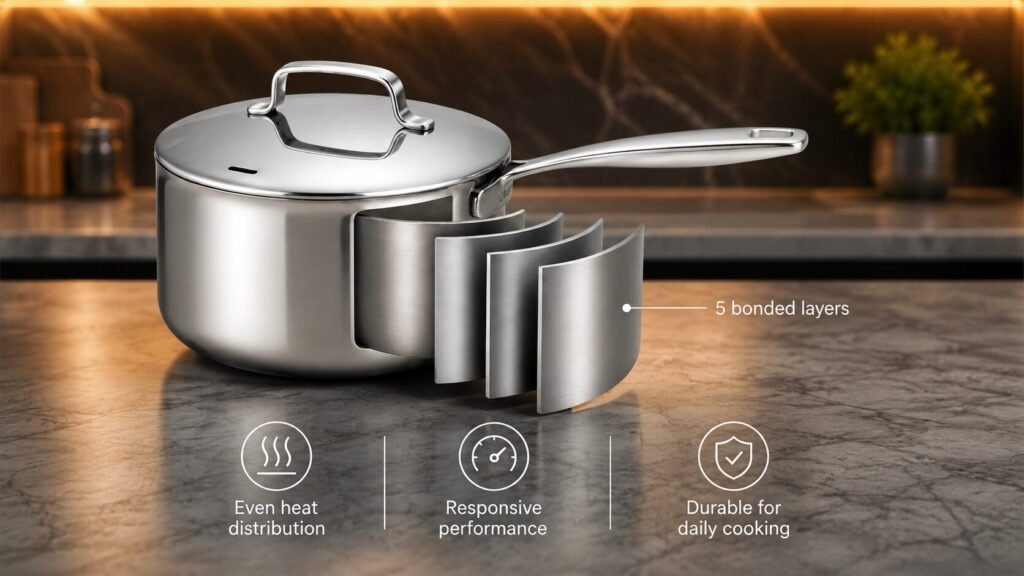
The Alva Maestro uses fully clad 5-ply construction from edge to edge. The walls of the pan consist of five layers of bonded metal: alternating sheets of heat-conductive aluminum inside a protective armor of 18/10 stainless steel. When your flame or induction loop hits the bottom, the heat wraps evenly all the way up the sides of the pan.
This professional architecture completely changes your kitchen workflow:
- Real Fond, Real Flavor: Because there is no synthetic chemical barrier between your food and the steel, sugars and proteins caramelize perfectly. This leaves behind a beautiful fond (the browned bits at the bottom of the pan), allowing you to deglaze with wine or broth for rich, restaurant-quality pan sauces.
- Zero Chemical Leaching: You can braise highly acidic tomato sauces or deglaze with sharp citrus juices without worrying about a metallic tang or eroding a delicate non-stick surface.
Pro Chef Tip: To achieve absolute precision when searing thick proteins in your Alva Maestro sauté pan, pairing your culinary technique with a high-end tool like theINKBIRD INT-12E-BW Wireless Meat Thermometerensures you never overcook the center while waiting for that perfect exterior crust.
Cultivating a High-Performance Home Ecosystem
Upgrading to lifetime-quality, toxin-free cookware is rarely an isolated decision—it is typically part of a broader shift toward a healthier, more intentional, and highly efficient household lifestyle.
If you are systematically eliminating toxins and optimization bottlenecks from your daily environment, your kitchen tools are just one piece of the puzzle. For instance, while you protect your food from chemical coatings, you can protect your respiratory wellness by tracking indoor environmental metrics with the Atmocube Smart Indoor Air Quality Monitor.
A truly high-performance home relies on smart infrastructure across every room:
- Daily Routine & Wellness: While waiting for your 9.5-inch frying pan to preheat, grinding fresh morning beans with an OutIn Fino Portable Electric Coffee Grinder or prepping a quick morning brew using premium Light Roast Coffee Pitcher Packs keeps your morning routine smooth. Maintain that same high standard of personal care through the day by switching to advanced dental tech like the Triple Bristle Duo Sonic Toothbrush.
- Productivity & Comfort: Investing in premium cookware that protects your physical stamina in the kitchen mirrors the way you support your spinal alignment during long office hours with a Sunaofe Boss Pro Ergonomic Standing Desk. To stay active between cooking sessions and desk work, adding a compact setup like the Toputure Walking Pad or Exercise Bike provides an effortless way to keep up your energy. After a long day of work and cooking, you can decompress with a book while leaning into the ergonomic support of the Best Reading Pillow for Couch lounging.
- Smart Domestic Operations: Streamlining your chores keeps your cooking space spotless. While you enjoy dinner, let a smart device like the Honiture T10 Robot Vacuum sweep up the kitchen crumbs. You can keep your appliances charged and cords organized at your workspace counter using the high-power AOHI The Future AI 280W Desktop Power Hub, and manage your family’s dynamic schedules or recipe meal plans smoothly on an Apolosign Digital Family Calendar.
- Climate & Power Resilience: True home optimization extends to climate control and emergency readiness. Managing your home’s thermal comfort can be done efficiently via the Cozeware 24K Mini Split Air Conditioner. For absolute peace of mind during severe weather blackouts, deploying an enterprise-grade emergency backup like the Allpowers 4000W Solar Generator ensures your lights, refrigeration, and electric induction cooktops keep running no matter what.
If you enjoy expanding your high-performance cooking setup outside of the indoor kitchen, you can read about specialized patio infrastructure in The Big Horn Outdoors Evolution 2026 Guide or check out our direct field tests in the Big Horn Aura Flex 2026 Review.
Head-to-Head Comparison: Alva vs. The Market
How does the Alva Maestro stack up against traditional department store brands and cheap non-stick options? Let’s look at the numbers.
| Feature Comparison | Alva Maestro 5-Ply Set | Legacy Premium Retail Brands | Mass-Market Non-Stick Sets |
| Material Layering | 5-Ply Fully Clad (Edge-to-edge) | 3-Ply or 5-Ply Clad | Single-layer aluminum or base disc |
| Pricing Model | Direct-to-Consumer (No retail markup) | High retail middleman markup | Low initial cost / high replacement rate |
| Average Retail Cost | $559 (On Sale) | $800 – $1,200+ | $150 – $300 |
| Chemical Safety | 100% Free of PFAS, PTFE, & PFOA | Varies (Some use chemical coatings) | Often contains PTFE / Forever Chemicals |
| Longevity Expectancy | Generational (Decades of use) | Generational | 1 – 3 Years maximum |
| Warranty Coverage | Performance-Backed Lifetime | Lifetime | 1 – 2 Years typical |
| Design Influence | Modern European (Sleek, cast handles) | Industrial / Traditional | Generic mass-produced |
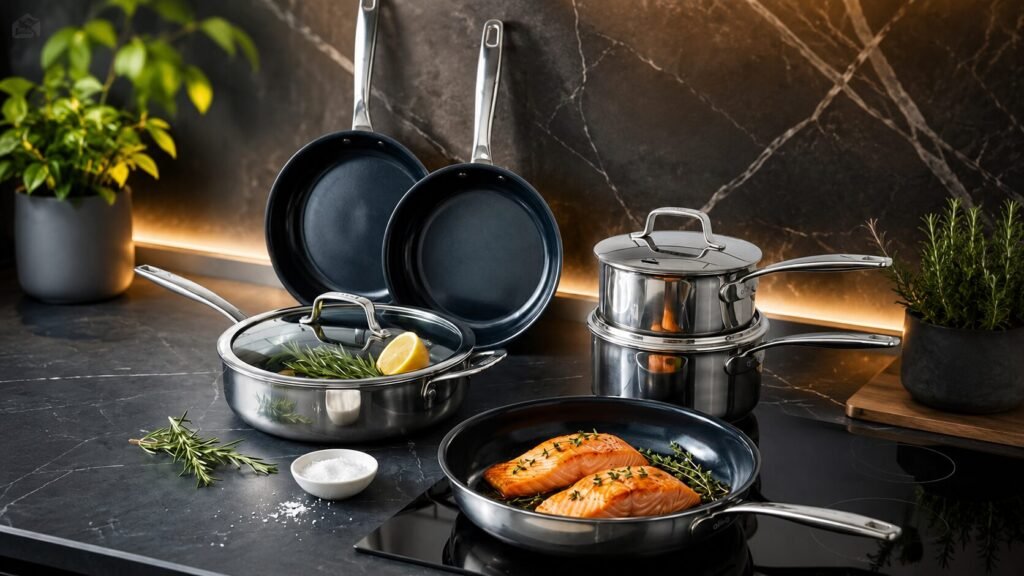
The Ultimate Kitchen Upgrade: Alva Maestro 7 Piece Nonstick Set!
Pros & Cons: An Honest Look at Alva Maestro
The Pros
- Thermal Control: Exceptionally fast heating response and superb thermal retention, making it incredible for searing steaks and simmering sauces evenly.
- Indestructible Build: You can safely use stainless steel tongs, metal whisks, or wooden spoons without worrying about scratching or flaking an artificial surface.
- True Direct-to-Consumer Value: By eliminating the retail middleman, Alva offers premium 5-ply composition at a price point where competitors usually only offer 3-ply sets.
- High Thermal Ceiling: Seamlessly shifts from high gas flames or intense induction loops into an oven or broiler setting up to 500°F.
- Vented Stainless Steel Lids: Keeps condensation under control while preventing messy boil-overs.
The Cons
- The Learning Curve: If you are used to tossing food into a cold pan with zero oil, you will experience sticking initially. Stainless steel requires proper temperature control.
- Cosmetic Upkeep: While technically dishwasher-safe, aggressive automated detergents can dull the brilliant mirror finish. Hand washing with a soft sponge is highly recommended to preserve long-term shine.
- Heavier Profile: Because of its thick 5-ply clad construction, these pans carry significant physical weight compared to flimsy aluminum alternatives.
Who Should Buy the Alva Maestro Set?
This set is an absolute match for you if:
- You want to eliminate “forever chemicals”: You prefer a pure, unadulterated 18/10 steel cooking surface that will never leach synthetics into your family’s food.
- You own an induction cooktop: The magnetic stainless steel exterior skin interacts beautifully with induction elements, delivering incredibly rapid boiling times.
- You view cookware as a long-term investment: You want to buy a single set of pots and pans backed by a lifetime warranty, ending the wasteful cycle of discarding degraded pans every few years.
This set might not be the right choice if:
- You demand zero-prep, oil-free cooking: If you want to fry eggs with absolutely zero butter or oil without preheating your pan, you may prefer keeping a dedicated ceramic non-stick pan on hand for delicate items.
- You struggle with heavy kitchenware: If you have wrist pain or prefer ultra-lightweight cookware, fully clad 5-ply steel may feel too substantial during daily tossing and pouring.
The Ultimate Cookware Deep-Dive: Community Questions & Expert Answers
When you are investing in a premium kitchen setup, a glossy product page isn’t enough. You want to know what happens when the pan hits the high heat of an induction cooktop, how it handles real-world abuse, and whether those non-toxic marketing claims actually hold water.
Below is an unvarnished, science-backed breakdown of the most common questions home cooks ask when auditing their cabinetry, compiled with real insights from professional kitchens and community testing.
Is stainless steel cookware truly non-toxic?
Yes. High-quality 18/10 stainless steel is a completely coating-free material. Because there are no synthetic chemical layers applied to the surface, it will not flake, degrade, or leach toxic compounds into your food over time, even under extreme heat.
What exactly does 5-ply stainless steel mean?
“5-ply” means the cookware is constructed by bonding five distinct layers of metal together from edge to edge. Alva uses alternating layers of stainless steel and aluminum. The aluminum cores provide rapid, ultra-responsive heat conduction, while the stainless steel outer skins provide durable protection and induction compatibility.
Will food stick to this stainless steel cookware set?
Food can stick if the pan is not preheated correctly or if you attempt to flip proteins too early. For an effortless release, remember the golden rule of stainless steel cooking: preheat your dry pan on medium heat, add your cooking oil, let the oil shimmer, and then add your food. Proteins will naturally release from the metal surface once a proper outer crust has formed.
Is stainless steel better than a standard non-stick coating?
It depends entirely on your cooking goals. Stainless steel is far superior for high-heat searing, deep browning, creating complex pan sauces, and lasting for decades. Non-stick coatings are convenient for delicate, low-temperature items like omelets but lack durability. For most serious home cooks, a clad stainless steel set serves as the indestructible foundation of the kitchen.
Is Alva good cookware, and where is it engineered?
Alva is an exceptionally reputable European brand with a deep culinary lineage. It was established in 1949 in Oostrozebeke, Belgium, and has been run by three generations of the same family.
While legacy premium brands traditionally lock their products behind steep retail markups in high-end department stores, Alva utilizes a direct-to-consumer model. This allows them to offer heavyweight, professional-grade 5-ply cladding at a price point where most brands only offer basic 3-ply construction.
💡 Pro Tip: Don’t confuse Alva Cookware with regional shipping or logistics entities like “Shopee Express.” Alva is strictly a premium, independent kitchenware manufacturer engineered to strict European manufacturing standards.
What is the absolute best stainless steel construction—clad edge-to-edge or a disc bottom?
If you want professional performance, fully clad edge-to-edge construction is vastly superior to a disc-bottom pan. * Disc-Bottom (Impact-Bonded): These pans feature a thin shell of stainless steel with a heavy metal slug slapped onto the very bottom. While cheap to produce, heat only travels across the base. The moment the heat hits the sharp corner turn up the sidewall, it stops dead. This creates severe ring-shaped hot spots where sauces curdle and proteins scorch.
- Fully Clad (Like Alva Maestro): The conductive core (in this case, multi-layered aluminum) is sandwiched between sheets of stainless steel and rolled continuously all the way from the base right up to the pouring rim. The entire body of the pan becomes a uniform radiant heating element.
💡 Pro Tip: For heavy-duty cooking on modern glass-top or induction stoves, edge-to-edge cladding ensures the pan expands and contracts uniformly. This eliminates structural weak points and offers the precise heat control demanded by high-end induction setups.
What pans should I absolutely stay away from?
When auditing your kitchen, you should systematically weed out and stay away from three specific categories:
- Cheap, Stamped Aluminum with Traditional PTFE (Teflon): If a pan feels feather-light and costs less than a fast-food meal, it is likely stamped aluminum. These pans warp instantly under moderate heat, and their soft chemical coatings easily scratch off into your food.
- Pans with Flaking or Scratched Coatings: The moment any non-stick surface shows deep scratches, scoring, or visible flaking, its structural integrity is compromised. Throw it out immediately.
- Gimmicky “Stone” or “Diamond” Coated Pans: These are almost always standard, low-grade non-stick pans wrapped in clever marketing prose. The “diamond dust” or “granite texture” does not extend the lifespan of a fragile synthetic chemical bond.
Are non-stick pans basically all bad for you? What is the safest, most “non-toxic” option?
Let’s look at the material science candidly, without the marketing panic:
Traditional non-stick coatings are made from PTFE (Polytetrafluoroethylene). From a strict medical standpoint, solid PTFE is highly stable and chemically inert at standard temperatures—so much so that it is used in medical implants.
The real hazard comes from overheating. The moment a PTFE pan crosses 500°F (which can happen in just a couple of minutes on a high gas flame or empty induction burner), the synthetic coating begins to break down and off-gas. These microscopic fumes are highly toxic to pet birds and can cause temporary flu-like symptoms in humans. Furthermore, older non-stick pans manufactured before environmental regulations often contained PFOA, a persistent environmental pollutant.
The Hierarchy of Cookware Safety:
- The Ultimate Safe Option (Bare Metals): High-grade 18/10 Stainless Steel (like the Alva Maestro set), cast iron, and bare carbon steel contain absolutely zero synthetic chemical coatings. There is nothing to degrade, nothing to wear off, and nothing to off-gas, no matter how high you crank the heat.
- The Safe Convenience Option (Ceramic Non-Stick): Modern ceramic coatings use a silica-based, sand-derived gel. They are completely free of PFAS, PTFE, and PFOA, giving you total peace of mind even if the pan accidentally overheats.
💡 Pro Tip: Many experienced home chefs choose a hybrid approach. They use an indestructible, fully clad stainless steel set for 90% of their daily searing, boiling, and sauce-making, while keeping a single, dedicated non-toxic ceramic frying pan in the cupboard exclusively for delicate, low-temperature items like eggs or crepes.
Is it normal for stainless steel pans to warp a little on the bottom after the first use?
No, premium cookware should not warp after standard use. If a pan warps or develops a wobble on a flat glass cooktop, it is almost always caused by thermal shock or utilizing ultra-thin, single-ply metals.
Thermal shock occurs when a blazing hot pan is taken directly off the stove and dropped into a sink full of cold water. The sudden, violent plunge in temperature causes different sections of the metal to contract at vastly unequal speeds, warping the base.
Because the Alva Maestro features a heavy-duty, multi-layered 5-ply clad architecture, it possesses immensely higher structural rigidity against thermal stress than cheap, thin cookware.
💡 Pro Tip: Always let your premium cookware cool down naturally on the stovetop or a heat-safe trivet for a few minutes before exposing it to soap and water.
How does the maintenance of Alva’s stainless steel compare to a carbon steel pan?
Choosing between these materials comes down to a direct tradeoff between convenience and cooking style:
Cookware Maintenance Comparison
| Maintenance Factor | Bare Carbon Steel | 18/10 Stainless Steel |
| Daily Upkeep | High Maintenance | Low Maintenance |
| Preparation | Requires Manual Seasoning | No Seasoning Required |
| Moisture Safety | Must Be Kept 100% Dry | Can Soak in Water |
| Rust Vulnerability | Prone to Rusting | Completely Rust-Proof |
| Cleanup Routine | Hand-Wash Only | Dishwasher Safe / Compatible |
- Carbon Steel: Operates like a hybrid between cast iron and a stainless skillet. It arrives as bare, vulnerable metal that will rust almost instantly if left damp. It requires a manual “seasoning” process (baking thin layers of oil onto the metal to build a dark, natural patina) and must be meticulously hand-washed, dried completely, and oiled after every single use.
- Clad Stainless Steel: The ultimate low-maintenance workhorse. It features an integrated layer of chromium that shields the metal from environmental damage. It never requires seasoning, will never rust if left to soak in the sink overnight, handles acidic ingredients smoothly, and can be easily restored to a brilliant shine with a soft sponge and a standard polishing powder like Bar Keepers Friend.
Connecting the Pieces: Building a Clean Home Environment
Upgrading your kitchen infrastructure to a lifetime, toxin-free standard is a phenomenal foundation, but it is often just one element of optimizing your home environment.
If you are committed to keeping your family’s food clean by choosing premium 18/10 stainless steel, consider maintaining that same high standard of air purity throughout your living spaces. Tracking your home’s air metrics with an advanced device like the Atmocube Smart Indoor Air Quality Monitor ensures your living environment is just as pure as your ingredients.
By systematically swapping out disposable, chemical-laden consumer goods for durable, professional-tier alternatives, you eliminate unnecessary household waste and create an efficient, high-performance home ecosystem built to last for generations.
You bought a beautiful, glass-smooth ceramic non-stick pan. For the first few weeks, it felt like magic—eggs slid around like hockey pucks on ice, and cleanup required nothing more than a quick rinse.
Then, slowly, the magic faded. A stubborn brown stain appeared in the center, food started clinging to the surface, and you found yourself scrubbing harder just to get it clean.
What went wrong? Unlike traditional plastic-based non-stick coatings, ceramic cookware utilizes a silica-based, sand-derived gel layer. It is inherently non-toxic, eco-friendly, and completely free of PFAS, PTFE, and PFOA. However, it is also highly sensitive to thermal stress, microscopic surface degradation, and carbonized oil buildup.
If your premium ceramic pans are starting to lose their slipperiness, you don’t need to throw them away. By understanding the science of ceramic care, you can restore their performance and extend their lifespan for years. This comprehensive guide details how to cook with, clean, and completely restore your ceramic non-stick cookware.
Ceramic Cookware: Performance Parameters
| Operating Variable | Safe Threshold & Best Practice |
| Stovetop Compatibility | Agnostic (Gas, Electric, Ceramic, and Induction Safe) |
| Maximum Heat Level | Low to Medium Heat Only (Never use high heat settings) |
| Oven Thermal Limits | Max safe temperature up to 400°F |
| Recommended Wash Method | Handwash Only (Avoid automated dishwashers) |
| Utensil Compatibility | Silicone, wood, nylon, or plastic tools only |
The Golden Rules of Ceramic Non-Stick Cooking
To keep your ceramic coating pristine, your daily cooking workflow requires a few minor adjustments.
1. Master the Low-to-Medium Heat Rule
Ceramic pans conduct heat exceptionally fast and evenly. Because they retain thermal energy efficiently, cranking your stovetop to high heat is entirely unnecessary. High heat will rapidly degrade and break down the delicate microscopic structure of the ceramic gel layer, causing permanent loss of its non-stick properties.
💡 Pro-Tip: Always match your pan’s thermal profile with the ingredients you cook. To ensure you never overcook proteins while maintaining safe low-to-medium heat on your ceramic skillet, monitor your dishes with a precise tool like theINKBIRD INT-12E-BW Wireless Meat Thermometer.
2. Ditch the Aerosol Cooking Sprays
Never use commercial aerosol cooking sprays (like Pam or generic oil misters). These aerosol cans contain chemical propellants and emulsifiers (such as lecithin) that cook onto the pan at relatively low temperatures. This leaves behind a sticky, microscopic plastic-like residue that bonds permanently to the ceramic surface, creating a barrier that causes food to stick.
3. Choose the Right Tools
Keep metal forks, metal tongs, and stainless steel spoons completely away from your pan. A single microscopic scratch through the ceramic coating exposes the underlying metal structure, allowing food to take hold and peel the surrounding glaze. Stick strictly to soft silicone, wooden, or high-temp plastic utensils.
The Master Checklist: Do’s and Don’ts
Do:
- Do let your pan cool down completely to room temperature before exposing it to water.
- Do use a tiny drop of high-smoke-point butter or oil (like avocado or coconut oil) to coat the surface before turning on the heat.
- Do store your pans using protective felt liners or soft towels if you stack them inside your cabinets.
Don’t:
- Don’t plunge a blazing hot pan into a sink full of cool water, as thermal shock will instantly warp the base metal and craze the ceramic glaze.
- Don’t use abrasive green heavy-duty scrubbing pads, steel wool, or harsh powder cleansers.
- Don’t run your ceramic cookware through an automated dishwasher, as aggressive detergents and high heat will dull and prematurely erode the coating.
Step-by-Step: Daily Cleaning Protocol
For standard daily cleaning, follow this straightforward three-step process to keep your pans in top-tier shape:
- Step 1: The Natural Cool Down: Remove the pan from your stovetop and set it on a heat-safe trivet. Allow it to cool down to room temperature naturally.
- Step 2: Gentle Hand Wash: Submerge the cooled pan in warm, soapy water. Use a few drops of mild dish soap and a soft kitchen sponge or microfiber cloth. Gently wipe away any oil or food residue.
- Step 3: Thorough Drying: Use a soft cotton dish towel to dry the cookware completely before storing it. This simple habit prevents mineral-rich water spots from dulling the surface and keeps exposed structural rims completely free of rust.
Advanced Deep-Cleaning: How to Restore a Burnt Pan
If food has carbonized onto your cookware or an accidental oversight has left a dark, burnt stain on the cooking surface, do not panic. Try one of these two proven restoration methods to rescue your pan.
Method One: The Hot Water & Dish Soap Soak
This method works best for lifting dried-on food particles and standard grease build-up without stressing the ceramic layer.
- Let the Pan Cool: Never attempt to clean a hot pan. Bring it down to room temperature first.
- The Hot Water Basin: If food has hardened onto the glaze, fill the pan with hot water and a generous squirt of degreasing dish soap. Let it sit undisturbed on your counter for 15 to 20 minutes to naturally soften the debris.
- The Soft Scrub: Pour out the water. Apply fresh dish soap directly to the soft side of a non-scratch kitchen sponge. Gently work the sponge in circular motions over the stained areas until the softened grime lifts away.
Method Two: The Baking Soda & White Vinegar Simmer
For stubborn, brown, caramelized oil stains that standard dish soap cannot budge, a gentle, chemically reactive cleaning slurry will break the molecular bonds of the residue.
Baking Soda & Vinegar Restoration Pattern
| Restoration Step | Phase Name | Action Items |
| Step 1 | Liquid Base | Fill the bottom of the pan with a thin layer of water. |
| Step 2 | Activate | Add 2 tbsp of white vinegar and 2 tbsp of baking soda. |
| Step 3 | Low Simmer | Warm on the stove for 5 minutes to loosen the carbonized residue. |
| Step 4 | Cool & Wipe | Let the pan cool completely, then wipe clean with a soft sponge. |
- Create the Mixture: Pour a thin layer of water into the bottom of the pan to cover the stain, then add 2 tablespoons of distilled white vinegar and 2 tablespoons of baking soda. The mixture will fizz safely.
- The Low Simmer: Place the pan on your stove over low heat. Bring the mixture to a very gentle simmer for 3 to 5 minutes. The combination of mild acidity and natural effervescence works to lift cooked-on oils from the slick surface.
- Sponge and Rinse: Remove the pan from the heat, allow it to cool down completely, and pour out the liquid. Take a damp, soft sponge, sprinkle a tiny pinch of dry baking soda directly onto the sponge for ultra-mild, non-scratch leverage, and gently wipe away the remaining discoloration. Rinse thoroughly with clean water and dry completely.
Can I put my ceramic non-stick pan in the dishwasher?
No. Even if a specific manufacturer label states a piece is technically “dishwasher-safe,” you should always hand wash ceramic cookware. The aggressive chemicals found in dishwasher tablets, combined with high-pressure water jets and intense drying cycles, will steadily strip away the microscopic slickness of the ceramic gel, causing it to fail long before its time.
Why does food start sticking to my ceramic non-stick pan?
Food typically begins sticking due to microscopic oil buildup or surface degradation. If you cook with high heat or use aerosol sprays, a thin, invisible layer of carbonized fat or chemical propellant cooks directly onto the pan, masking the slick ceramic layer. A thorough deep-cleaning with a baking soda paste can often strip away this residue and restore performance. However, if the surface is deeply scratched or visibly worn down to the base metal, the coating has reached the end of its lifespan and the pan needs to be replaced.
Are ceramic pans safe for high-heat cooking?
No. Ceramic coatings perform best on low to medium heat settings. Exposing a ceramic pan to intense high heat can degrade its molecular bond, leading to permanent sticking issues. If your cooking technique requires intense searing, stir-frying, or high-temperature roasting, swap out your ceramic piece for a heavy-duty fully clad stainless steel pan or a seasoned bare carbon steel skillet.
How do I safely remove stubborn discoloration or stains?
First, soak your cool pan in warm, soapy water for 20 minutes. If the discoloration remains, mix baking soda with a few drops of water to create a smooth, toothpaste-like paste. Apply this paste directly to the stained area and work it gently with a soft microfiber cloth or non-abrasive sponge. For deeply set stains, use the white vinegar and water simmer technique detailed above. Always avoid steel wool and harsh chemicals, which can permanently score the finish.
Can I use metal utensils on my ceramic non-stick pan?
Absolutely not. Metal utensils will scratch, pit, and chip the delicate ceramic surface. These small nicks ruin the integrity of the non-stick field and can cause the coating to peel away. Stick exclusively to heat-safe silicone, wooden, or soft plastic kitchen utensils to keep your cooking surface completely smooth.
When you are investing hundreds of dollars into premium cookware, the product specifications are only half the story. The real test of a brand’s integrity lies in the fine print: How fast will it ship? What happens if a carrier drops it? And does that “Lifetime Warranty” actually mean something, or is it buried under a mountain of loopholes?
If you are eyeing Alva Cookware, you can skip the dense legal pages. Here is the completely unvarnished, human-to-human breakdown of Alva’s shipping protections, return logistics, and warranty matrices so you know exactly what to expect before checking out.
1. Shipping Timelines & Tracking Logistics
Alva operates out of a centralized fulfillment network designed to minimize delivery windows. Here is how the processing timeline breaks down:
- The 1:00 PM Cutoff: If you place your order before 1:00 PM Eastern Time (Mon–Fri), your cookware leaves the warehouse the exact same business day. Orders placed after 1:00 PM ET, or over the weekend, drop into the queue for dispatch on the following business day.
- U.S. Domestic Shipping: Standard shipping is completely free on all U.S. orders over $150. For smaller accessory orders under $150, a clear flat-rate fee is applied at checkout. Most domestic shipments land on your doorstep within 2 to 5 business days, though deliveries to Alaska, Hawaii, and off-shore U.S. territories naturally take a bit longer.
- International Orders: Alva partners with DHL eCommerce Parcel Direct for international transit. Delivery usually averages 7 to 11 business days. Duties and taxes are dynamically calculated at checkout, giving you the choice between DDP (Delivery Duty Paid—no surprise fees at your door) or DDU (Delivery Duty Unpaid—where you pay the carrier directly before they release the package).
Crucial: Understanding Your Optional Shipping Protection
Alva offers an add-on Shipping Protection service at checkout. If you buy it, it is non-refundable, but it establishes strict, legally binding timelines for replacement claims if your carrier mismanages the delivery:
- Lost / Stuck in Transit: If your tracking link stalls out and stops updating, you must file your claim between 7 and 30 days from the date of the last shipping scan.
- Stolen / Missing Packages: If the carrier marks your box as “Delivered” but it is nowhere to be found, you have a firm window between 5 and 30 days from the timestamp of delivery to lodge a claim.
- Damaged Goods: If the box arrives crushed or torn open, you have up to 30 days from delivery to file a claim. You must take clear photos of both the damaged packaging and the internal cookware items to get an automatic replacement.
2. The 45-Day Trial & Return Policy
Alva offers a 45-day kitchen trial window from the date of delivery. However, there is a distinct structural catch you need to note to avoid getting your return rejected at the warehouse:
⚠️ The Condition Threshold: While the trial allows you to verify the weight, balance, and aesthetics of the cookware in your home, items sent back for a full refund must be unused and returned in their original packaging. If you realize the set isn’t a perfect fit for your kitchen design, or if you want to swap pieces via their free exchange and store credit program, the process is streamlined. Once your return is received and inspected at their warehouse facility, expect a processing window of 5 to 10 business days for the funds to clear back onto your original payment method.
3. The Alva Warranty Matrix: What’s Covered?
Alva has been manufacturing cookware in Belgium since 1949, and they back their build quality with tiered warranties. However, a common misconception among home cooks is that all cookware lines carry a lifetime guarantee.
As a rule of thumb, core metals carry a lifetime warranty, while exterior coatings and lightweight collections carry a 10-year structural cap.
Responsive Warranty Breakdown By Collection
| Cookware Material Line | Warranty Duration | Primary Coverage Definition |
| Stainless Steel Collections | Limited Lifetime | Manufacturing defects in materials & workmanship |
| Artist Collection / Black Angus Carbon Steel | Limited Lifetime | Manufacturing defects in materials & workmanship |
| Enameled Cast Iron Lines | Limited Lifetime | Manufacturing defects in materials & workmanship |
| Ceramic Non-Stick Collections | Limited 10-Year | Manufacturing defects in materials & workmanship |
| Forest Collection Carbon Steel | Limited 10-Year | Manufacturing defects in materials & workmanship |
Defect Coverage vs. Everyday Wear
To keep your expectations grounded, it helps to understand what Alva classifies as a true warrantable defect versus standard cosmetic aging.
- What Is Covered: Structural failures that manifest under normal household cooking conditions. This includes handles loosening due to compromised rivets, base metals separating or warping under standard heat loads, or metallurgical flaws present straight out of the factory box.
- What Is Disqualified: The warranty is strictly an anti-defect policy, not an accidental damage protection plan. It will not cover cosmetic discoloration, external scratches, or surface stains from burnt cooking oils. It also explicitly excludes damage caused by thermal shock (such as putting a hot pan directly into cold water) or scoring marks left behind by metal utensils on ceramic non-stick lines.
4. Where You Buy Matters: The Authorized Retailer Safeguard
To protect against counterfeit goods and unauthorized secondary market manipulation, Alva limits its warranty coverage strictly to the original purchaser who can provide a verified proof of purchase.
If you buy your cookware from an unverified third-party reseller, liquidation outlet, or random online marketplace store, your warranty is instantly void. To guarantee your lifetime or 10-year coverage remains fully intact, purchase exclusively from these recognized platforms:
- Direct: The official Alva storefront (
alva-cookware.us). - Authorized Retail Partners: Official purchases made through Amazon (specifically through the verified Alva and Allinox USA storefronts), Wayfair, and Macy’s.
5. How to File an Instant Warranty Claim
If a component fails or you spot a structural flaw down the line, Alva pays for the return shipping on all approved claims and will repair or replace the piece entirely free of charge. You do not need to fill out complex online portals—simply handle it via email:
- Draft an Email: Send it to
care@alvacookware.comwith the exact subject line: “Warranty Claim”. - Attach Proof: Include your original web order number or a digital copy of your retail receipt.
- Provide Visuals: Take clear, well-lit digital photos of the overall pan and a close-up of the specific area of failure.
- Describe the Issue: Write a short, straightforward description of how the issue developed during everyday cooking.
The Alva review team typically processes submissions and provides confirmation or next-steps instructions within 2 to 3 business days.
💡 Immediate Out-of-Box Defect Pro-Tip: If your package lands on your doorstep and you notice structural damage or a clear manufacturing defect immediately upon unboxing, do not go through the formal warranty claim process. Instead, notify the care team within 30 days at
care@alvacookware.com. Send a quick photo of the shipping damage so they can handle it with the carrier, and they will immediately arrange a hassle-free replacement or store credit.
The Final Verdict: Is It Worth It?
If you are ready to upgrade your kitchen infrastructure, the Alva Maestro 5-Ply Stainless Steel 7-Piece Cookware Set represents an exceptional balance of heritage engineering and direct-to-consumer value. For $559, you are securing a professional-tier, fully clad system that matches the performance metrics of legacy culinary brands charging nearly double the price.
Backed by an accommodating 45-day kitchen trial and a lifetime replacement guarantee, this set takes the risk out of moving away from disposable non-stick pans. If you want to cook with higher heat, develop richer flavors, and invest in tools that will outlast your kitchen, the Alva Maestro is a stellar choice for your home.