If you have ever looked at a turbofan engine model online and wondered, “Is this just a fancy desk display, or does it actually do something?”, you are not alone. That is the exact question most buyers ask before spending serious money on a jet engine model kit.
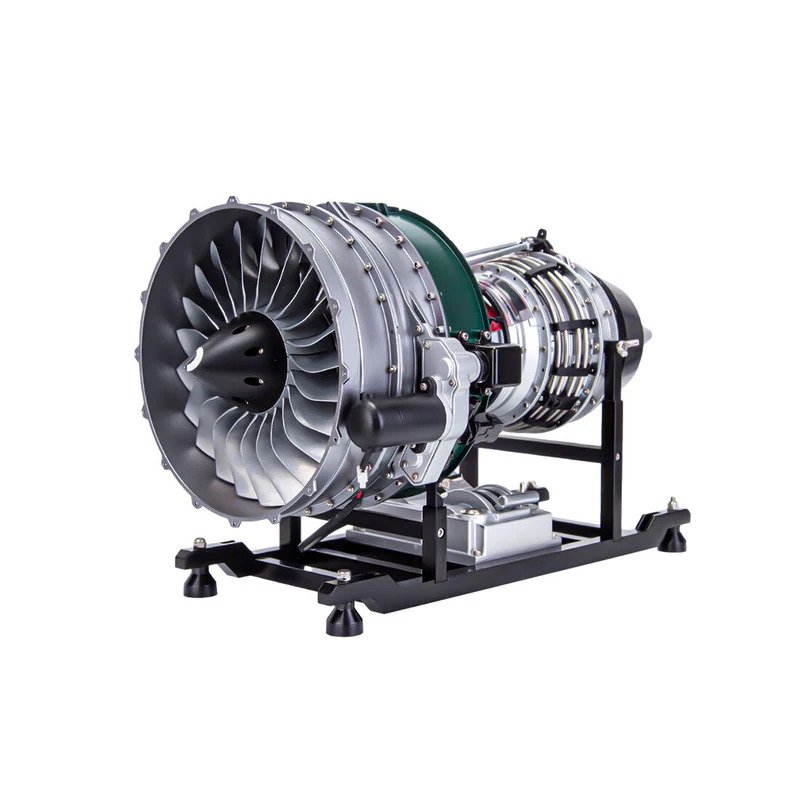
The TECHING Mechanical Dual-Spool Turbofan Engine Model Kit is not a cheap toy, and it does not pretend to be. It is a large, metal, highly detailed build made for people who want something closer to an engineering showcase than a casual hobby item. At first glance, it looks like the kind of model you buy because you love aviation. After digging into the details, it becomes clear that this kit is built for a very specific kind of buyer: someone who wants realism, movement, mechanical detail, and a project that feels substantial from start to finish.
This review breaks down what the kit is, how it works, what makes it different, how it compares with other turbofan engine model kits, and whether the price makes sense for the right buyer.
Quick Summary
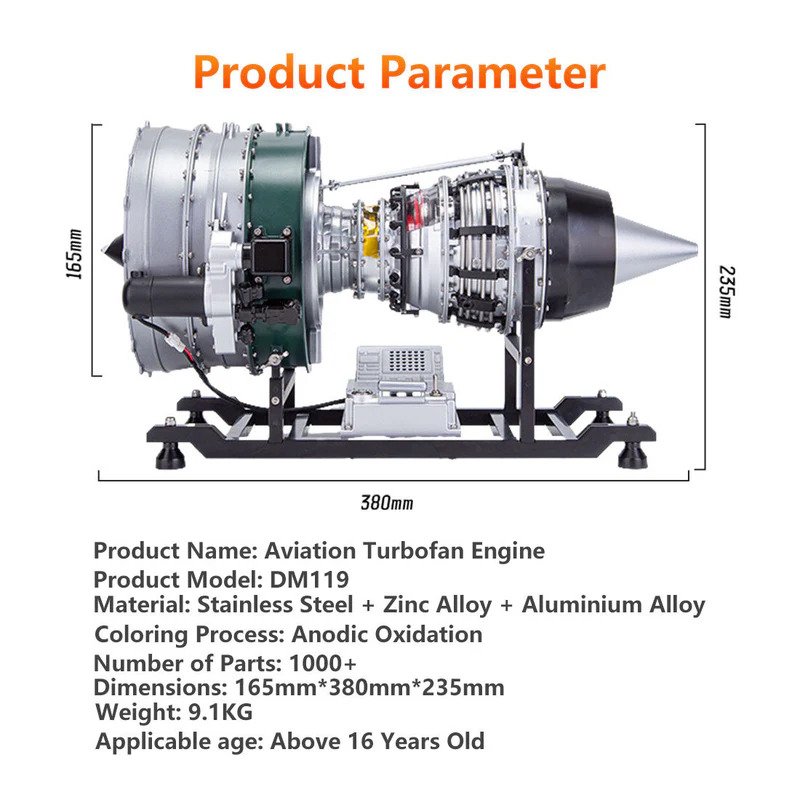
The TECHING Mechanical Dual-Spool Turbofan Engine Model Kit is a 1/10 scale, 1000+ piece, motor-driven, metal construction turbofan engine model designed for display, education, and advanced building. It uses aluminum alloy and stainless steel, includes a 3.7V 800mAh lithium battery, charges by USB, and can take up to 10 hours to assemble. It is aimed at ages 14+ and at people who want a realistic mechanical engine model rather than a basic toy.
This is a premium build, and the $999.99 price puts it in the serious hobbyist category. For aviation fans, model builders, and STEM collectors, it offers strong visual impact and mechanical appeal. For beginners or casual buyers, it is probably too expensive and too involved.
What This Turbofan Engine Model Kit Actually Is
The TECHING Mechanical Dual-Spool Turbofan Engine Model Kit is a detailed mechanical replica of a turbofan engine, built on a 1/10 scale. It is designed to show the internal structure and working movement of a turbofan-style engine in a physical model form.

This is important to understand right away: this is not a real aircraft engine and it is not meant to power anything. It is an educational and display-focused model with moving parts, visible internals, and a realistic metal build. The goal is to give the user a hands-on look at how a turbofan engine is put together and how the major components move.
That is exactly why this type of product has such strong search interest. People searching for a turbofan engine model kit, a jet engine model kit, or a turbofan engine toy are usually trying to figure out three things: does it work, how realistic is it, and is it worth the money?
Why Turbofan Engine Models Get So Much Search Interest
Search interest around turbofan engine models is stronger than many people realize. Some buyers are aviation enthusiasts. Some are mechanical hobbyists. Some are parents or gift buyers looking for something educational. Others just want a model that looks impressive on a desk or shelf.
The phrase “turbofan engine model kit that works” matters because many people do not want a static plastic shell. They want movement. They want visible fans, rotating parts, and something that feels alive. That is where this type of model becomes much more appealing than a simple display replica.
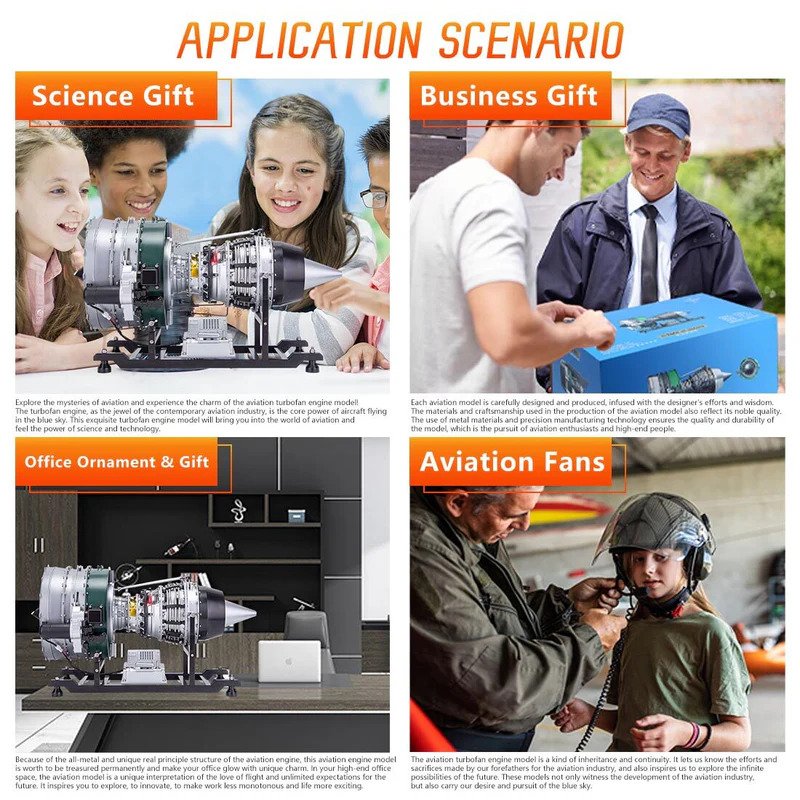
There is also a learning side to it. A turbofan engine is one of the most important engine types in aviation, and people often compare it with a turboprop engine model kit because both are turbine-based but work differently. A turbofan uses a large front fan and a core to produce thrust, while a turboprop uses a turbine core to drive a propeller. That makes these models useful not just for display, but also for learning.
For buyers who search terms like “small bypass turbofan engine model kit” or “1/20 turbofan engine model kit,” the bigger picture is usually the same: they want an engine model that feels educational, mechanical, and visually impressive.
How a Turbofan Works in Simple English
A turbofan engine has a front fan that pulls air in. Some of that air goes through the engine core, and some goes around it. That outside flow is called bypass air. In many turbofans, the fan and the core are arranged in a way that helps the engine run efficiently and produce thrust from both the fan and the hot core exhaust.
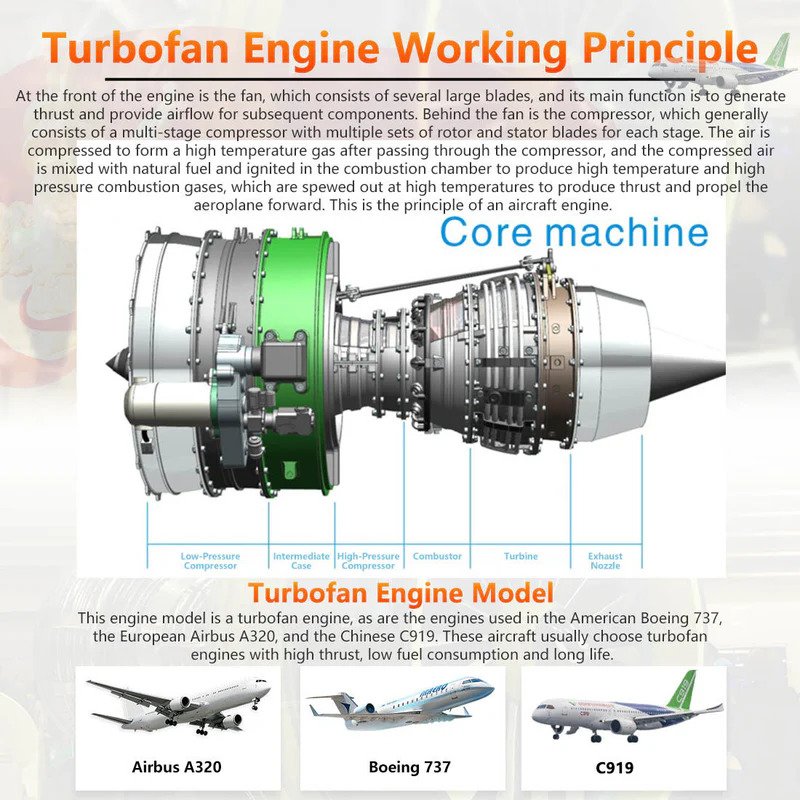
That is why turbofan engines are so important in commercial aviation. They are efficient, powerful, and practical. The two-spool design used in many turbofan engines is part of what makes the TECHING Dual-Spool model interesting. It is trying to recreate that layered engineering feel in a display model, not just the outer shape.
A turboprop works differently. Instead of using a big fan to move air around the core, it uses the engine’s power to spin a propeller. That is why turboprops are often used where lower speed efficiency matters more than jet-like performance. In a model review like this, the turbofan-vs-turboprop comparison helps readers understand why the turbofan model has such a distinctive structure.
The Build Experience: 1,000 Pieces of “Engineering Zen”
I’m going to be real with you: this build is an emotional journey.
The Unboxing
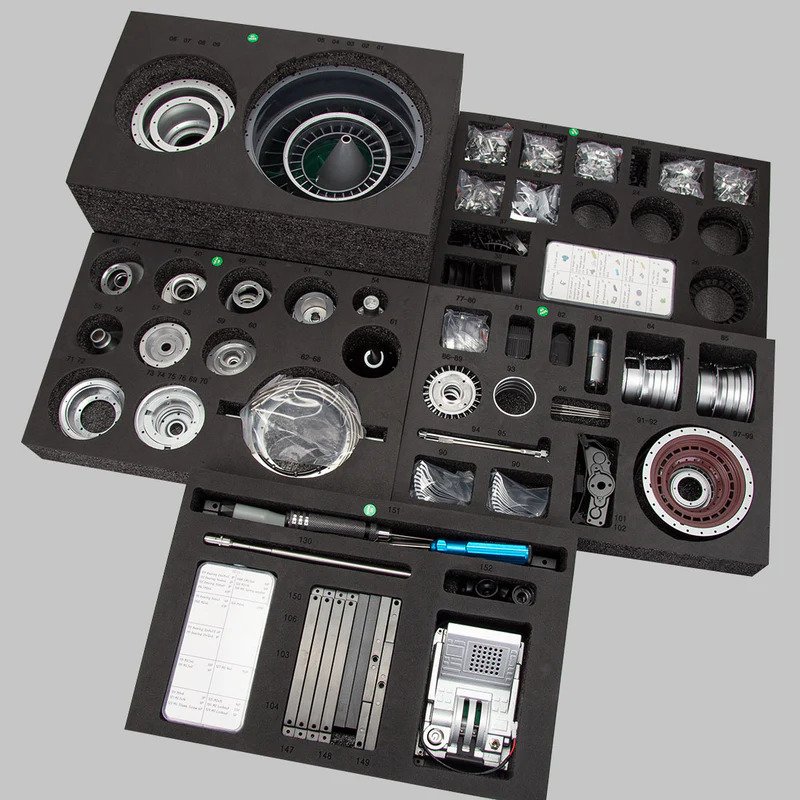
The box arrives, and it’s heavy. When you open it, you aren’t greeted by plastic parts attached to frames (sprues). You see rows of precision-machined metal parts nestled in high-density foam. It feels like you’ve just been handed a crate of spare parts for a private jet.
The First 5 Hours: The Core
The assembly starts from the inside out. You begin with the high-pressure compressor stages. This is where the 1/10 scale really hits home. You’re handling tiny stainless steel bolts that require a steady hand. If you’re a hobbyist who loves the precision of the Anycubic Kobra S1 Combo Review – High-Performance Multi-Color CoreXY 3D Printing Guide, you will find the assembly logic very satisfying.
The Middle Marathon
By hour six or seven, your fingers might be a little sore, but the “engine” is starting to look like an engine. Aligning the concentric shafts—the “dual spools”—is the hardest part. One tiny misalignment, and the motor will struggle later.
Pro Tip: Keep your workspace spotless. If a single tiny washer rolls off your desk, it’s going to be a long night. If you happen to drop some metal shavings or dust during the build, let yourHoniture T10 Robot Vacuum Review 2026: Is This Budget Smart Vacuum Really Worth It?handle the floor while you stay focused on the table.
Key Features at a Glance
The TECHING Mechanical Dual-Spool Turbofan Engine Model Kit comes with a strong feature list:
- 1/10 scale
- 1000+ pieces
- Aluminum alloy and stainless steel construction
- Motor-driven operation
- 3.7V 800mAh lithium battery
- USB charging
- Up to 10 hours assembly time
- 14+ age rating
- Sound module
- Hollowed-out design for realistic viewing
That combination tells you a lot about the product. This is not built to be quick, cheap, or simple. It is built to feel detailed, heavy-duty, and mechanical.
Build Quality and Materials
The first thing that stands out about a kit like this is the material choice. Aluminum alloy and stainless steel immediately move the product into a more premium category than plastic model kits.
That matters for two reasons.
First, the model looks and feels more serious. Metal parts give the kit a sense of weight and durability. When you handle a metal model, it feels closer to a miniature machine than a toy.
Second, the material choice helps the model match the audience. A person buying a turbofan engine model kit for sale at this price is usually not looking for a lightweight plastic display. They want something that looks like it belongs in an engineering office, aviation classroom, or high-end collector display.
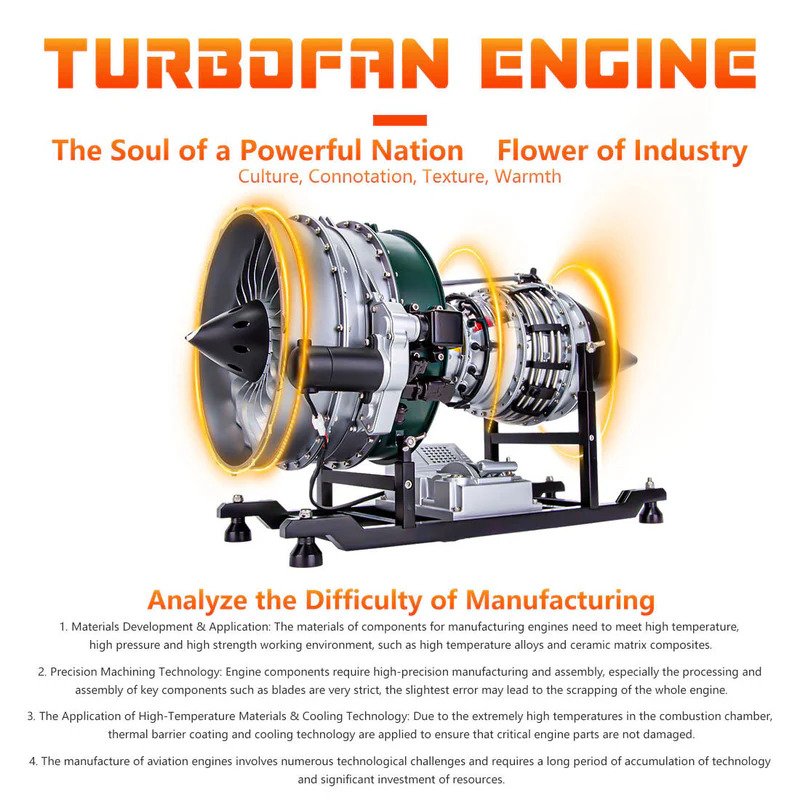
The hollowed-out design also adds value. Instead of hiding the internal structure, the kit exposes it. That gives the model a more educational feel and makes the moving parts more visually interesting.
Filming and Showing Off Your Creation
Once the 1,000+ pieces are together, you are left with a masterpiece of industrial design. If you’re a content creator, this model is pure “b-roll” gold. The way the light catches the spinning fan blades is hypnotic.
To get those professional-grade cinematic shots for your YouTube channel or Instagram, you’ll want a gimbal that can handle macro-movements. The Feiyu SCORP Mini 3 Pro Review 2026: The Best AI-Powered Hybrid Gimbal for Solo Creators is perfect for this. Its AI-tracking and smooth panning allow you to orbit the engine as it spools up, capturing every mechanical detail without a hint of camera shake.
Assembly Experience
Assembly is one of the biggest selling points and one of the biggest filters for the right buyer.
With more than 1000 pieces and an estimated build time of up to 10 hours, this is clearly not an afternoon project for a beginner. It is the kind of build that asks for patience, focus, and a willingness to follow instructions carefully.
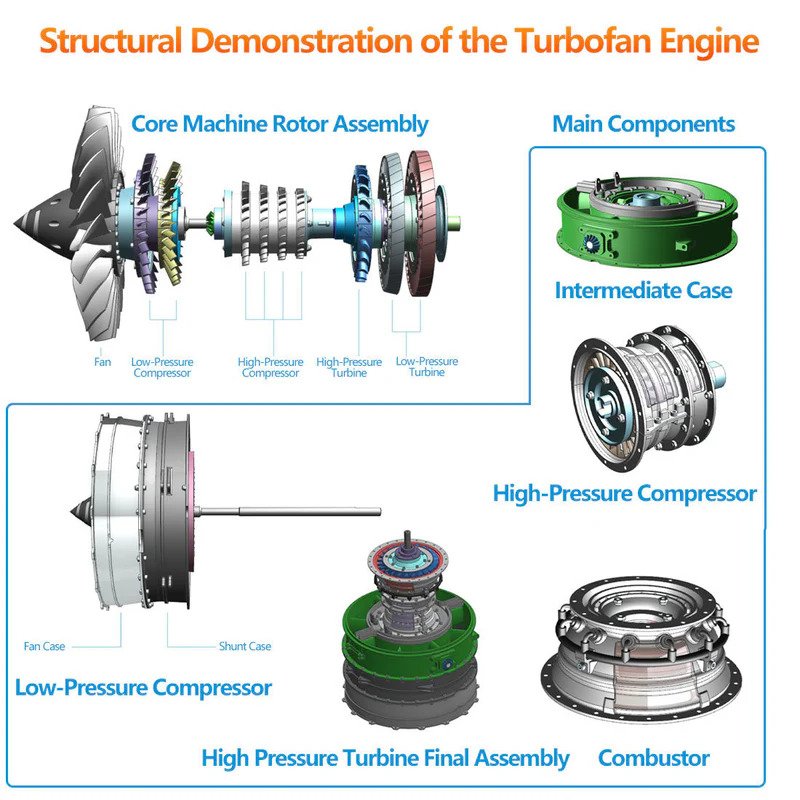
For experienced model builders, that is part of the fun. The process is not just about finishing the model. It is about understanding how the pieces fit together, how the movement is transferred, and how the engine structure is formed from the inside out.
For beginners, the same thing can feel overwhelming. A large parts count is exciting when you know what you are doing, but it can also slow you down if you are not used to mechanical models. That is why this kit fits the advanced hobby category better than the casual hobby category.
The best way to think about it is this: the build itself is part of the product. You are not only buying the finished model. You are buying the experience of assembling a complex mechanical system.
Does It Actually Work?
Yes, in the sense that this is a working mechanical display model.
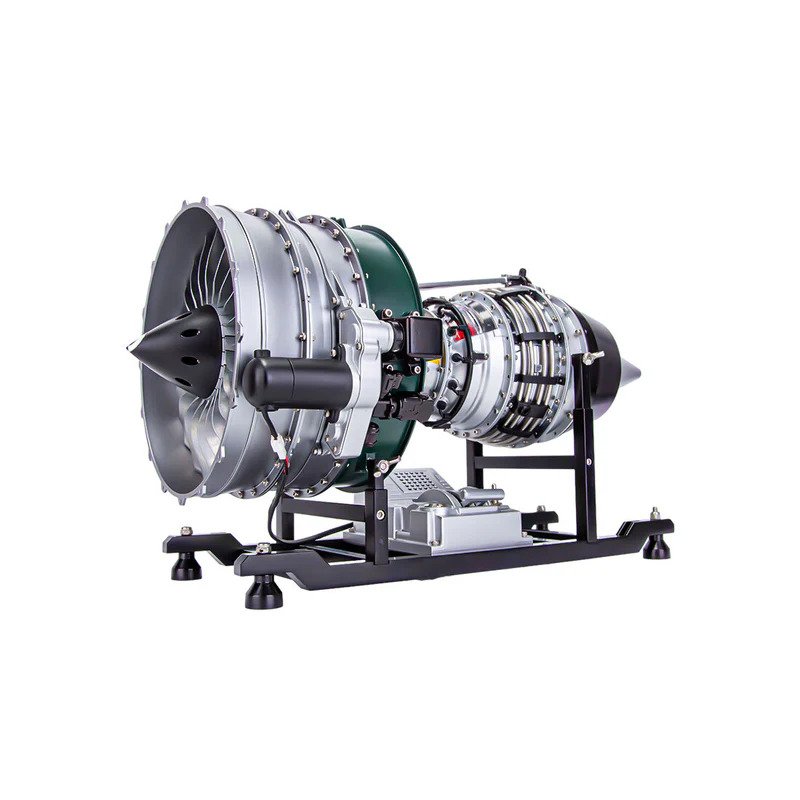
The fan, compressors, and turbine rotate using a built-in motor. That is exactly the kind of detail buyers are usually searching for when they type “turbofan engine model kit that works” into Google. The kit is not pretending to be a combustion engine or a real jet powerplant. Instead, it gives you the movement, structure, and visual behavior of a turbofan-style model.
That is a big difference.
A lot of products look impressive in product photos but feel flat in real life. What makes a model like this appealing is that the motion adds realism. The moving parts make the engine easier to understand and far more satisfying to watch.
So yes, it works, but in model form. That is the right expectation.
Noise, Movement, and Realism
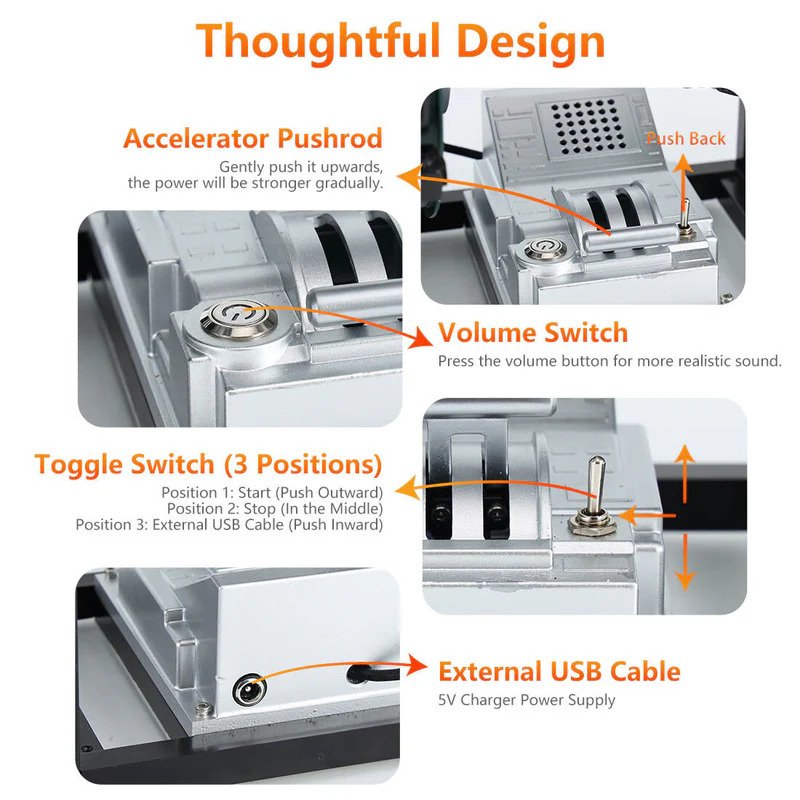
One detail that matters in a mechanical metal model is sound. The product notes mention a sound module, and friction-like noise is normal with moving metal parts. That is not a flaw by itself. In fact, for this type of product, some noise can make the model feel more authentic.
The key question is whether the sound feels cheap or appropriate. A well-made model with controlled movement and a realistic mechanical sound can feel impressive. A loud, harsh sound would be a problem. Based on the product style, the sound and motion are part of the experience rather than an accidental side effect.
The realism also comes from the shape and layering of the build. A hollowed-out structure lets people see the internal system, which is one of the main reasons model collectors and technical hobbyists like these products in the first place.
Performance and Engineering Value
This is a premium investment, which means its value is measured by its engineering excellence rather than just its size. This kit is designed for those who prioritize precision over budget-friendly alternatives.
You are moving beyond the world of simple toys and investing in:
- Scale Accuracy: A true-to-life 1/10 representation.
- Premium Construction: Durable, high-grade metal components.
- Mechanical Motion: Realistic dual-spool functionality driven by a motor.
- Complexity: A high parts count that challenges and rewards the builder.
- Display Quality: A museum-grade centerpiece for any office or workshop.
- Educational Depth: A hands-on look at jet propulsion physics.
- Collector Appeal: A rare, high-end piece that holds its significance over time.
When viewed through the lens of professional-grade modeling, this kit stands in a category of its own compared to standard plastic alternatives.
Price and Value
At $999.99, this is not a budget model kit. It is a premium purchase, and that means the value has to be judged differently.
You are not paying for a simple toy. You are paying for
Price Comparison Table
This comparison shows the main point clearly: the TECHING 1/10 dual-spool kit is expensive, but it sits at the top end of the hobby because of its size, detail, and working movement.
| Model | Scale | Parts | Material | Power | Price | Best For |
|---|---|---|---|---|---|---|
| TECHING Dual-Spool | 1/10 | 1000+ | Aluminum/Steel | Motor (USB) | $999.99 | Serious Collectors |
| TECHING Cutaway | 1/12 | — | Metal Alloy | Mechanical | $399.99 | Budget TECHING fans |
| TECHING DM135 | 1/10 | — | Full Metal | Motorized | $799.99 | Premium Enthusiasts |
| SKYMECH Trent 900 | 1/20 | — | Composite Metal | Static/Display | $199.99 | Entry-level Fans |
| SKYMECH WS-15 | 1/20 | — | High-grade Alloy | Display | $249.99 | Budget Builders |
*Swipe left/right on mobile to see full specs.
If someone is simply looking for a decorative engine model, a lower-priced kit may make more sense. If someone wants a flagship-level model that feels serious and interactive, the price is easier to justify.
Who Should Buy This
This model is a strong fit for:
Aviation hobbyists
If you love jet engines, aircraft systems, or engine cutaway models, this is the kind of build that can become a centerpiece.
Makers & Techies:
If your office is already full of gadgets like the Valerion VisionMaster Max Review 2026: Is It Worth It for Home Theater and Gaming?, this engine provides the physical, tactile centerpiece you’re missing.
STEM collectors
The moving structure and visible internal mechanics make it useful as a display and learning piece.
Advanced model builders
If you enjoy complex assembly projects, the parts count and metal construction will likely feel rewarding.
Gift buyers
This can be a powerful gift for someone who already loves aviation or engineering models.
Adults who want a premium desk display
This is the kind of product that can sit in an office, workshop, or study and make a strong impression.
Who Should Skip It
This is probably not the right choice for:
Absolute beginners
The large part count and assembly time make it a poor first project.
Buyers who want a quick build
This is not a one-hour or even one-evening model.
People looking for a cheap desk toy
The price alone rules this out for casual buyers.
Shoppers who want a real engine
This is a model, not a combustion-powered aircraft engine.
FAQ
The $1,000 Question: Is This Just a Fancy Paperweight?
Let’s address the elephant in the room right away. Why would anyone spend a thousand dollars on a model engine?
If you’re a “Maker”—the kind of person who spends their weekends calibrating an ACMER P3 48W Laser Engraver Review – Is This the Best Side Hustle Machine in 2026? or watching a 40-hour print finish on a Phrozen Sonic Mega 8K V2 Review – Large-Format Resin 3D Printing for Professionals—you already know the answer. It’s not about the “what.” It’s about the “how.”
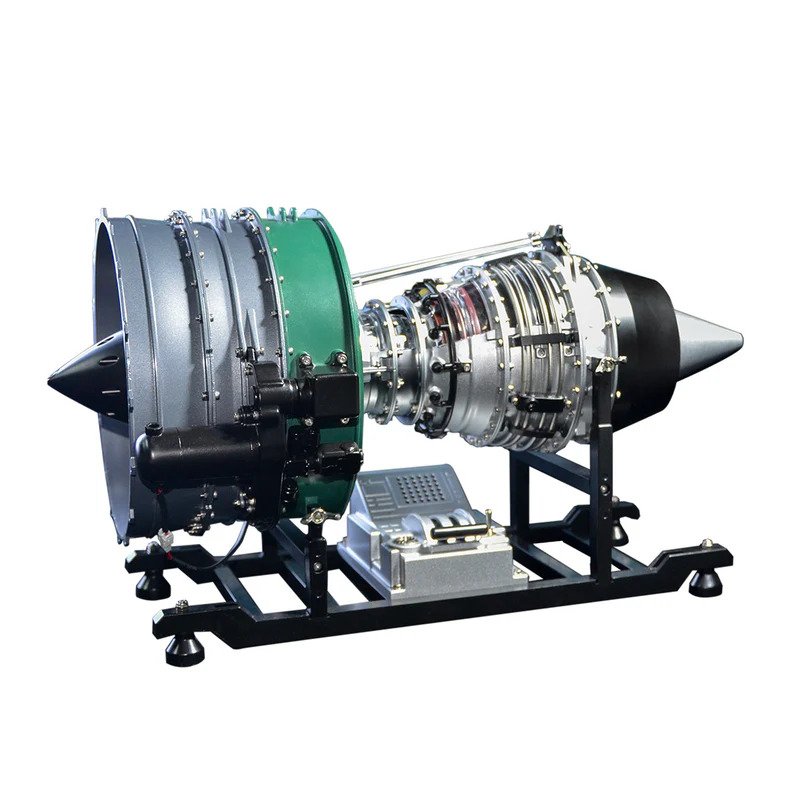
Most engine models are static. They sit there. They look like an engine, but they have the soul of a rock. The TECHING Dual-Spool kit is different. It is a functional mechanical replica. When you finish this build, you have a machine that rotates, whirs, and demonstrates the actual internal logic of a jet engine.
Quick Summary and Specs
| Feature | Detail |
| Scale | 1/10 |
| Parts Count | 1,000+ Individual Components |
| Material | Anodized Aluminum Alloy & Stainless Steel |
| Drive System | Electric Motor (Rechargeable Lithium Battery) |
| Build Time | 10–15 Hours (Expert Level) |
| Special Features | Dual-Spool rotation, sound module, cutaway design |
Do they work?
Yes. The fan, compressors, and turbine rotate using a built-in motor. It works as a mechanical model, not as a real jet engine.
What materials are used?
The product uses aluminum alloy and stainless steel, which gives it a more premium feel than plastic kits.
How long does assembly take?
The assembly time is generally up to 10 hours, depending on experience and pace.
Is it appropriate for beginners?
Not really. It is better suited to ages 14+ and to experienced model builders or older hobbyists.
Does it run on fuel?
No. It is electrically operated with a rechargeable battery and USB charging, not combustion fuel.
Do they make noise?
Yes, some friction-like sound is normal because of the moving metal parts.
What tools are needed?
The kit generally includes the needed tools, which makes assembly easier than sourcing everything separately.
What are the key components of a turbofan engine?
A turbofan typically includes the fan, compressor sections, combustion area, turbine sections, and core structure. In a model, the main value is showing how these parts relate to each other.
What are the disadvantages of a turbofan engine?
In real aviation, turbofans can be more complex and larger than some alternatives, which affects design and maintenance. In model form, the downside is usually cost and build complexity.
Which is faster, turbojet or turbofan?
In general, turbojets are associated with higher-speed performance, while turbofans are usually more efficient for modern commercial flight. The answer depends on the use case, but turbofans dominate modern airliners because of efficiency.
What is the smallest turbofan engine?
That depends on the exact engine family and design standard, but the term usually refers to compact engine designs used in small aircraft or specialized applications.
What This Turbofan Engine Model Kit Actually Is
The TECHING Mechanical Dual-Spool Turbofan Engine Model Kit is a detailed mechanical replica built to show the internal structure and working movement of a jet engine.
I want to be clear about one thing: it is not a real aircraft engine. You cannot bolt this to a go-kart and blast down your street at Mach 0.8. It is an educational and display-focused model. The goal is to give you a hands-on look at how a turbofan is put together and how the major components move in relation to each other.
That is exactly why this type of product has such massive search interest right now. People looking for a “turbofan engine model kit that works” aren’t looking for combustion; they’re looking for mechanical truth. They want to see the gears turn.
Why Are We All Suddenly Obsessed with Turbofan Models?
Search interest around turbofan engine models is stronger than many people realize. It’s a niche, but it’s a deep one.
Some buyers are aviation enthusiasts who have spent thousands of hours in flight simulators and want something physical to show for it. Others are mechanical hobbyists who find joy in the assembly of complex systems. Then you have the STEM parents—the ones looking for a gift that might inspire a future engineer.
The phrase “turbofan engine model kit that works” is the golden ticket here. Nobody wants a static plastic shell anymore. In a world of digital screens, we want movement. We want visible fans, rotating parts, and something that feels alive on our desk.
Final Verdict
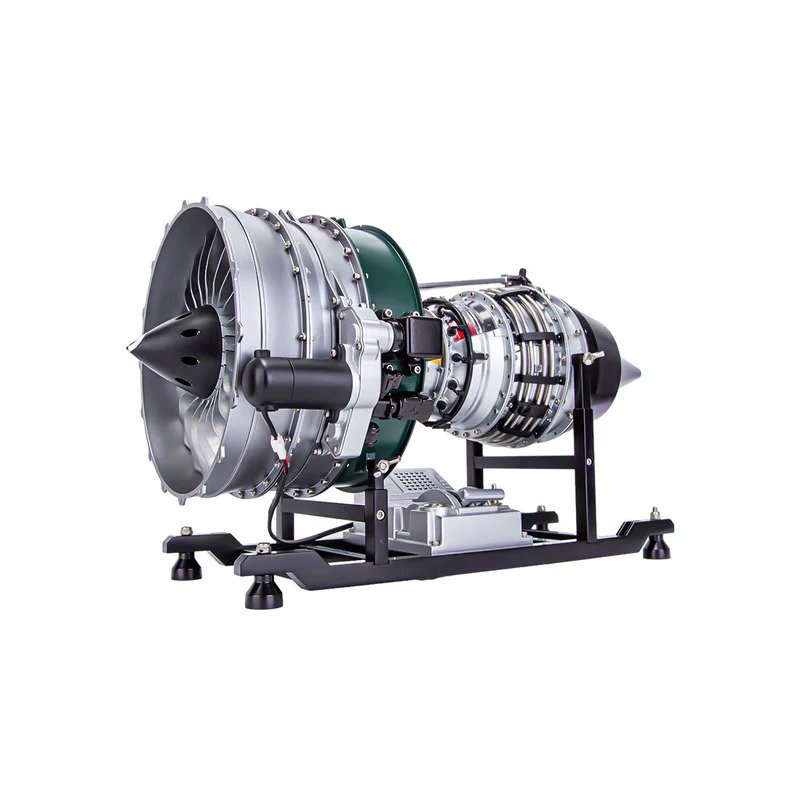
The TECHING Mechanical Dual-Spool Turbofan Engine isn’t just another weekend project; it’s a legitimate statement piece for anyone who truly appreciates high-level engineering. This is a heavy, industrial-grade kit that commands attention the moment you open the box. Between the 1/10 scale presence and the satisfying weight of its all-metal construction, it immediately separates itself from the sea of plastic “toy” engines on the market.
With a staggering count of over 1,000 precision parts, the build process is as much an education in aviation as it is a hobby. The open-casing design is a brilliant touch, allowing you to watch the dual-spool synchronization in motion—a feature that usually stays hidden behind the cowlings of a real Boeing or Airbus.
The real magic here is the versatility. It manages to hit the “trifecta” of modeling: it serves as a rigorous mechanical challenge, a museum-quality display piece for your office, and a functional STEM tool that teaches the physics of jet propulsion. If you’re looking to graduate from basic kits to something that feels like a genuine piece of machinery, this is the gold standard.