Imagine throwing a full-sized Mandalorian helmet or 50 dental arches onto a resin 3D printer, walking away for 24 hours, and returning to a flawless, crisp batch of prints without a single drop of spilled resin. For years, massive large-format resin printing was a high-stakes gamble—plagued by catastrophic suction failures, mid-print resin droughts, and hardware-punishing physics.
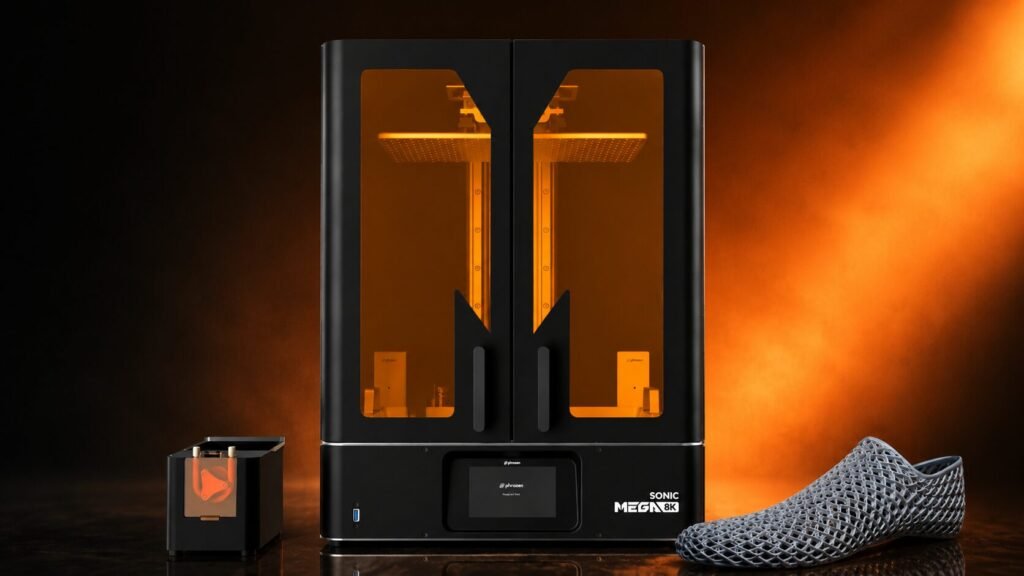
The Phrozen Sonic Mega 8K V2 steps into 2026 claiming to change the narrative completely. Armed with a towering 40 cm Z-axis, an automated “Pump & Fill” ecosystem, and blistering fast speeds, it brings undeniable “Main Character Energy” to professional workshops. But does it truly deliver on its industrial-grade promises, or will it leave you hunting for troubleshooting solutions online? Let’s break down exactly what makes this powerhouse tick.
Before diving deep into this large-format resin powerhouse, if you are also considering high-speed multi-color filament setups, check out our Anycubic Kobra S1 Combo Review – High-Performance Multi-Color CoreXY 3D Printing Guide.
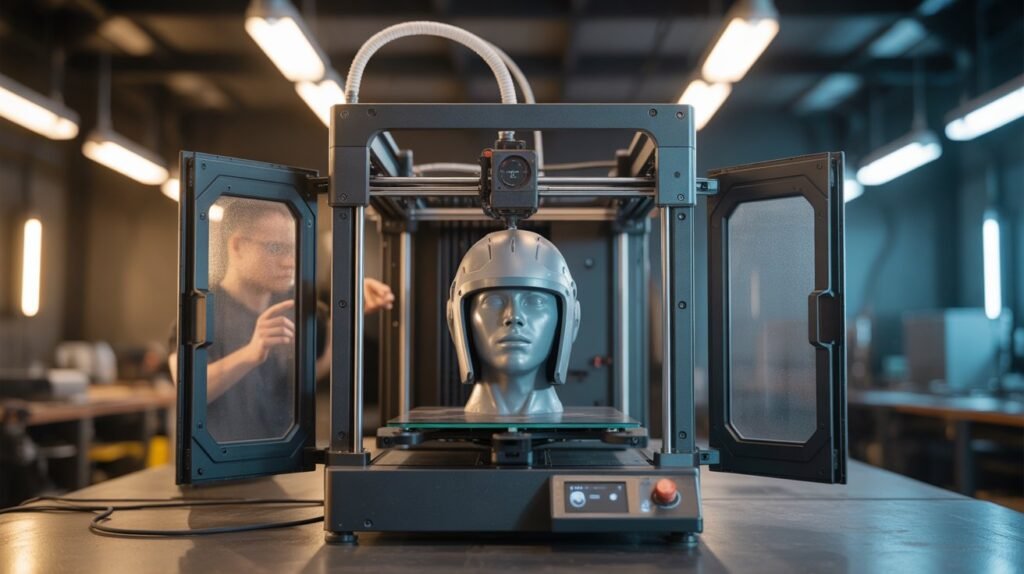
The landscape of additive manufacturing in 2026 is defined by a decisive shift toward high-throughput, automated production within the resin-based stereolithography sector. The Phrozen Sonic Mega 8K V2 represents a pivotal iteration in this development, transitioning from the experimental large-scale formats of the early 2020s into a stabilized, industrial-adjacent production unit. This report provides a granular examination of the Sonic Mega 8K V2’s mechanical architecture, optical precision, and software integration, while situating the device within the broader competitive and cultural ecosystem of the mid-2020s.
🎁 Exclusive Phrozen Affiliate Discount
Upgrade your 3D printing workflow with professional-grade machines, precision resins, and advanced accessories from Phrozen.
Get 10% OFF your purchase with our exclusive affiliate code.
Use code: AFF10
Offer valid on printers, consumables, electronic gadgets, and toy models. Active until December 2, 2026.
Evolution of the Mega Series: From Prototyping to Production
The lineage of the Sonic Mega series reflects the industry’s response to the demand for larger build volumes without the traditional compromise in XY resolution. The original Sonic Mega 8K, released in 2021, was the first consumer-accessible machine to feature a 15-inch 8K monochrome LCD, effectively breaking the “size-resolution barrier”. However, early iterations faced challenges related to resin management and mechanical fatigue under the stress of massive suction forces. The V2 iteration addresses these through localized automation and refined Z-axis stability.
The primary distinction between the Sonic Mega 8K V2 and its predecessor lies in the integration of workflow-enhancing features: the “Pump & Fill” automated resin management system, a built-in air purifier, and a revised “Fast Printing Mode” capable of 400 layers per hour. These additions transform the machine from a large-format curiosity into a reliable component of a 3D printing farm or professional workshop.
Comparative Specifications: The Sonic Mega Ecosystem
| Feature | Sonic Mega 8K (2021) | Sonic Mega 8K S | Sonic Mega 8K V2 |
| Build Volume (mm) | 330 x 185 x 400 | 330 x 185 x 300 | 330 x 185 x 400 |
| Z-Axis Height | 40 cm | 30 cm | 40 cm |
| XY Resolution | 43 microns | 43 microns | 43 microns |
| LCD Size | 15″ Monochrome | 15″ Monochrome | 15″ Monochrome |
| Automation | None (Manual Refill) | Optional Pump & Fill | Integrated Pump & Fill |
| Frame Design | Dual Side-Opening Doors | Lift-up Acrylic Cover | Dual Side-Opening Doors |
| Max Speed | 70 mm/hr | Standard (Optimized) | 400 layers/hr (Fast Mode) |
| Motherboard Support | Legacy (No Pump Support) | Modern (Pump Ready) | Advanced (Integrated) |
The architectural choice to maintain the 40 cm Z-axis in the V2, compared to the 30 cm height of the 8K S model, underscores the V2’s positioning as the flagship for massive, single-piece prints such as automotive components or full-scale cosplay helmets.
Technical Architecture and Optical Engineering
The core of the Sonic Mega 8K V2 is its 15-inch monochrome LCD screen, which acts as the masking element for the 405 nm UV light source. The resolution of 7680 x 4320 pixels distributed across the 330 x 185 mm build area yields a pixel density where each individual voxel is 43 microns in the XY plane. In the context of 2026, while smaller printers have achieved 18-micron resolutions, the 43-micron threshold remains the industry standard for large-format reliability, as it balances surface detail with the physical limitations of resin light-bleed and curing kinetics.
ParaLED 3.0 and Light Uniformity
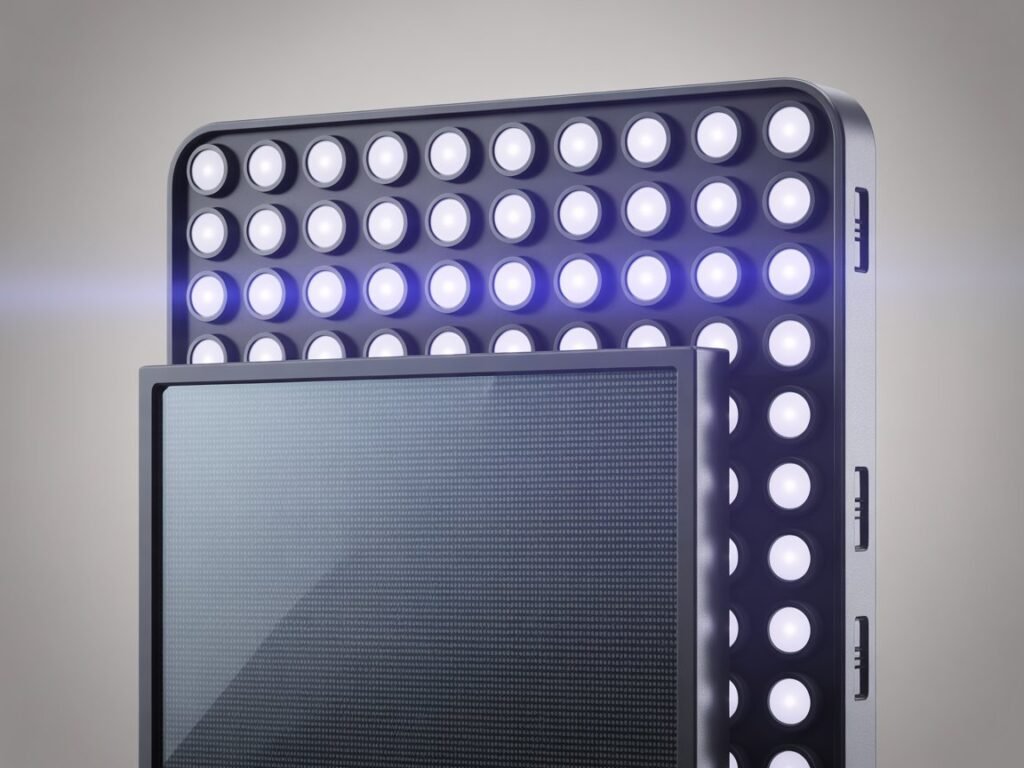
Uniformity of light intensity is a critical factor in large-format masking LCD (MSLA) printing. The V2 utilizes Phrozen’s ParaLED 3.0 technology, an array of UV LEDs coupled with a specialized lens system designed to ensure that UV rays hit the LCD screen at a perpendicular angle across the entire surface. This minimizes “paraxial error,” where light hitting the screen at an angle would otherwise cause pixel distortion or dimensional inaccuracies at the edges of the build plate.
The mathematical relationship between light intensity and curing depth is typically modeled using the Jacob’s Working Curve equation:
Cd = Dp ln(Emax / Ec)
Where:
- Cd is the total curing depth.
- Dp is the penetration depth of the resin.
- Emax is the energy delivered by the light source.
- Ec is the critical energy required for gelation.
The ParaLED 3.0 system ensures that Emax remains constant across the 15-inch diagonal, allowing for uniform Cd and reducing the likelihood of delamination or soft spots in large batches.
Mechanical Stability and Z-Axis Dynamics
A significant challenge in large-format resin printing is the management of suction forces, also known as “peel force.” When the build plate lifts after a layer is cured, a vacuum is created between the cured layer and the FEP/ACF film at the bottom of the vat. For a build area of 330 x 185 mm, the surface area is approximately 61,050 mm².
Stefan’s Law for squeeze flow provides an insight into the force required to separate the two parallel plates:
F = [ 3πω_r_4 / 2_h_3 ] × (dh / dt)
In this model, F is the total peeling force, π (pi) and ω (eta) represent the geometric constant and resin viscosity, r4 is the radius of the build plate raised to the fourth power, h3 is the distance between the plates cubed, and dh / dt is the lift speed. As the build area increases, the force grows exponentially to the fourth power of the dimensions, putting extreme stress on the Z-axis motor and the LCD screen.
Dual Linear Rails and Ball Screw Design
To combat these forces, the Sonic Mega 8K V2 employs an ultra-stable Z-axis composed of dual hardened-steel linear rails and a high-precision ball screw. Unlike the lead screws found in entry-level printers, ball screws offer significantly higher mechanical efficiency and lower backlash. This rigidity is essential for maintaining the 10-micron Z-axis precision required for high-resolution output over a 40 cm travel distance.
Furthermore, Phrozen utilizes a perforated build plate design. By allowing resin to flow through the plate during the descent and ascent phases, the effective surface area involved in suction is reduced, thereby lowering the mechanical load on the system and the risk of the model being torn from its supports.
Automation and Integrated Systems: The Pump & Fill Ecosystem
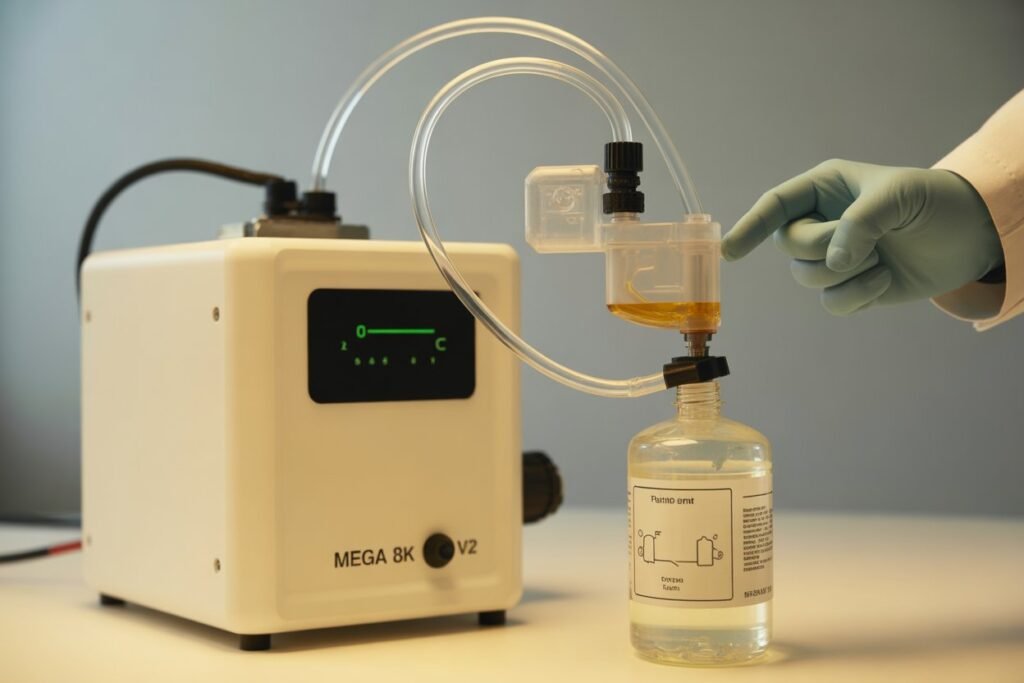
The defining feature of the V2’s “production-ready” status is the Phrozen Pump & Fill system. In large-scale printing, the vat capacity is often the limiting factor for unattended operation. A full-height print on the Mega 8K V2 can consume up to 2 kg of resin, far exceeding the safe initial fill level of most vats.
Mechanism of Action
The Pump & Fill system utilizes a peristaltic pump, which moves fluid by compressing a flexible tube between a series of rollers. This design is advantageous for 3D printing as it prevents the resin from contacting the mechanical parts of the pump, reducing the risk of contamination or mechanical failure due to cured resin.
| Component | Technical Detail | Maintenance Requirement |
| Peristaltic Tube | Flexible, chemical-resistant polymer | Replace every 6 months |
| Resin Sensor | Electronic level detection | Clean after every 500 hours |
| Pump Motor | High-torque DC motor | None (Sealed unit) |
| Bottle Compatibility | Standard 1 kg bottles (≤ 90 mm diameter) | Use Phrozen-compatible caps |
The system provides three primary functions:
- Resin Auto-Fill: Automatically detects low resin levels and replenishes the vat mid-print, eliminating the need for manual intervention.
- Resin Auto-Pump: At the conclusion of a print, the system can be programmed to draw unused resin back into the bottle, facilitating easier vat cleaning and minimizing material waste.
- Immediate Manual Pump: Allows for user-triggered suction for rapid vat emptying during color or material changes.
Software, Firmware, and the Z-Axis Bug Resolution
The software ecosystem for the Sonic Mega 8K V2 is primarily centered around CHITUBOX and Lychee Slicer, both of which provide optimized profiles for the 15-inch 8K screen. However, the transition to the V2 hardware was initially marred by a critical firmware issue.
The Z-Offset Firmware Bug (V1.0.5)
Reports from the user community in late 2024 and early 2025 identified a recurring failure where the Z-axis would cease vertical movement at approximately the 20 cm (mid-course) mark, while the UV exposure continued to run. This resulted in “pancake” failures where the top of the model was cured as a solid block against the FEP film.
Phrozen’s engineering team diagnosed this as a bug in firmware V1.0.5, specifically related to the software-defined upper limits and Z-offset calibration. The subsequent release of firmware V1.0.7 provided a comprehensive fix, recalibrating the motor’s step-count logic to recognize the full 40 cm travel distance. Users are strictly advised to perform a “dry run” (Z-axis movement without resin) to verify that their unit is not running the legacy firmware.
Competitor Analysis: The 2026 Large-Format Landscape
As of 2026, the Sonic Mega 8K V2 faces stiff competition from Anycubic and Elegoo, both of whom have introduced high-volume printers that target similar market segments with differing value propositions.
Anycubic Photon Mono M7 Max vs. Phrozen Sonic Mega 8K V2
The Anycubic M7 Max is positioned as a direct rival, emphasizing speed and thermal management. While its build volume (298 x 164 x 300 mm) is slightly smaller than the Mega 8K V2, it incorporates a heated resin vat—a feature that Phrozen has notably omitted.
| Parameter | Phrozen Mega 8K V2 | Anycubic M7 Max | Strategic Implication |
| Max Build Height | 400 mm | 300 mm | Phrozen leads for tall, single-piece props. |
| Resin Heating | External Heater Required | Integrated (20-40°C) | Anycubic offers better reliability in cold climates. |
| XY Resolution | 43 microns | 46 microns | Phrozen maintains a slight edge in fine detail. |
| Release Film | FEP / PFA | ACF (High Speed) | Anycubic is optimized for speed out of the box. |
| Price (Est. 2026) | $2,800.00 | $899 – $999 | Anycubic targets the high-volume hobbyist market. |
Elegoo Jupiter 2: The High-Resolution Challenger
The Elegoo Jupiter 2, launched in late 2025/early 2026, introduces a 14-inch 16K screen, providing an XY resolution of 20 x 26 microns. This significantly trumps the Mega 8K V2 in terms of detail density. Furthermore, the Jupiter 2 features a modular LCD replacement system (10 minutes) and a quick-swap FEP mechanism (10 seconds), addressing the maintenance downtime that has historically plagued the Phrozen Mega series.
Market Positioning and Cultural Integration (2026)
The marketing of 3D printers in 2026 has evolved to utilize a mix of technical authority and social media-driven linguistic trends to engage the “maker” community. The Sonic Mega 8K V2 is often marketed as having the “Main Character Energy” of the workshop—a reference to its physically imposing metal frame and dominant build volume.
Digital Cultural Presence and “Aura Farming”
In the context of 2026 social media, “Aura Farming” describes the act of curating a high-end, professional aesthetic to build brand authority online. The Sonic Mega 8K V2, with its dual side-opening metal doors and industrial-grade Z-axis, is a primary tool for makers looking to “increase their aura” by showcasing large-scale, complex builds that smaller machines cannot replicate.
Reviews within the maker community often use slang to convey performance metrics:
- “This printer ate”: Refers to a flawless, high-quality print that surpassed expectations.
- “No Cap calibration”: Emphasizes that the factory-pre-calibrated build plate is legitimately accurate without user adjustment.
- “Skibidi failures”: Used to describe chaotic or bizarre print failures often caused by unlevel surfaces or cold resin.
Materials Science and Resin Compatibility
The Mega 8K V2’s utility is expanded by its compatibility with third-party, engineering-grade resins. While Phrozen promotes its “Aqua-Gray 8K” for general modeling, industrial users often turn to specialized manufacturers like Liqcreate for high-performance applications.
Liqcreate Engineering Resins
The pairing of the Mega 8K V2 with Liqcreate’s “Strong-X” or “Bio-Med Clear” allows for the production of parts with industrial-level mechanical properties.
- Strong-X: Offers high tensile strength and heat resistance, suitable for injection molds or functional prototypes.
- Bio-Med Clear: A biocompatible resin that enables the Mega 8K V2 to be used in the production of dental models and skin-contact medical devices.
The physical properties of these resins, particularly their viscosity, require precise tuning of the printer’s “Light-off Delay” and “Lift Speed” settings. For high-viscosity engineering resins, a longer light-off delay is necessary to allow the resin to flow back under the build plate and stabilize before the next exposure cycle begins.
Professional Maintenance and Life-Cycle Management
Maintaining a large-format printer requires a structured protocol, particularly regarding the consumable components that ensure print reliability.
LCD Screen Replacement and Protection
The 15-inch 8K monochrome LCD is a consumable with a lifespan typically rated between 2,000 and 3,000 hours of UV exposure. Given the $400 replacement cost, the use of a factory-installed screen protector is a critical safeguard against resin leaks or physical scratches. If a leak occurs and resin cures onto the screen, it can cause “dead pixels” or light blockages that lead to localized print failures.
Peristaltic Pump Maintenance
The Pump & Fill system introduces a new maintenance layer. The peristaltic tubing is subject to mechanical wear from the rollers and chemical degradation from constant resin contact. Phrozen mandates replacement of this tubing every six months to prevent rupture, which would otherwise lead to an internal resin leak within the pump housing.
Z-Axis Lubrication
To maintain the accuracy of the ball screw and linear rails, regular lubrication with spindle oil or high-grade lithium grease is required. Debris or cured resin dust on the Z-axis can lead to a “grinding” noise or motor jams, which are common causes of layer shifting in tall prints.
Industrial Applications and Economic Impact
The economic viability of the Sonic Mega 8K V2 is most apparent in sectors where batch production or large-scale prototyping is a daily requirement.
The Cosplay and Prop Industry
The ability to print a full-scale “Mandalorian” helmet or a “Batman” cowl in a single 24-hour run, with virtually no layer lines, has revolutionized the prop-making industry. Previously, such items required FDM printing in multiple parts, followed by labor-intensive “bondo” and sanding phases. The Mega 8K V2 reduces the labor-per-unit by approximately 70%, allowing prop studios to scale their output significantly.
Dental Laboratory Integration
In dental labs, the Mega 8K V2 serves as a high-volume producer of study models and surgical guides. A single 15-inch plate can accommodate 40 to 50 dental arches in a single run. When combined with the Pump & Fill system, labs can run “lights-out” production overnight, arriving in the morning to a full batch of cured models.
Rapid Tooling and Jigs
Engineers use the Mega 8K V2 to create assembly jigs and fixtures for manufacturing lines. The large build area allows for the creation of complex, multi-component alignment tools that would be too large for standard desktop printers and too expensive to CNC machine in low volumes.
Technical Troubleshooting and Community “Best Practices”
Large-format printing often requires specific “tribal knowledge” within the community to achieve consistent results.
- Angled Orientation: Printing flat on the build plate increases suction forces. Community experts recommend angling models at 30 to 45 degrees and using heavy supports for the initial layers to distribute the peel load.
- Temperature Regulation: Since the Mega 8K V2 lacks a built-in heater, users in colder environments often install external “Peopoly heaters” or “brewing belts” around the resin vat to maintain a consistent 25-30°C, which ensures the resin remains at its optimal viscosity.
- USB Quality: The provided generic USB drives are a frequent point of failure. Users are advised to upgrade to high-speed, branded USB 3.0 drives formatted to FAT32 with a 2048-byte allocation unit to prevent data corruption during long prints.
Who Should Buy the Phrozen Sonic Mega 8K V2?
- Professional Prop Makers and Cosplayers: If your business relies on churning out full-scale helmets, cowls, or massive armor pieces in a single, seamless 24-hour run, the 40 cm Z-axis will save you hours of slicing, gluing, and sanding.
- High-Volume Dental Laboratories: Ideal for labs looking to run “lights-out” production overnight. You can pack 40 to 50 dental arches onto a single plate and trust the automated pump to keep the resin filled while you sleep.
- Industrial Engineers and Rapid Prototypers: If you are manufacturing custom assembly jigs, fixtures, or low-volume functional parts using thick, engineering-grade resins, the industrial steel rails and heavy-duty ball screw are built to survive that grueling workload.
- Commercial Print Farms: The automated fluid management (pumping unused resin back into the bottle) drastically cuts down on labor, material waste, and messy cleanup between production batches.
Who Should Skip It?
- Hobbyists and Casual Makers: If you are primarily printing tabletop miniatures or small display models, this machine is massive overkill. The $2,200+ entry price, physical footprint, and strict maintenance schedule make it impractical for a casual home setup.
- Makers in Cold Garages or Workshops: Because Phrozen skipped an integrated vat heater, you will struggle with failed prints if your workspace drops below 25°C. If you don’t want the hassle of rigging up external heating belts, look elsewhere.
- Detail Purists: If you need extreme microscopic precision over physical print size, a smaller desktop printer or a machine like the 16K Elegoo Jupiter 2 (with its 20-micron resolution) will give you sharper edges than the 43-micron threshold on the Mega V2.
- Buyers on a Strict Budget: If you want large-volume printing but can’t justify a pro-tier price tag, rivals like the Anycubic Photon Mono M7 Max give you a highly capable large-format experience for closer to $900.
Dialing in a high-viscosity, engineering-grade resin like Liqcreate Strong-X on a massive 15-inch screen requires a complete shift in mindset. You have to throw “speed printing” out the window and prioritize fluid dynamics. Because thick resins flow like cold honey, moving the build plate too fast or firing the UV light too quickly will result in catastrophic delamination, severe blooming, or empty voids.
The baseline slicing profile below contrasts standard fast-curing resin settings with the conservative adjustments needed to handle heavy-duty engineering resins on the Sonic Mega 8K V2.
Sonic Mega 8K V2 Engineering Resin Slicing Profile
| Slicing Parameter | Standard Resin (e.g., Aqua-Gray 8K) | Engineering Resin (e.g., Liqcreate Strong-X) | Why the Change Matters |
| Layer Height | $0.05\text{ mm}$ | $0.05\text{ mm}$ to $0.10\text{ mm}$ | Thicker layers ($0.10\text{ mm}$) optimize mechanical impact resistance for functional parts. |
| Normal Exposure | $1.8\text{ – }2.5\text{ s}$ | $3.5\text{ – }5.0\text{ s}$ | Denser, chemical-resistant photopolymers require significantly more energy to cross-link. |
| Bottom Exposure | $20\text{ – }25\text{ s}$ | $35\text{ – }45\text{ s}$ | Vital for keeping heavy, industrial prints anchored to the perforated build plate. |
| Lift Distance | $7\text{ – }8\text{ mm}$ | $9\text{ – }11\text{ mm}$ | Thick resin pulls hard on the release film; you must lift higher to guarantee a clean peel in the center. |
| Lift Speed (Normal) | $60\text{ – }80\text{ mm/min}$ | $40\text{ – }45\text{ mm/min}$ | Slowing down controls peel force and protects delicate support structures from snapping. |
| Retract Speed | $150\text{ mm/min}$ | $60\text{ – }90\text{ mm/min}$ | Prevents the massive build plate from slamming into dense resin like a piston, preserving your LCD screen. |
| Rest Time After Retract | $1.0\text{ – }2.0\text{ s}$ | $4.0\text{ – }6.0\text{ s}$ | Gives the thick fluid adequate time to settle flat and stop moving before the UV light turns on. |
The Three Golden Rules for Thick Resins
1. Master the “Rest Time After Retract” (Light-off Delay)
If you only change one setting, make it this one. When the Mega V2’s massive $330 \times 185\text{ mm}$ build plate drives down into thick resin, it displaces a huge volume of fluid. Standard resins snap back into place instantly. High-viscosity resins slowly ooze back outward.
If the UV light fires while that resin is still moving, you get blooming—a structural failure where layers look fuzzy, weak, or split apart. Setting a 4 to 6-second Rest Time After Retract (sometimes called Wait Before Print in CHITUBOX) guarantees the resin has completely stopped moving before curing begins.
2. Slow Down the Retract Speed
Because of the sheer surface area of the Mega V2, lowering the build plate too quickly into a dense fluid creates massive hydraulic pressure. Dropping the retract speed down to 60–90 mm/min acts as an insurance policy for your $400 LCD screen, letting the plate submerge gently without forcing high-pressure shockwaves through the vat.
3. Account for Vat Flex with High Lift Distances
On a small desktop printer, the release film (FEP/ACF) only flexes a millimeter or two before popping away from the cured layer. On a massive 15-inch vat, the film stretches upward like a trampoline. If your lift distance is only 6 or $7\text{ mm}$, the film might stretch up with the print and never actually separate before the machine drives back down. For resins like Strong-X, a safe 9 to 11 mm lift distance ensures a definitive, successful peel on every single layer.
Pro Tip: If you are running the automated Pump & Fill system with these dense materials, make sure the resin temperature is at least 25°C. Cold engineering resin will clog or strain the peristaltic pump tubing, drastically accelerating mechanical wear. Use a vat heating band if your workshop is chilly!
Pros and Cons
To give you a realistic look at what to expect on your workshop floor, here is a transparent look at the device’s strengths and weaknesses.
The Pros
- Massive Build Volume: The $330 \times 185 \times 400\text{ mm}$ build area allows for colossal, single-piece production runs—cutting down on assembly and post-processing times for props and industrial components.
- Automated Fluid Management: The “Pump & Fill” peristaltic system intelligently feeds resin during massive prints and sucks the excess back into the bottle when done, keeping operations clean and hands-free.
- Exceptional Z-Axis Rigidity: Driven by high-precision dual linear steel rails and a ball screw, it handles intense suction forces seamlessly with zero backlash or layer shifting.
- Uniform Optical Precision: Phrozen’s ParaLED 3.0 technology ensures light hits the entire 15-inch screen completely perpendicular, preventing distorted dimensions at the edges of the plate.
- Perforated Build Plate: The engineered holes allow resin to flow freely during movement, drastically reducing the peel force that often tears models off their support structures.
The Cons
- Premium Price Point: At an estimated price range of $2,800.00 it requires a significant initial financial investment compared to consumer-oriented alternatives.
- No Integrated Resin Heating: Unlike its direct competitor, the Anycubic M7 Max, it lacks an internal heating element, forcing users in colder environments to purchase third-party heating bands.
- Demanding Maintenance Schedule: The peristaltic pump tubing demands replacement every 6 months to avoid internal leaks, and the massive $400$ LCD screen requires regular monitoring.
- Subpar Stock Accessories: The factory-supplied generic USB drive is highly prone to data corruption, requiring an immediate user upgrade to a reliable branded drive.
Frequently Asked Questions (FAQ)
What was the notorious Z-axis bug, and how do I know if my unit is safe?
Early versions of the printer shipped with firmware version V1.0.5, which contained a critical step-count error. The Z-axis would completely freeze up around the 20 cm height mark while the UV light kept firing, resulting in ruined, flattened “pancake” failures. Phrozen fully resolved this in firmware version V1.0.7. It is highly recommended to perform a “dry run” (moving the Z-axis up and down completely without resin) to confirm your unit tracks the full 40 cm smoothly.
How does Stefan’s Law affect prints on a machine this large?
Stefan’s Law and Squeeze Flow (Peel Force)
Stefan’s Law explains how fluid dynamics impact large-surface resin printing. The formula for the peel force is modeled as:
F = [ 3πω_r_4 / 2_h_3 ] × (dh / dt)
Where:
- F is the total peeling force pulling on the screen.
- π (pi) and ω (eta) represent the geometric constant and resin viscosity.
- r4 is the radius of the build plate raised to the fourth power.
- h3 is the distance between the plate and the film cubed.
- dh / dt is the lift speed of the Z-axis.
Because the force scales exponentially to the fourth power (r4) of the build plate’s dimensions, a massive 15-inch plate experiences destructive suction forces when pulling away from the film. The Mega 8K V2 combats this extreme physical stress by employing ultra-rigid ball screws instead of standard consumer lead screws, combined with a perforated build plate that lets resin flow through to relieve fluid pressure.
What kind of routine maintenance does the Pump & Fill system require?
Because the peristaltic system uses rollers to crush a flexible tube to displace resin, the material experiences heavy mechanical and chemical degradation. You must replace the flexible polymer tube every 6 months to prevent it from cracking and leaking resin into the internal electronics. Additionally, clean the electronic resin level sensors every 500 hours of print time to keep the auto-fill functions tracking accurately.
Can I use engineering-grade, third-party resins on the Mega 8K V2?
Yes. It handles high-performance third-party resins beautifully, such as Liqcreate Strong-X (for injection molds/functional prototypes) and Bio-Med Clear (for biocompatible medical devices). However, because these engineering resins carry a much higher viscosity, you must manually adjust your slicing profiles to include a longer Light-off Delay and a slower Lift Speed so the dense resin has time to settle under the plate before exposure.
How does the Sonic Mega 8K V2 compare to the Elegoo Jupiter 2?
The battle comes down to pure build volume versus outright detail density. The Elegoo Jupiter 2 features a sharper 14-inch 16K screen ($20 \times 26\text{ micron}$ resolution), easily beating Phrozen’s 43-micron screen for fine textures. Elegoo also features lightning-fast, 10-second FEP changes and a modular 10-minute LCD replacement swap. However, the Phrozen Mega 8K V2 retains its crown for heavy-duty output because of its superior 40 cm build height (compared to the Jupiter’s smaller footprint) and fully automated pump ecosystem.
3D Printing Master FAQ: Phrozen, Troubleshooting, & Industry Insights
Pricing & Buyer Guides
Q: What is the price of Phrozen Sonic Mega 8K V2?
The Phrozen Sonic Mega 8K V2 generally retails between $2,300 and $2,800 USD, depending on regional distributors, shipping configurations, and whether you purchase bundles that include accessories like the automated resin Pump & Fill system. It sits firmly in the professional, large-format production tier.
Q: Are Phrozen printers good for beginners?
It depends heavily on the footprint of the machine. Smaller and mid-sized options like the Sonic Mini or Sonic Mighty 8K are highly approachable for beginners because of their massive online communities, robust documentation, and forgiving calibration curves. However, massive industrial giants like the Sonic Mega 8K V2 or Mega 8K S are not recommended for absolute beginners. Managing large-scale resin vats, heavy build plates, and gallons of post-processing cleaning fluids requires a mature workshop safety setup and prior resin handling experience.
Celebrity Tech & Power Consumption
Q: What 3D printer does Jay Leno use?
Jay Leno relies heavily on industrial-grade, production-scale additive manufacturing units inside his famous Big Dog Garage to reverse-engineer and print obsolete, discontinued parts for his multi-million dollar classic car collection. His primary workhorse is the Stratasys Fortus 450mc, an FDM system that allows him to deploy high-performance engineering plastics like FDM Nylon 12 Carbon Fiber to create functional, road-ready vehicle components.
Q: How much does it cost to run a 3D printer for 2 hours?
Surprisingly little—3D printers are highly energy-efficient appliances.
- A standard FDM filament printer draws roughly 100 to 150 watts of electricity once the heated bed reaches temperature.
- A resin printer draws even less, typically sitting between 50 to 100 watts. Over a typical 2-hour print window, your machine will consume roughly 0.1 to 0.3 kWh of power. Given average US residential utility rates of $0.16 per kWh, running a printer for 2 hours will cost you roughly 2 to 5 cents.
Safety & Operation
Q: How to get started safely with a resin printer (Sonic Mega 8K S) in a bedroom?
⚠️ Critical Warning: Operating a massive large-format resin system like the Sonic Mega 8K S inside a bedroom is highly discouraged. Liquid photopolymer resins emit harmful Volatile Organic Compounds (VOCs) and chemical micro-vapors that pose serious long-term respiratory risks if inhaled continuously—especially while sleeping.
If space constraints absolutely force you to print inside a bedroom, you must treat it like a mini chemical lab with these non-negotiable protections:
- Air-Tight Enclosure: Seal the printer entirely inside an airtight grow tent or specialized printing chamber.
- Dedicated Active Venting: Run a heavy-duty inline duct fan from the enclosure directly out of a nearby window to pump toxic VOCs entirely out of the room.
- Strict PPE Discipline: Never handle the machine, the resin vat, or fresh prints without thick nitrile gloves (do not use latex, as resin quickly penetrates it) and a properly fitted organic vapor respirator mask.
- Time Isolation: Never run active print or wash cycles while you are sleeping in the same space.
Resin Troubleshooting & Advanced Film Tech
Q: Why am I getting such bad layer lines?
(Phrozen Mega 8K S) When a high-end 8K monochrome screen yields heavy, visible horizontal artifacts, the cause is almost always physical or mechanical rather than digital. Check these three prime areas:
- Z-Axis Contamination: Debris, old dried grease, or cured resin flakes caught on your dual linear rails or the primary lead screw will cause minor mechanical stuttering as the carriage rises.
- Build Plate Play: The heavy four-point leveling mechanism on the Mega series must be locked down completely flat. Even half a millimeter of shifting under intense suction forces will manifest as nasty layer lines.
- Extreme Peel Stress: Large cross-sectional prints create massive vacuum resistance against the vat film. If your lift speeds are set too aggressively fast, the print can flex or shift during release.
Q: nFEP vs ACF on the Phrozen Sonic Mega 8K V2—what’s the difference?
Choosing between these two films significantly alters your print speed and release behavior:
- nFEP (PFA): Provides impeccable optical clarity and high light transmission, resulting in hyper-crisp surface details. However, it is highly elastic, creating intense suction forces (“peel stress”) that require slow, conservative lift speeds to avoid tearing prints off their supports.
- ACF (Advanced Carbon Film): Features a smooth matte finish that dramatically lowers suction and release resistance. This allows the Mega 8K V2 to execute dramatically faster lift speeds, cutting total print times by 30% to 50%. The slight trade-off is minor UV light diffusion, which is only noticeable on hyper-intricate microscopic detailing.
Q: What are the exposure settings on a Phrozen Sonic Mini 8K for Anycubic Standard Grey resin, and is it normal for it to go even higher?
Under normal conditions, a high-intensity monochrome screen like the Sonic Mini 8K requires a per-layer exposure setting between 1.8 and 2.4 seconds for standard grey resins. If you are experiencing constant failures unless you push your exposure times way higher (3.5+ seconds), it is not normal. It points directly to one of these system bottlenecks:
- Low Room Temperature: Resin prints best when warm—ideally between 22°C and 27°C (72°F to 80°F). Cold resin thickens exponentially, requiring far more UV exposure time to kickstart polymerization.
- Hazy Vat Film: A heavily scratched, cloudy, or worn FEP sheet scatters incoming UV light, reducing its curing power and forcing you to overexpose.
- LCD/LED Degradation: Over hundreds of hours of use, monochrome LCD screens and UV LED arrays naturally lose their raw output strength.
Q: What fixes Phrozen Sonic Mighty 8K rashing issues?
“Rashing” or resin rash creates an unexpected, bumpy, sand-paper-like rough skin across the outer surfaces of an otherwise successful print. It occurs when liquid resin is accidentally, partially cured by stray light bleed. You can combat it by:
- Increasing Light-Off Delay (Rest Time): Give the liquid resin more time (typically 2 to 3 seconds) to stop flowing and settle completely into a perfectly still state before the UV light engine fires.
- Clearing the Optical Path: Inspect the space between the LCD panel and the bottom of your vat for hidden micro-spills of cured resin or dust blocking or bending the light.
- Testing for Dying Pixels: Run an onboard screen exposure test. If specific pixels are glitching or flickering out, they will allow irregular UV light to leak into areas that should remain unexposed.
FDM & Filament Calibration
Q: Need help fixing the leveling on my 3D printer, on the bottom left and a bit on the right for some reason. For some reason I can’t level the bed at all. The printer is Creality Ender-3 V2. When you find yourself running out of room on your thumb screws—where the bottom left and right corners won’t level no matter how much you turn them—you are fighting a structural geometry error rather than a simple bed alignment issue. Follow this mechanical reset guide:
- Square Your Z-Gantry Frame: Turn off the power and measure the exact distance from the left side of the horizontal X-axis metal bar down to the bottom metal frame, then repeat the measurement on the right side. Because the Ender-3 V2 has a single Z-axis lead screw on the left, the right side often sags over time. Tighten the eccentric nuts on the outer wheels of the right-side carriage until the sagging slop is completely eliminated.
- Reset Your Physical Z-Limit Switch: Lower all four of your bed-leveling wheels until the springs are compressed roughly 70% tight. Manually lower your print nozzle down until it barely rests on the bed plate surface. Loosen the physical plastic Z-axis limit switch attached to the left vertical frame, slide it upward until it clicks against the carriage assembly, and lock it down securely. This resets your mechanical home baseline.
- Check for a Warped Bed: Stock aluminum build plates on the Ender-3 series are notoriously prone to thermal bowing (warping higher in the middle or twisting on opposite diagonals). If the corners line up but the sides or center completely drop out of level, drop a rigid glass plate or a magnetic spring steel sheet over the top to flatten the variance.
💡 Pro-Tips for Printing Success
Pro-Tip 1: The Warm Resin Soak If your resin exposure times are spiking or prints are randomly separating from the build plate, look at temperature before changing software settings. Keep your resin bottle sealed tight and sit it in a warm water bath (roughly 35°C / 95°F) for 10 minutes prior to printing. Shaking and pouring warm resin dramatically drops its viscosity, ensuring flawless layer transitions and crisp details.
Pro-Tip 2: The “Paper Tug” Vibration Check When manually leveling your Ender-3 V2 bed using a piece of standard printer paper, don’t just look for friction. Slide the paper back and forth beneath the nozzle. You are looking for a light, rhythmic vibration feel. If the nozzle catches the paper so tightly that you can push it forward but cannot pull it backward without tearing the grain, your bed is still too high.
Real-World Phrozen Mega 8K V2 Verdict
The Resolution Reality Check: Is 8K Stretched Too Far?
Q: Does the massive screen size change the actual print detail on the Mega 8K V2?
Yes, and this is a massive point of confusion for buyers. When people hear “8K,” they expect microscopic details. However, on a massive 15-inch panel, those pixels are stretched over a much wider surface area compared to a compact 10-inch screen.
Your actual effective resolution drops to roughly 50µm in all dimensions. While Phrozen’s optical stack still delivers incredibly refined details compared to older large-format setups, it will not look quite as razor-sharp as a smaller mid-sized 8K or 14K machine. It is optimized for large-scale production, not miniature figurines.
The Perforated Build Plate Trap & Resin Cautions
Q: Why do some users hate the perforated build plate on the Mega 8K V2?
While the perforated holes are engineered to reduce massive fluid pressure and peel forces during printing, the community has a major love-hate relationship with it. The holes trap uncured resin, making post-print cleanup a messy nightmare. It also strictly forces you to use rafts for every single print.
⚠️ The High-Transparency Resin Warning: If you print with high-transparency resins (like Nova3D Clear), stray UV light can bleed upward through the cured layers during the print cycle. This accidentally bakes solid resin plugs inside the build plate holes. Users have reported having to literally use a chisel to clear out blocked holes.
Phrozen Mega 8K V2 vs. Mega 8K S vs. Mighty Revo MAX
Q: Should I buy the Mega 8K V2 or look at other Phrozen alternatives?
If you are weighing your options, the current community consensus breaks down into a clear strategy depending on your production goals:
| Model | Primary Advantage | Resolution Experience | Best Used For |
| Sonic Mega 8K V2 | Massive Z-height (40 cm), premium gantry stability | ~50µm (Stretched) | Full-scale cosplay armor, large automotive prototypes |
| Sonic Mega 8K S | Actively supported, highly budget-approachable | ~50µm (Stretched) | Multi-machine print farms needing consistent parts sourcing |
| Mighty Revo MAX | Next-gen smart features, crisp pixel density | Hyper-refined 12K+ detail | Tall, intricate display pieces and high-detail statues |
Global Parts Availability & Warranty Caveats
Q: Is Phrozen customer support easy to deal with if a component fails?
The consensus on reliability is mixed. While many commercial shops run fleets of 8+ Mega machines daily as bulletproof workhorses, others report early power supply or screen failures.
Phrozen’s factory support team is generally fair and willing to ship out replacement parts under warranty, but your regional location dictates your actual experience. Users in the EU report sparse local stock and long wait times for consumables. The US market is much better supported via specialized distributors like the Ultimate 3D Printing Store. Always check your specific reseller’s warranty terms—some may try to stick you with expensive international shipping costs for heavy replacement parts.
The Ultimate 2026 Alternative Buying Guide (Resin vs. FDM)
If the high cost of large-format resin consumables or the intense workspace ventilation requirements have you looking at other options, the 3D printing community consistently recommends these top-tier alternatives across different categories:
Best Options for Beginners
- Bambu Lab A1 Mini (FDM): Hands-down the community favorite for effortless, plug-and-play printing. Out-of-the-box calibration makes it completely foolproof for newcomers.
- Creality Ender 3 V3 SE (FDM): The definitive king of tight budgets. It offers an incredibly approachable entry point to learning the mechanics of 3D printing without a massive upfront investment.
Best for Multi-Color & Multi-Material Printing
- Bambu Lab P1S (FDM): An absolute favorite for makers who want automated multi-color prints without constant tinkering. The enclosed design keeps print environments stable.
- Snapmaker U1 (FDM): Universally recognized by advanced makers as a powerhouse option for executing clean, independent multi-material swaps in a single build cycle.
Best for Engineering & Advanced Industrial Materials
- Qidi Tech X-Max (FDM): Featuring a high-temperature actively heated chamber, this machine is purpose-built to handle tough engineering plastics like ABS, Nylon, and Carbon Fiber without warping.
- Bambu Lab H-Series/X1-Carbon Ecosystem (FDM): Highly praised for high-speed, structural prototyping where structural component strength matters far more than cosmetic resin smoothness.
The Best Open-Source & Ethical Choice
- Prusa i3 MK3S+ / MK4 (FDM): While more expensive than budget clones, Prusa remains the gold standard for users who value open-source philosophy, lifetime software updates, and legendary customer support ecosystems.
Community Pro-Tips for Large-Format Printing
Pro-Tip 1: The Aluminum Sheet Plate Mod
If you absolutely cannot stand cleaning the stock perforated plate on your Mega 8K V2, do what seasoned production shops do: measure the dimensions and have a local machine shop cut a custom, solid sheet of flat aluminum to lock onto your gantry. It eliminates trapped resin entirely.
Pro-Tip 2: Never Skimp on the Slicer Proofs
When troubleshooting large failed prints online, the community will rarely help you if you don’t provide a direct screenshot of your slicer orientation and support settings. Before wasting gallons of resin on a huge file, run a dry print cycle with the vat removed to ensure your screen mask isn’t glitching.
Expanding Your Creator Studio: Next-Level Workshop Upgrades
If you are investing in a massive production powerhouse like the Sonic Mega V2, chances are you are running a commercial print farm, a custom prop shop, or a high-yield design business. Scaling up your digital manufacturing capabilities means expanding your tools past resin. If you want to diversify your product catalog with customized wood, leather, or metallic engravings to sell alongside your 3D models, examining the ACMER P3 48W Laser Engraver Review – Is This the Best Side Hustle Machine in 2026? is an essential step to maximizing your shop’s daily revenue.
No cap, the single biggest nightmare for any large-format maker is experiencing a sudden power outage 22 hours into a complex, multi-day print job, instantly wasting kilograms of expensive engineering polymer. To fully safeguard your investments and keep your industrial workspace printing seamlessly when the local municipal power grid stutters, pairing your hardware with an ultra-reliable backup power bank is smart business. You can learn how to completely protect your studio from blackouts by studying the Grid Down for Days? Why This 4000W Beast Is the Ultimate Blackout Survival Secret.
Once those massive helmets or dental matrices successfully come off the perforated build plate, it is time to farm your online brand authority. Capturing ultra-smooth, high-end cinematic b-roll of your peeling and washing workflow for TikTok, YouTube, or Instagram is exactly how professional makers attract premium corporate clients. If you are a solo operator looking to elevate your studio’s content production value without hiring a camera crew, check out the Feiyu SCORP Mini 3 Pro Review 2026: The Best AI-Powered Hybrid Gimbal for Solo Creators. to track your movements smoothly and effortlessly.
Finally, remember that the most profitable digital manufacturing hubs utilize an intentional mix of liquid and filament technologies. While the flagship Phrozen Mega V2 flawlessly masterfully structures organic curves and ultra-detailed mold faces, a rapid-fire filament setup handles your heavy internal structural brackets and structural prototypes. Be sure to check out our fully updated Anycubic Kobra S1 Combo Review – High-Performance Multi-Color CoreXY 3D Printing Guide to discover how deploying a high-speed multi-color FDM machine can build the ultimate high-conversion workflow alongside your large-scale resin ecosystem.
Conclusion: The Strategic Value of the Mega 8K V2 in 2026
The Phrozen Sonic Mega 8K V2 occupies a unique niche in the 2026 additive manufacturing market. While it faces pressure from lower-priced rivals like the Anycubic M7 Max and higher-resolution challengers like the Elegoo Jupiter 2, its combination of a 40 cm Z-axis, a robust all-metal frame, and integrated automation makes it a formidable tool for professional production.
🎁 Exclusive Phrozen Affiliate Discount
Upgrade your 3D printing workflow with professional-grade machines, precision resins, and advanced accessories from Phrozen.
Get 10% OFF your purchase with our exclusive affiliate code.
Use code: AFF10
Offer valid on printers, consumables, electronic gadgets, and toy models. Active until December 2, 2026.
The resolution of the initial firmware Z-axis bug and the refinement of the Pump & Fill system indicate a manufacturer that is responsive to the needs of the industrial-prosumer. For organizations requiring the consistent production of large-scale, high-detail resin parts, the Mega 8K V2 provides a “no cap” solution that balances mechanical longevity with cutting-edge automation. As the industry moves toward more “smart” and “connected” ecosystems, the Mega 8K V2 stands as a “main character” in the ongoing narrative of decentralized, high-fidelity manufacturing.
If you plan to build a professional resin printing workflow, you can currently get a limited affiliate discount on official Phrozen printers and accessories below.