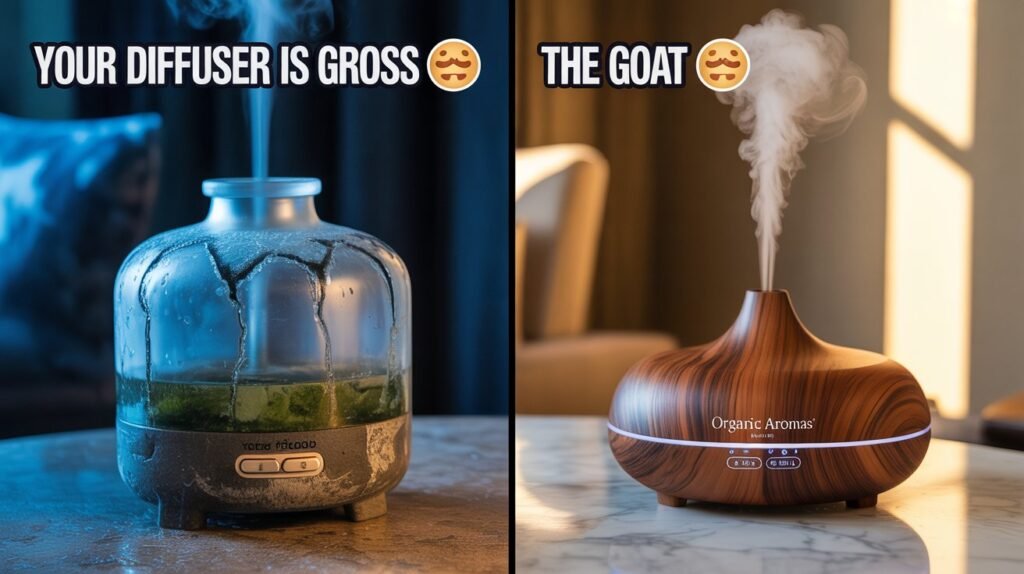
The domestic landscape of 2026 has witnessed a fundamental paradigm shift in the conceptualization of home wellness. No longer content with the superficial task of merely “scenting” a room, the contemporary American consumer has moved toward a sophisticated discipline defined as environmental branding. This evolution represents the transformation of personal sanctuaries into curated olfactory environments designed to regulate the human nervous system and establish a specific “aura” or identity within the home. At the center of this movement is a critical rejection of mass-market, plastic-based ultrasonic diffusers, which are increasingly categorized by wellness professionals and consumers alike as “bacteria factories” and vectors for environmental toxins.
The emergence of the Organic Aromas Nebulizing Diffuser as a dominant force in the high-end aromatherapy market is not merely a result of aesthetic preference; it is a response to a complex intersection of environmental health concerns, fluid dynamics, and the resurgence of artisanal craftsmanship. As domestic environments transition into “longevity residences,” the requirements for air quality and scent purity have become more stringent. Conventional ultrasonic systems, which utilize standing water and plastic components, are increasingly viewed as failures in the context of modern health standards. This report provides an exhaustive technical and socio-economic analysis of the nebulizing diffuser, evaluating its physical mechanisms, biological safety profile, and role in the 2026 wellness economy.
The Pathogenic Risk Profile of Conventional Ultrasonic Diffusion
The primary criticism directed toward ultrasonic diffusers in 2026 concerns their fundamental reliance on water as a medium for scent dispersal. While these $20 units from big-box retailers have long been a household staple, their design presents significant biological hazards that are often overlooked by the average consumer.
The Biofilm and “Dirty Sock” Phenomenon
The core mechanism of an ultrasonic diffuser involves a small vibrating disk that creates a fine mist of water and oil. However, where there is standing water in a plastic reservoir, the development of biofilm is inevitable. Biofilm is a structured community of microorganisms—including bacteria and fungi—that adhere to surfaces and secrete a protective extracellular matrix. In the context of a water-based diffuser, this results in what is colloquially known as “Dirty Sock Syndrome,” where the emitted mist carries a distinct, unpleasant odor reminiscent of a wet basement or damp laundry.
When these units are activated, they do not only aerosolize the intended essential oils; they create a fine mist of biological matter. Consumers believing they are inhaling therapeutic “Lavender Dreams” are, in many instances, subjected to a concentrated suspension of mold spores, bacteria, and mineral dust. This biological aerosolization is particularly concerning because the microscopic droplets are small enough to bypass the primary filters of the upper respiratory tract, depositing pathogens directly into the lower respiratory system.
Mineral Dust and Respiratory Irritants
Beyond biological contamination, ultrasonic diffusers utilizing tap water contribute to the accumulation of “white dust” or mineral particulates. As the water is broken down into a mist, the minerals—typically calcium and magnesium—are released into the air. In 2026, air quality monitoring has become a standard integration in smart homes, revealing that these minerals contribute significantly to indoor particulate matter (PM2.5) levels. For individuals with pre-existing conditions such as asthma or chronic obstructive pulmonary disease (COPD), the inhalation of this mineral dust can act as a significant irritant, negating any perceived wellness benefits of the aromatherapy session.
The Chemical Crisis: Phthalates, Microplastics, and Solvent Action
One of the most pressing health issues addressed in 2026 is the hidden danger of plastic leaching in domestic appliances. Essential oils are not benign fragrances; they are powerful, concentrated natural solvents composed of volatile organic compounds (VOCs) such as terpenes, alcohols, and ketones.
Essential Oils as Polymer Solvents
When concentrated essential oils sit in the cheap plastic reservoirs of mass-market diffusers, a chemical reaction occurs. The molecular structure of the oils allows them to penetrate plastic polymers, particularly low-grade types like polyethylene terephthalate (PET), polystyrene (PS), or polyvinyl chloride (PVC). This process leads to the physical etching of the reservoir, manifesting as cloudiness, pitting, or warping of the plastic.
This chemical interaction is the mechanism for “melting” plastic into the essential oil solution. As the oils break the carbon-based bonds of the plastic, synthetic additives—including phthalates and bisphenol A (BPA)—are leached directly into the oil before being aerosolized. The consumer, seeking a health-promoting experience, inadvertently inhales a “nano-mist” of melted plastic and endocrine disruptors.
The Impact of Endocrine Disrupting Chemicals (EDCs)
The 2026 health landscape is increasingly focused on the cumulative effects of endocrine-disrupting chemicals. Phthalates, used to increase the flexibility of plastics, have been linked in numerous studies to developmental issues, reproductive toxicity, and metabolic disorders.
| Phthalate Compound | Common Application in Plastics | Health Concerns Identified (2026 Research) |
| Di-n-pentyl phthalate (DPP) | Polyvinyl chloride softening | Reproductive and developmental impairment |
| Diisobutyl phthalate (DiBP) | Solvent and plasticizer | Testicular development and weight changes |
| Dibutyl phthalate (DBP) | Plasticizer and additive | Toxic to fetal development; banned in EU cosmetics |
| Diisodecyl phthalate (DIDP) | PVC, toys, carpet backing | Liver toxicity, thyroid disruption, asthma |
Recent laboratory testing by Mamavation revealed that 100% of analyzed essential oil products contained traces of phthalates, with levels ranging from 40 ppb to over 13,000 ppb. This contamination often occurs early in the supply chain through plastic storage containers. When these oils are placed in a plastic diffuser, the exposure is amplified significantly. Organic Aromas addresses this existential wellness threat by committing to a zero-plastic scent path, utilizing only sustainable hardwood and hand-blown borosilicate glass.
Microplastics and Respiratory Absorption
The 2026 “Tackling Microplastics as a Human Health Issue” trend highlights that microplastics—fragments smaller than 5 millimeters—have been detected in every major human organ, including the brain and heart. Micro-nanoplastics (MNPs) smaller than 10 microns can cross epithelial barriers in the respiratory system. By aerosolizing oils that have etched the plastic components of a diffuser, conventional units serve as a direct delivery system for these persistent pollutants into the human bloodstream.
The Science of the Flex: Bernoulli’s Principle and Cold Air Diffusion
The technical superiority of the Organic Aromas system is rooted in the application of Bernoulli’s Principle, a fundamental theorem of fluid dynamics that allows for the atomization of pure essential oils without the use of heat or water.
The Physics of Pressure and Velocity
Named after the Swiss mathematician Daniel Bernoulli, the principle states that in a steady flow, the sum of all forms of mechanical energy along a streamline is constant. This relationship is mathematically expressed as:
$P + \frac{1}{2}\rho v^2 + \rho gh = \text{constant}$
In the context of the Organic Aromas nebulizing unit, the process functions through a specialized glass micro-tube assembly :
- Air Compression: An internal air pump generates a high-pressure stream that is forced through a narrow tube, significantly increasing the air’s velocity.
- Vacuum Creation: According to Bernoulli’s theorem, as the velocity of the air increases at the exit point, the local pressure decreases. This creates a suction effect (the Venturi Effect).
- Atomization: This vacuum pulls pure essential oil from the reservoir into the high-velocity air stream. The collision between the air and the oil breaks the liquid into microscopic particles—a process known as pneumatic atomization.
- Mist Suspension: The resulting droplets are typically less than five micrometers in diameter. These ultra-fine particles are light enough to remain suspended in the air for hours, rather than settling on surfaces.
Thermal Integrity and Scent Throw
Unlike heat-based diffusers or aroma heaters, which can alter the molecular structure of essential oils, the Organic Aromas nebulizer operates at room temperature. This preservation of “unadulterated plant power” ensures that the full terpene profile—including delicate top notes—remains intact, maximizing the therapeutic efficacy. The power of this system allows for a coverage area of over 800 square feet, significantly outperforming the 300-400 square foot range of typical ultrasonic units.
Hand-Carved Jewels: Ubud Artistry and the Main Character Aesthetic
In 2026, the interior design landscape is characterized by “Cozycore,” “Quiet Luxury,” and “The Bespoke Revival”. Consumers are increasingly moving away from mass-produced, sterile plastic gadgets toward high-impact pieces that serve as “functional art”.
The Master Artisans of Mas Village
Organic Aromas sources its Hand-Carved Collection from master woodcarvers in Ubud, Bali, specifically from regions like Mas Village, which is world-famous for its intricate traditions. This area has historically been a center for Balinese royal support of the arts, where skills are passed down through lineages of grandparents and parents.
The production process for a single unit, such as the Dragon or the Unicorn Pegasus, is a testament to slow-production values:
- Time Intensity: It takes a single artisan approximately three full days of manual labor to carve the detailed relief work for one diffuser base.
- Materiality: The units are crafted from solid plantation hardwood, such as teak or mahogany, which are chosen for their sustainability and ability to show rich grain patterns.
- Unique Identity: Because each piece is carved by hand, no two units are identical, providing the “Main Character Energy” that 2026 consumers crave for their personal sanctuaries.
Biophilic Design and Sensory Engagement
The use of natural materials like wood and glass aligns with “Biophilic Design” trends, which aim to connect building occupants more closely to nature. Research in 2026 suggests that incorporating “biomorphic patterns”—objects that mimic nature, such as the hand-carved floral or animal motifs of Organic Aromas—can reduce environmental stress and improve mental clarity. By placing a hand-blown borosilicate glass reservoir (heat-strengthened Pyrex) on a nightstand or office desk, the user is romanticizing their daily ritual while ensuring a safe, non-toxic environment.
2026 IoT Innovation: The Smart Nebulizing Line
While the exterior of Organic Aromas units reflects ancient Balinese traditions, the internal technology has been updated for the 2026 smart home ecosystem. Historically, nebulizers were limited by manual control knobs, but the new Smart line introduces comprehensive digital agency.
Technical Architecture of the Smart Line
The Smart Nebulizing Diffuser line features several critical upgrades that position it as a “literal cheat code” for wellness enthusiasts:
- Bluetooth 5.0 Connectivity: Seamless integration with a dedicated application (iOS and Android) allowing for remote management of the atmosphere.
- Custom Scheduling and Programming: Users can set complex timers, such as a heavy mist for 20 minutes during a morning yoga session followed by a low-intensity “whisper” of scent for the duration of the workday.
- Rechargeable Autonomy: These units feature a high-performance lithium-ion battery that provides over 4 hours of pure mist on a single charge, removing the constraint of power cables and allowing for placement on garden patios or in vehicles.
- Real-Time Monitoring: The app provides data on battery life and allows for the management of multiple diffusers across different rooms of a large residence.
This integration of 2026 IoT tech with waterless nebulizing technology solves the primary pain points of aromatherapy: the mess of water refills and the limitation of being tethered to a wall outlet.
Market Comparison: Why Organic Aromas Sells Out
The aromatherapy market in 2026 is highly competitive, yet Organic Aromas maintains a unique position through its refusal to compromise on materials. Comparisons with other popular brands like Vitruvi and Aroma360 highlight significant differences in technical execution.
| Performance Metric | Organic Aromas (Smart Line) | Vitruvi (Stone/Move) | Aroma360 (Wireless Pro) | Mass-Market Brands |
| Diffusion Type | Waterless Nebulizing | Ultrasonic (Water-based) | Cold-Air (Waterless) | Ultrasonic / Heat |
| Scent Path Material | Hardwood & Glass | Ceramic-Plated Plastic | Metal & Plastic | Cheap Plastic |
| Pure Oil Potency | 100% Undiluted | Water-Diluted | Alcohol-Blended/Pods | Highly Diluted |
| Coverage Area | 800+ sq. ft. | ~500 sq. ft. | 600 – 1,200 sq. ft. | 300 – 400 sq. ft. |
| App Integration | Bluetooth 5.0 | None (Manual/Remote) | Remote/App | None |
| Health Safety | Zero Mold/Plastic Risk | High Mold Risk | Potential Leaching | Pathogenic Biofilm Risk |
| Artisan Value | Hand-Carved Bali Art | Mass-Produced Ceramic | Mass-Produced Metal | Injection-Molded Plastic |
The Competitive Edge over Aroma360 and Vitruvi
While Aroma360 offers high-coverage systems (like the Wireless Pro which covers 600 sq. ft.), their reliance on proprietary Pro-Pod oils can be restrictive for purists who want to use their own certified organic essential oils. Vitruvi’s Stone and Move diffusers are widely praised for their aesthetic, but as ultrasonic devices, they continue to rely on water, which limits the potency of the scent and maintains the risk of biofilm development. Organic Aromas is the only brand that consistently provides a zero-plastic, waterless path from the reservoir to the atmosphere, backed by a one-year warranty and a life-long build quality.
Solving the American “Stress Epidemic”: The Neurowellness Connection
Chronic stress is the leading wellness challenge in the US in 2026, driven by screen fatigue and a culture of constant hustle. The Organic Aromas nebulizer is increasingly marketed as a tool for “Neurowellness” and nervous system regulation.
Olfactory Stimulation and the Limbic System
Aromatherapy is no longer viewed merely as a pleasant fragrance; it is a direct biological interface. When a nebulizer blasts pure, undiluted oils like Frankincense or Lavender, the molecules interact with the olfactory bulb, which has a direct neuroanatomical connection to the limbic system—the brain’s center for emotion, memory, and autonomic nervous system control.
The lack of dilution in a nebulizing system provides several physiological advantages:
- Terpene Density: Because the oil is not diluted by water or damaged by heat, the user receives a high concentration of therapeutic terpenes (like linalool in lavender), which hit the system faster than any other method.
- Cortisol Regulation: Diffusion during evening “wind-down” routines or meditation has been shown to lower cortisol levels and send a signal to the parasympathetic nervous system to induce relaxation.
- Vagal Tone Support: “Neurowellness” trends in 2026 emphasize vagus nerve stimulation; the consistent, high-potency mist from a nebulizer serves as a sensory anchor for breathwork and somatic practices.
Sleep Architecture and Atmospheric Control
The “Longevity Residences” trend emphasizes that “healthspan comes home”. By using a programmable Smart nebulizer to release sedative scents like sandalwood or cedarwood thirty minutes before bed, users can improve sleep architecture—reducing the time to fall asleep and increasing the duration of deep REM cycles. This is a “literal cheat code” for those struggling with the sleep fragmentation caused by digital overload.
The Verdict: Value Proposition and ROI in 2026
The final assessment of Organic Aromas depends on whether the consumer values health, vibe, and ethical craftsmanship over convenience and low initial cost.
Artisanal Support vs. Corporate Churn
By purchasing a hand-carved unit, consumers are actively supporting a living culture and reducing the pressure on over-touristed areas of Bali. This alignment with “Sustainable Luxury” ensures that the item is not a disposable gadget but a “one-of-a-kind jewel” that preserves Balinese cultural DNA for future generations.
Practical Logistics for the US Market
For consumers in the United States, Organic Aromas offers logistical advantages that facilitate the “glow-up” routine:
- Free Expedited Shipping: Orders over $130 qualify for free shipping, typically arriving in 4-6 business days via FedEx or UPS.
- Warranty and Service: A one-year free parts and service warranty provides peace of mind that a basic $20 big-box unit cannot offer.
- Safety Features: The units feature an automatic usage cycle (2 minutes on, 1 minute off) and a 120-minute auto-shutoff to prevent motor overheating and ensure optimal oil usage.
Conclusion: The Ultimate Flex for Atmospheric Health
In the wellness-centric world of 2026, the aura of a home is a direct reflection of its occupant’s commitment to self-care and environmental integrity. The Organic Aromas Nebulizing Diffuser has established itself as the “literal GOAT” of the industry by addressing the “Big Ick” of conventional diffusers: the aerosolization of mold and the leaching of microplastics. By blending the rigorous science of Bernoulli’s Principle with the emotional and cultural depth of Ubud artistry, the brand has created a high-performance wellness machine that “hits different”.
Ready to revolutionize your home’s aura? To invest in the best waterless essential oil diffuser of 2026, you can shop the Handcrafted Collection to experience the ‘absolute GOAT’ of Balinese artisanal craftsmanship. For those ready to buy a smart app-controlled nebulizer, for unparalleled wireless freedom and precision scheduling. If you are seeking a high-performance entry into professional aromatherapy, the general segment offers the purest medical-grade mist without the risks of plastic leaching. Plus, for a limited time, you can get 10% off any product using our exclusive “SmartDiffuser” launch promotion. Don’t settle for a moldy bacteria factory—secure your premium waterless system today and transform your personal sanctuary into a high-performance wellness retreat.