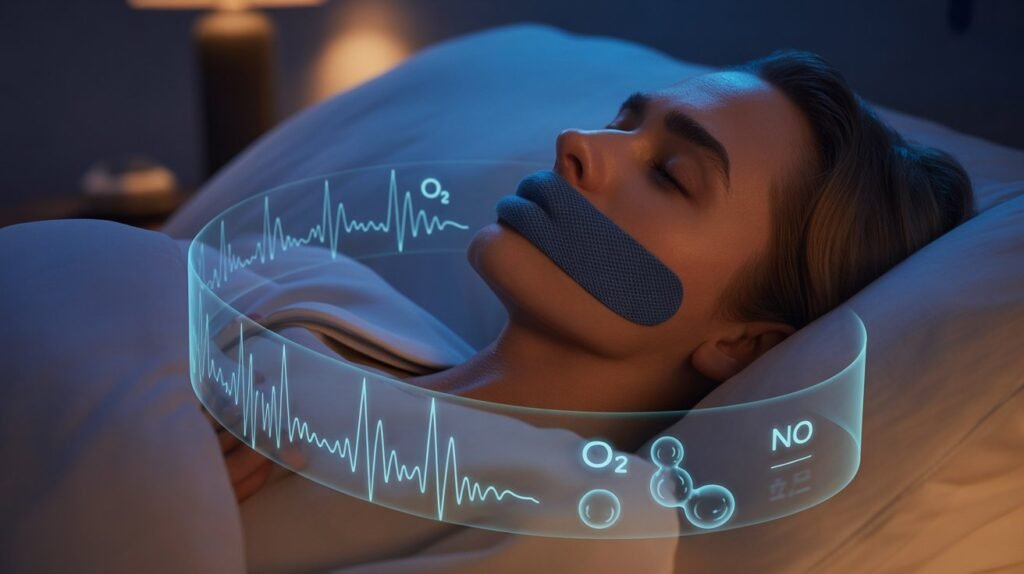
The sleep optimization market in the United States has undergone a transformative shift between 2021 and 2025, evolving from a niche interest within the biohacking community into a mainstream health and wellness sector valued at over $50 million. Central to this evolution is the rising adoption of mouth taping—a practice involving the application of specialized adhesive strips to the lips to facilitate nasal breathing during sleep. Market data indicates a significant surge in consumer interest, with search volume for “mouth tape” increasing by 133% in the twelve months leading up to March 2025, reaching an estimated 669,000 monthly searches. This growth is part of a broader 400% increase in core industry search terms since 2021, suggesting that consumer demand is currently outpacing product availability.
This analysis examines the biophysiological foundations, clinical efficacy, material science, and safety protocols of the current market, with a specific focus on PATCH4U and its primary competitors, including SomniFix, MyoTape, Hostage Tape, and VIO2. By synthesizing clinical research with market dynamics and technical specifications, this report provides a comprehensive overview for healthcare professionals and industry stakeholders.
Market Dynamics and Regional Consumer Trends
The rapid expansion of the mouth tape market is driven by several converging factors, including social media virality, a growing focus on respiratory health, and the mainstreaming of sleep hygiene practices. TikTok has emerged as the primary catalyst for product awareness, where short-form videos foster quick virality and the sharing of personal anecdotes regarding sleep quality. In contrast, platforms like YouTube, which emphasize longer-form technical content, have seen less relative engagement, highlighting the current consumer preference for experiential rather than purely clinical testimonials in the early stages of adoption.
Geographical analysis reveals that the strongest interest in mouth taping is concentrated in health-conscious US markets, specifically California, Colorado, and the Pacific Northwest. These regions often serve as early adopters for wellness trends before they penetrate mainstream national markets. Seasonal patterns also dictate consumer behavior, with a primary peak in January coinciding with New Year health resolutions and a secondary peak in September as individuals establish new routines following the summer months. Furthermore, the market is segmented by intent: sleep optimization seekers represent the largest demographic, typically adults aged 25–55 who prioritize comfort and gentle adhesive properties. Athletes and biohackers form smaller but higher-value segments, seeking performance enhancement and scientific transparency.👉 Amazon 👈
US Market Growth and Search Volume Projections
| Metric | 2021 Baseline | 2022–2024 Growth | 2025 Current Estimate |
| Monthly Core Search Volume | ~41,000 | +340% (“mouth tape”) | 165,000 (core) |
| Long-tail Search Volume | ~21,000 | +280% (“mouth taping”) | 85,000 |
| Total Monthly Searches | ~62,000 | ~300% (Aggregate) | 250,000+ |
| Market Valuation | N/A | Emerging | $50M+ |
The maturation of the market is evidenced by a decline in generic searches for “sleep aid” and an increase in specific queries such as “mouth tape safety,” “alternatives to CPAP,” and “mouth breathing problems”. This suggests that consumers are becoming increasingly educated about the specific mechanisms of respiratory health and are seeking targeted interventions rather than broad-spectrum solutions.
Biophysiological Foundations: Nasal Breathing and Nitric Oxide
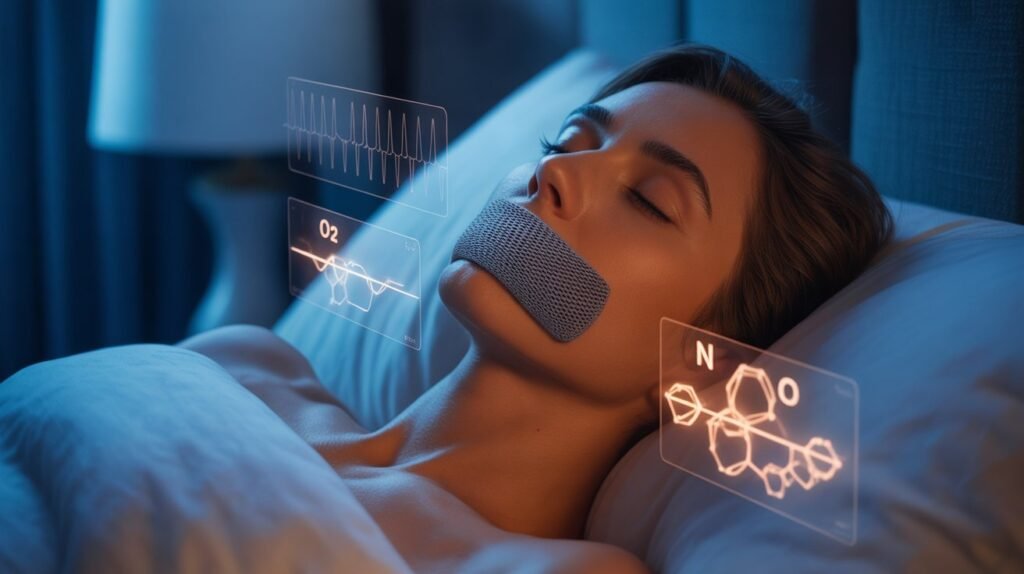
The fundamental premise of mouth taping rests on the physiological superiority of nasal breathing over oral breathing. The nasal passage is not merely a conduit for air but a sophisticated filtration and conditioning system. During nasal inhalation, air is heated, humidified, and filtered, which reduces the physiological stress on the lower respiratory tract. In contrast, mouth breathing during sleep is associated with several detrimental anatomical changes, including the posterior displacement of the soft palate and the inferior movement of the mandible. These movements decrease the retropalatal and retroglossal areas, which increases airway resistance and aggravates the severity of obstructive sleep apnea (OSA).
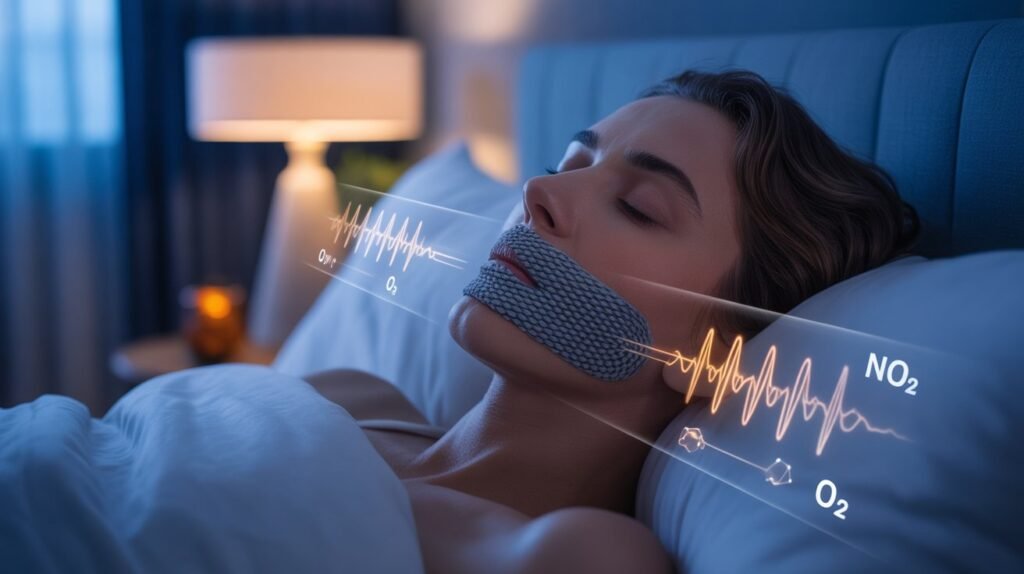
A critical, often underappreciated aspect of nasal breathing is the production and utilization of nitric oxide (NO). This molecule, first identified as a powerful vasodilator, is constitutively produced by epithelial cells in the paranasal sinuses. The concentrations of NO in the sinuses are remarkably high, often exceeding atmospheric pollution levels and reaching levels 100 times higher than those found in the lower airways.
The “Aerocrine” Function of Sinus-Derived Nitric Oxide
Nasal breathing acts as a delivery mechanism for this endogenous NO, which reaches the lungs in a diluted form with every breath. Research characterizes NO as an “aerocrine” hormone—produced in the upper airways and transported to a distal site of action in the lungs. In the pulmonary system, NO facilitates several key processes:
- Vasodilation: It relaxes pulmonary vascular smooth muscle, reducing pulmonary vascular resistance.
- Oxygen Exchange: Clinical studies have demonstrated that nasal breathing can increase transcutaneous oxygen tension (tcPO2) by 10% in healthy subjects and arterial oxygenation (PaO2) by up to 18% in intubated patients when nasal air is introduced.
- Antimicrobial Defense: High concentrations of NO in the sinuses possess bacteriostatic effects, helping to maintain sterility in the paranasal cavities.
- Mucociliary Activity: NO stimulates the cilia in the respiratory tract, enhancing the clearance of mucus and trapped particles.
Recent computational modeling based on CT scans has revised the understanding of NO transport, showing that the ethmoid sinuses and diffusive transport—rather than convective air movement from the larger maxillary sinuses—dominate the emission of NO into the main nasal airway. This underscores the importance of maintaining patent nasal passages to realize the full physiological benefits of NO.👉 Amazon 👈
Clinical Efficacy in Sleep-Disordered Breathing
The clinical literature regarding mouth taping and oral occlusion presents a complex landscape of results, with efficacy largely dependent on the patient’s baseline severity of sleep-disordered breathing. While social media narratives often present mouth taping as a universal remedy, scientific consensus emphasizes its role primarily in the management of mild OSA and primary snoring.
Impact on the Apnea-Hypopnea Index (AHI)
The Apnea-Hypopnea Index (AHI) is the standard metric for diagnosing and grading the severity of OSA. Several small-scale studies have investigated the impact of mouth occlusion on this metric. Lee et al. (2022) conducted a study on patients with mild OSA (defined as an AHI between 5 and 15) and found that mouth taping resulted in a 47% reduction in median AHI, from 8.3 to 4.7 events per hour (p=0.0002). This improvement was even more pronounced in the supine position, where the median AHI dropped from 9.4 to 5.5 (p=0.0001).
Similarly, a study by Huang et al. (2015) using a specially designed oral patch reported a reduction in median AHI from 12.0 to 7.8 events per hour (p<0.01). However, these results are not universally replicated. A systematic review by Rhee et al. (2025) of ten studies involving 233 patients found that only a minority reported statistically significant reductions in AHI, while others showed no change compared to baseline or placebo. For instance, Labarca et al. (2022) found that mouth taping only improved AHI when used in combination with a Mandibular Advancement Device (MAD), but had no significant effect when used as a standalone intervention.
Snoring Index and Oxygen Saturation
Snoring, often a primary motivator for consumers, has shown more consistent improvement in clinical trials. The Lee et al. (2022) study observed a significant reduction in the median Snoring Index (SI), which fell from 303.8 to 121.1 events per hour—a 47% improvement (p=0.0002). Other research suggests that mouth taping may reduce snoring intensity by 15% to 20% in specific populations.
Regarding oxygenation, the data remains mixed. While some studies showed improvements in the oxygen desaturation index (ODI) and the lowest saturation levels, others found no significant change in mean oxygen saturation (SaO2). This suggests that while mouth taping may reduce the frequency of discrete breathing interruptions, it may not fundamentally alter the baseline oxygen saturation of the blood in more severe cases.👉 Amazon 👈
Mouth Leak and CPAP Compliance
One of the most robust clinical applications for mouth tape is as an adjunct to Continuous Positive Airway Pressure (CPAP) therapy. Patients using nasal masks often experience “mouth leak,” where the therapeutic air pressure is lost through an open mouth, leading to reduced efficacy and uncomfortable dry mouth. Multiple studies have confirmed that oral occlusion significantly reduces mouth leak, thereby enhancing CPAP compliance and effectiveness. In some instances, mouth taping has allowed for lower CPAP pressure requirements compared to oronasal masks.
Summary of Clinical Studies on Oral Occlusion
| Study | Population | Primary Outcome (AHI) | Primary Outcome (Snoring) | Quality Rating (Newcastle-Ottawa) |
| Lee et al. (2022) | Mild OSA | 8.3 → 4.7 (p=0.0002) | 303.8 → 121.1 (p=0.0002) | Low |
| Huang et al. (2015) | Mild OSA | 12.0 → 7.8 (p<0.01) | 146.7 → 40.0 (p<0.01) | Low |
| Labarca et al. (2022) | OSA | No sig. change (tape alone) | N/A | Low |
| Osman et al. (2024) | OSA | No sig. change | N/A | Low |
| Systematic Review (2025) | Aggregate | Inconsistent results | Reduced in 3 studies | Low (All 10 studies) |
The prevalence of “low quality” ratings across these studies—primarily due to small sample sizes, lack of control groups, and risk of bias—indicates that while the preliminary findings are promising for mild cases, large-scale, multi-institution randomized controlled trials are required to establish mouth taping as a standard clinical intervention.
Material Science and Adhesive Technology
For any product designed for 7–10 hours of nightly skin contact, the material composition and adhesive chemistry are paramount. The perioral region is characterized by high sensitivity and a complex moisture profile, making it susceptible to Medical Adhesive-Related Skin Injury (MARSI).
MARSI, TEWL, and Skin Barrier Integrity
MARSI encompasses a range of clinical issues, including mechanical injuries (skin stripping, epidermal tears, tension blisters) and dermatitis. A key indicator of skin barrier damage is Transepidermal Water Loss (TEWL). When the stratum corneum is disrupted by the repeated application and removal of adhesives, TEWL increases, leading to dehydration and inflammation.
Research comparing silicone-based and acrylate-based adhesives—the two primary systems in the mouth tape market—reveals significant differences in skin response. A study of 88 healthy volunteers found that silicone adhesives removed significantly less total protein and fewer corneocytes than acrylate-based tapes. Furthermore, silicone tapes did not significantly alter TEWL, whereas acrylate tapes caused a significant elevation, indicating a compromised moisture barrier.👉 Amazon 👈
Comparative Analysis of Adhesive Systems
| Feature | Silicone Adhesives | Acrylate Adhesives | Synthetic Rubber Adhesives |
| Adhesion Profile | Soft, conforms to skin crevices | Strong initial bond, can increase over time | High tack, often used in heavy-duty tapes |
| Removal Trauma | Low; minimal skin stripping | Higher; removes more protein | Potentially high; risk of hair pulling |
| MARSI Incidence | ~31.8% in surgical settings | ~56.8% in surgical settings | Not systematically rated in sleep studies |
| Skin Types | Ideal for sensitive/fragile skin | Standard; may cause irritation | May cause reactions in latex-sensitive users |
PATCH4U and many of its competitors utilize a cotton or cotton-blend backing. Cotton is preferred for its high Moisture Vapor Transmission Rate (MVTR), which allows the skin to “breathe” and prevents maceration (the softening and breaking down of skin due to trapped moisture). PATCH4U specifically emphasizes its “dermatologist-designed” cotton construction and hypoallergenic, latex-free formula, positioning it as a premium option for sensitive skin.
Competitive Review: Product Comparison and Specifications
The current market is bifurcated between products seeking medical legitimacy (e.g., SomniFix) and those emphasizing lifestyle, performance, or specialized use-cases (e.g., Hostage Tape, MyoTape).
Technical Specification Matrix
| Feature | PATCH4U | SomniFix | MyoTape | Hostage Tape | VIO2 |
| Material | Cotton | Patented Mesh | Soft Cotton | Woven Fabric | Cotton/Poly Blend |
| Adhesive | Hypoallergenic, Latex-free | Silicone-based | Acrylic Hypoallergenic | Stretchy, Strong Adhesive | Medical-grade |
| Breathing Vent | No | Yes (Central) | No (Surrounds mouth) | No | Partial (Non-full coverage) |
| User Type | Sensitive skin / General | CPAP / Medical | Kids (4+) / Athletes | Bearded users / Athletes | General Wellness / Kids (6+) |
| Key Differentiator | Pain-free removal focus | Harvard-validated study | Expert-led (Patrick McKeown) | “Official Sleep Aid of UFC” | Physician-designed (US Patent) |
| Price Point | ~$13/30-pack | ~$25/28-pack | ~$30/90-pack | ~$30/30-pack | ~$25/48-pack |
Product Specific Insights
- PATCH4U: Marketed as a premium tape designed for softness and extended wear. It emphasizes a 24/7 customer support model and a broad 30-pack value proposition. Its lack of a vent is compensated for by the high MVTR of its cotton material, though it is not recommended for heavy-duty industrial or high-moisture environments.
- SomniFix: Represents the most clinical approach in the market. Its “Pore-Vent” technology is designed to alleviate the claustrophobia associated with full oral occlusion, providing an “emergency pathway” for air. It is widely used in CPAP communities to improve mask seals.
- MyoTape: Offers a radical design departure by surrounding the mouth rather than covering it. This applies light elastic tension to the lips, training the muscles to stay closed while still allowing for speech or emergency mouth opening. This “mouth puffing” capability is noted as essential for safety in certain sleep apnea populations.
- Hostage Tape: Targets the athletic and bearded segments with a high-strength adhesive that maintains a seal even over facial hair. However, user feedback suggests that this strength can lead to “duct tape-like” removal pain and skin residue for some users.
- VIO2: Developed by a physician and a dentist, this product emphasizes its “forever-chemical-free” (PFAS-free) construction and its uniquely non-claustrophobic shape that allows for sipping through a straw.👉 Amazon 👈
Safety Protocols and Contraindications
While mouth taping is generally safe for healthy individuals with clear nasal passages, the potential for respiratory distress necessitates strict adherence to safety guidelines. Forced mouth closure prevents the body’s natural “switch” to oral breathing when the nasal route is obstructed, creating a risk of asphyxiation.
Critical Contraindications and Risk Factors
Healthcare providers should screen for the following conditions before recommending mouth tape:
- Nasal Obstruction: This includes both acute conditions (colds, allergies) and structural pathologies (deviated septum, nasal polyps, adenoidal hypertrophy).
- Moderate to Severe OSA: Mouth taping is not a treatment for significant apnea. It can dangerously reduce oxygen levels in patients who require CPAP or surgical intervention.
- Gastroesophageal Reflux Disease (GERD): The risk of vomiting during sleep—while rare—can lead to aspiration if the mouth is taped shut and the emesis cannot be expelled.
- Substance Use: Consuming alcohol, sedatives, or narcotics before bed is a primary contraindication, as these substances suppress the arousal response and the ability to remove the tape in an emergency.
- Pediatric Vulnerabilities: Children are particularly susceptible to respiratory obstruction due to smaller airways and the higher prevalence of tonsillar hypertrophy.
Pediatric Usage Guidelines
| Manufacturer | Recommended Age | Mandatory Supervision | Primary Safety Concern |
| MyoTape | 4+ years | Yes (Adult) | Must be able to remove tape independently |
| VIO2 | 6+ years | Yes | Not for use with sedatives or respiratory disorders |
| SomniFix | N/A (Adult focus) | N/A | Risk of obstruction in children with large tonsils |
The consensus among pediatric sleep experts is that mouth breathing in children is often a compensatory mechanism for physical obstructions like enlarged adenoids. In these cases, the appropriate treatment is typically adenotonsillectomy rather than mechanical occlusion.
Sociological Trends: Mewing and Facial Aesthetics
A secondary but powerful driver of the mouth tape market is the “looksmaxxing” and “mewing” subcultures. Mewing—a technique popularized by orthodontist John Mew—involves the persistent placement of the entire tongue against the hard palate. Proponents claim that this practice, when combined with mouth taping to maintain posture during sleep, can redefine the jawline, sharpen the facial profile, and even correct misaligned teeth.
Orthodontic Consensus on DIY Facial Restructuring
The American Association of Orthodontists (AAO) has issued warnings regarding the “mewing” trend, stating that scientific evidence supporting its jaw-sculpting claims is “as thin as dental floss”. Orthodontists emphasize several risks:
- Dental Displacement: Powerful tongue muscles can exert uneven pressure, pushing teeth out of alignment and leading to gaps or crowding.
- Malocclusion: Improper tongue posture can alter how the jaws meet, causing underbites, overbites, or TMJ pain.
- Complex Sequelae: Correcting the damage caused by improper DIY jaw positioning can lead to more expensive and time-consuming professional orthodontic treatments.
Despite the lack of clinical validation, the aesthetic appeal of a “sharper” jawline remains a major motivator for the 25-55 age demographic, contributing significantly to the current $50M market valuation.👉 Amazon 👈
Conclusions and Strategic Outlook
The US sleep optimization market for hypoallergenic cotton adhesives is currently in a high-growth, transformative phase. The evidence suggests that for a specific subset of the population—those with mild OSA, primary snoring, or those seeking to improve CPAP compliance—mouth taping offers a low-cost, non-invasive intervention that can yield significant physiological benefits, particularly through the regulation of nasal nitric oxide and the reduction of airway resistance.
However, the industry faces several challenges:
- Quality of Evidence: Most existing studies are limited by small sample sizes and lack of rigorous controls, necessitating more robust research to satisfy medical standards.
- Safety Regulation: As the trend moves from biohacking to the general population, the risk of “indiscriminate” use in high-risk groups (e.g., severe OSA, children with nasal obstruction) increases, highlighting the need for clearer clinical guidelines.
- Material Innovation: The shift from harsh acrylates to gentler silicone-based systems and high-MVTR cotton backings reflects a growing consumer demand for products that prioritize skin barrier integrity.
For PATCH4U, maintaining a competitive edge will require a continued focus on material softness and dermatologist-backed transparency, as consumers increasingly move away from generic “sleep aids” toward specialized, technically superior products. The future of the market likely lies in “smart” adhesives that can monitor respiratory variables or in the development of hybrid systems that combine mechanical occlusion with pharmacological aids (e.g., nasal decongestants) to ensure patent nasal breathing throughout the sleep cycle. Healthcare providers should view mouth taping as a useful adjunct—not a primary treatment—for sleep-disordered breathing, emphasizing the need for comprehensive screening and professional oversight. Access this top-rated product and more at👉 Amazon 👈