Women’s wellness in 2026 has evolved beyond basic hygiene products. Today’s buyers want solutions that are functional, comfortable, safe for the body, and better for the environment. One category that has exploded in popularity is leakproof underwear — especially among women dealing with heavy menstrual cycles, postpartum recovery, or bladder leaks.
For decades, the default solution was disposable pads or liners. But those products come with well-known downsides: they shift during movement, contain questionable chemicals, and contribute to enormous amounts of waste each year.
That’s where DeepFlow Leakproof Underwear from EverLeakproof enters the conversation. The company claims their underwear can absorb up to 100ml of fluid, which is significantly higher than most competing brands.
But marketing claims are one thing. Real-world performance is another.
To find out whether the product lives up to the hype, I spent 30 days testing DeepFlow during heavy cycle days, overnight wear, and normal daily use. In this review, I’ll break down the design, the real performance, and how it compares to other popular brands like Knix and Thinx.
| Brand | Max Absorbency | PFAS Free | Best For | Price |
|---|---|---|---|---|
| DeepFlow | 100ml | Yes | Heavy flow & bladder leaks | $79.95 (5 pack) |
| Knix | 40–50ml | Yes | Light leaks & daily wear | $25–$35 each |
| Thinx | ~45ml | Mixed reports | Style & moderate flow | $30+ each |
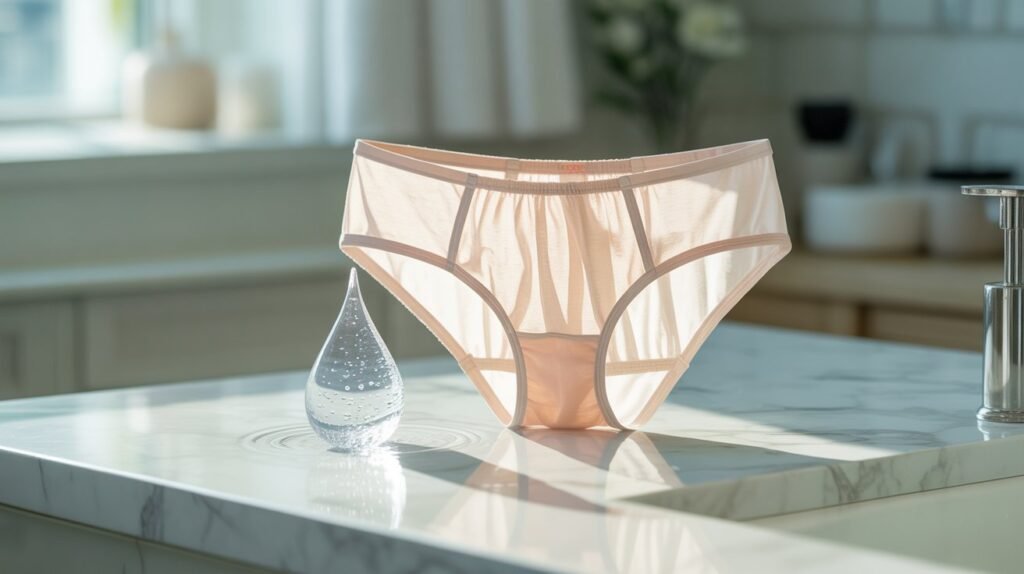
Why Leakproof Underwear Is Becoming So Popular
Before diving into the product itself, it’s worth understanding why leakproof underwear is trending so heavily.
Recent studies estimate that:
- 1 in 3 women experience bladder leaks at some point in their life.
- Heavy menstrual bleeding affects millions of women worldwide.
- The average woman spends over $100 per year on disposable pads or tampons.
Disposable products also create massive environmental waste. A single woman may discard thousands of pads over her lifetime.
Reusable leakproof underwear aims to solve three problems at once:
- Reduce leaks and accidents
- Lower long-term costs
- Reduce environmental waste
But not all leakproof underwear is built the same.
What Makes DeepFlow Different
The main selling point of DeepFlow is absorbency capacity.
Most leakproof underwear on the market absorb between 40ml and 50ml, which is roughly the equivalent of 8–10 tampons.
DeepFlow claims a capacity of 100ml, which is nearly double the industry average.
That alone makes it interesting for people dealing with:
- Very heavy menstrual cycles
- Overnight protection
- Postpartum bleeding
- Stress incontinence or bladder leaks
But capacity alone doesn’t determine performance. Fit, materials, breathability, and odor control also matter.
DeepFlow Material and Construction
During my testing, the construction of the underwear was one of the first things I noticed.
Instead of using fully synthetic inner layers, DeepFlow uses a hybrid fabric structure designed for comfort and skin health.
Outer Layer
The outer shell uses a nylon and spandex blend (83% nylon / 17% spandex).
This material has two purposes:
- It provides stretch and flexibility.
- It keeps the absorbent core pressed against the body to prevent shifting.
If you’ve ever worn disposable pads during exercise, you know how frustrating movement and bunching can be. The compression from the outer layer helps reduce that issue.
Inner Layer
The inside lining is 100% cotton, which feels soft and breathable.
Cotton liners are important because they reduce:
- skin irritation
- trapped heat
- odor buildup
Synthetic liners can sometimes feel warm or plasticky. The cotton layer here feels much more like normal underwear.
PFAS-Free Design
Another important point is that DeepFlow advertises itself as PFAS-free.
PFAS chemicals have been controversial in the hygiene industry, and many consumers now actively avoid products containing them.
The PFAS-free design adds another layer of safety reassurance.
My 30-Day Testing Experience
To properly test DeepFlow, I used the underwear during:
- two heavy cycle days
- three moderate cycle days
- overnight sleep
- general daily wear
Here’s what I experienced.
Heavy Flow Performance
Heavy flow days are where leakproof underwear either proves its value or completely fails.
On my heaviest day, I wore DeepFlow for around 9 hours during normal daily activity.
The results were surprisingly good.
There were no leaks, no shifting, and no damp feeling during the day.
The absorbent core distributes moisture evenly instead of concentrating it in one spot, which helps prevent the uncomfortable “saturated pad” feeling.
For extremely heavy flow, some users might still want to pair the underwear with a menstrual cup or tampon overnight, but for daytime wear the protection felt very reliable.
Overnight Protection
Overnight testing is often where leakproof products struggle.
I wore DeepFlow overnight for about 8 hours of sleep.
The underwear handled overnight protection well, with no leaks on bedding.
The back gusset design extends higher than many standard styles, which helps protect against leaks when sleeping on your back.
That design detail is actually very important and something many cheaper brands ignore.
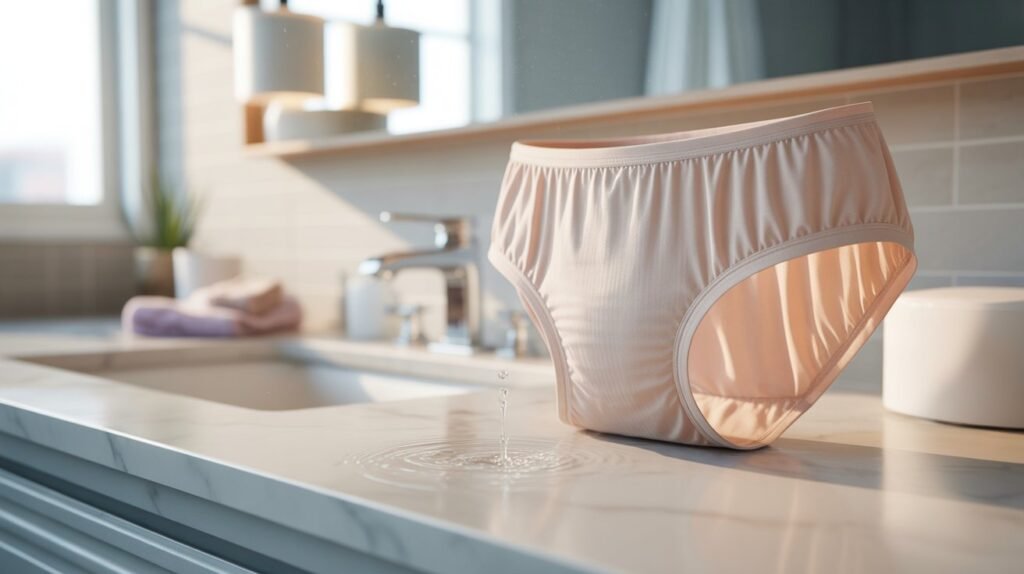
Comfort and Daily Wear
Comfort is where leakproof underwear sometimes disappoints.
If the absorbent layer is too thick, it can feel bulky or diaper-like.
DeepFlow does feel slightly thicker than lightweight brands, but not enough to feel uncomfortable.
In everyday wear:
- the fabric stretches well
- the waistband stays in place
- the underwear feels close to normal
It doesn’t feel like medical gear or adult incontinence wear, which is important for confidence.
Odor and Breathability
Odor control was another area I paid attention to during testing.
After long wear times (8–10 hours), the cotton liner helped maintain breathability.
There was no strong odor buildup, which can sometimes happen with synthetic fabrics.
This suggests the cotton layer is doing its job properly.
Washing and Durability
Leakproof underwear must survive frequent washing.
During my test period, the underwear was washed multiple times in cold water and air dried.
After washing:
- elasticity remained strong
- the absorbent core showed no separation
- the fabric maintained its shape
Proper care is important. Fabric softener should be avoided because it can reduce absorbency.
With proper care, most leakproof underwear can last 1–3 years.
DeepFlow vs Knix vs Thinx
To put DeepFlow into context, it helps to compare it to two of the most popular brands in the category.
Knix
Knix is known for extremely comfortable, lightweight designs.
However, their heavy absorbency models usually hold around 40–50ml.
Knix is great for:
- everyday comfort
- workouts
- light leaks
But for very heavy flow days, the capacity can be limiting.
Thinx
Thinx has been one of the most recognizable names in the leakproof category.
Their products often prioritize style and variety of cuts.
Absorbency levels are generally around 45ml, which works well for moderate protection.
However, DeepFlow offers higher absorbency while also emphasizing a PFAS-free safety profile.
Price and Long-Term Value
One of the biggest advantages of reusable underwear is cost savings.
A 5-pack of DeepFlow costs about $79.95, which works out to roughly $16 per pair.
Compared to other brands where individual pairs can cost $30 or more, that’s relatively affordable.
When replacing disposable pads, most users recover the cost within three to four months.
For first-time buyers, the discount code WELCOME10 reduces the initial investment.
👉 Buy DeepFlow Leakproof Underwear here:
Who Should Consider DeepFlow
DeepFlow is especially useful for:
- women with heavy menstrual cycles
- people experiencing bladder leaks
- postpartum recovery
- travelers who want fewer product changes
- anyone trying to reduce disposable waste
It may be less ideal for people who prefer extremely lightweight underwear, because higher absorbency inevitably adds some thickness.
Pros and Cons
Pros
✔ Very high 100ml absorbency capacity
✔ Cotton liner improves breathability
✔ PFAS-free safety profile
✔ Cost-effective compared to competitors
✔ Good overnight protection
Cons
✖ Slightly thicker than ultra-light brands
✖ Requires proper washing care
✖ Limited style variety compared to fashion-focused brands
Final Verdict: Is DeepFlow Worth It?
After 30 days of testing, DeepFlow proves to be a serious contender in the leakproof underwear category.
Its biggest advantage is the 100ml absorbency capacity, which provides extra confidence during heavy flow days or bladder leak situations.
While it may feel slightly thicker than lightweight competitors, the trade-off is significantly better protection.
For women looking to reduce disposable products, save money long-term, and avoid chemical exposure, DeepFlow offers a practical and well-engineered solution.
If heavy cycles or occasional leaks have ever made you anxious during the day or overnight, trying a 5-pack rotation is a smart way to test whether leakproof underwear can replace disposable pads for you.👉Check the latest DeepFlow price here:
Best Bras for Everyday Comfort in 2026 (Recommended for you)
Looking for the most comfortable bras this year? Explore the top-rated wireless bras that combine breathable fabric, flexible support, and modern seamless design for daily wear.
👉 Read more: Best Bras for Everyday Comfort in 2026