The High-Stakes Paradigm of the 2026 Retail Environment
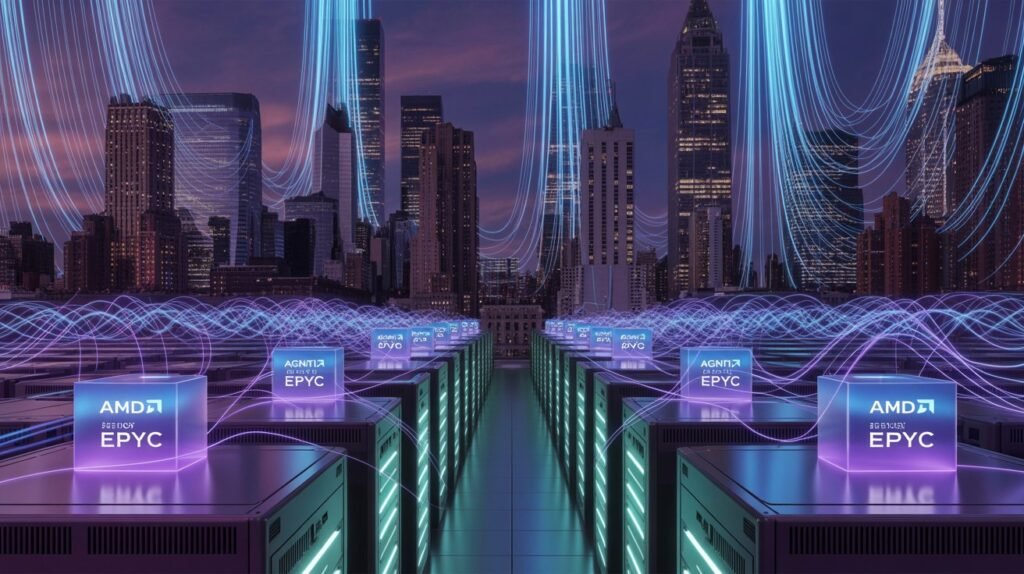
In the high-stakes arena of 2026 retail trading, the traditional boundaries between institutional and retail participants have effectively dissolved, replaced by a hierarchy defined by computational latency and the sophistication of autonomous reasoning swarms. This era is dominated by what the industry identifies as the “Caffeine-Fueled Trader”—an individual who recognizes that in a market where “Agentic AI” bots and high-frequency algorithms dictate the flow of liquidity, the difference between a “mooning” portfolio and a “blown account” is no longer solely a function of strategy, but a function of the physical location of a server. The global financial system may appear to be a decentralized digital cloud, yet for the U.S. forex market, the physical “heart” remains stubbornly localized at 755 Secaucus Rd, Secaucus, New Jersey. This location, known as the Equinix NY4 data center, represents a fortress of financial interconnection where the world’s largest media, enterprise, and financial firms house their matching engines.
The shift toward “Agentic AI” in 2026 marks a fundamental departure from the simple automated tools of the previous decade. These are no longer 2018-era bots utilizing basic Relative Strength Index (RSI) crosses or rudimentary trend-following logic; they are Large Language Model (LLM)-driven agents capable of real-time sentiment analysis, volumetric crunching, and multi-step reasoning. This technological evolution has placed an unprecedented demand on Virtual Private Server (VPS) infrastructure, as these “Agentic AI” frameworks—such as the “Quantum Queen” or “Mad Turtle” strategies—demand raw horsepower over the “one-click” gimmicks that once sufficed for the casual trader. Consequently, VPSForexTrader, an entity established in 2011, has positioned its New York infrastructure as a premium hub for traders who demand the performance required to compete in this adversarial environment.

| Metric Specification | VPS Smart NY Detail | Strategic Trader Impact in 2026 |
| Processor Architecture | 3-Core AMD EPYC (Enterprise) | High-speed tick processing during high-impact news |
| Memory Capacity | 4 GB ECC (Error-Correcting) | Prevents “bit-flip” crashes during extreme volatility |
| Storage Interface | 120 GB NVMe SSD | 3.5 GB/s read speeds for historical data backtesting |
| Network Performance | < 1 ms to Equinix NY4 | Minimizes slippage and maximizes fill probability |
| Operational Safeguard | No-Termination Policy | Prevents forced liquidation from billing errors |
The technical verdict in 2026 is clear: with sub-1ms latency to the matching engines utilized by OANDA and Forex.com, the infrastructure provided by VPSForexTrader serves as a professional-grade safety net. While the entry price point of $25.59 per month is significantly higher than the “clapped-out” servers offered by budget providers, the integration of enterprise-class AMD EPYC processors and NVMe over TCP/IP storage ensures that during a “gamma squeeze” or a “black swan” event, the platform remains stable while others are “cooked” by lag and execution delays.
The Secaucus Epicenter: Physical Realities in a Digital Market
The physical reality of trade execution is often overlooked by participants who view the market through a digital interface. However, when a trader in the U.S. decides to “BTFD” (Buy The F***ing Dip) on a pair like EUR/USD, the order does not float through the air; it travels through fiber-optic cables to a matching engine sitting in a rack within a specific data center in Secaucus, New Jersey. Geographical proximity to the Equinix NY4 facility is the primary defense against “slippage,” which remains the silent killer of any retail portfolio in 2026.
The latency discrepancy between a home internet connection and a strategically located VPS is staggering. A standard home fiber or Wi-Fi connection typically faces Round-Trip Time (RTT) latencies ranging from 80ms to 200ms. In the timeframe required for such a signal to travel, the price of a fast-moving asset can “tank” or “moon,” leaving the trader with a “ghost candle” fill that erodes the mathematical edge of their strategy. By contrast, a VPSForexTrader instance located within the New York metro corridor achieves a round-trip time of sub-1ms, allowing the trader to snag entries with institutional precision.
| Destination | New York VPS Latency | Chicago VPS Latency | Strategic Use Case |
| Equinix NY4 (Forex/ECN) | < 1 ms | 15 – 20 ms | US Forex, Equities |
| CME Aurora (Futures) | 5 – 8 ms | < 0.52 ms | CME, CBOT, NYMEX Futures |
| Equinix LD4 (London) | 65 – 75 ms | 80 – 90 ms | UK/EU Brokers, Arbitrage |
| Equinix TY3 (Tokyo) | 160 – 180 ms | 150 – 170 ms | JPY Pairs, Asian Session |
The infrastructure within NY4 is designed for “mission-critical” uptime, featuring N+1 redundancy for electrical and cooling systems. This redundancy ensures that even if a catastrophic event strikes the local power grid, the trading algorithms continue to “HODL” or exit positions according to their logic. For the modern trader whose caffeine-fueled schedule may not allow for 24/7 manual monitoring, this level of physical reliability is the difference between a “tendie” dinner and becoming a “bagholder”.
Hardware Micro-architectures: AMD EPYC and the “No-Lag” Mandate
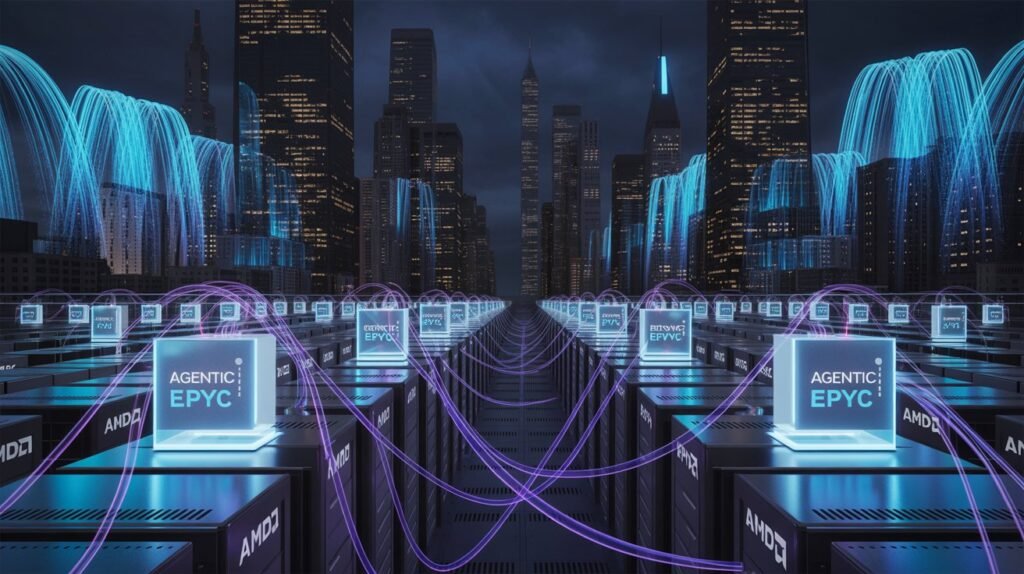
In 2026, the complexity of Expert Advisors (EAs) has increased exponentially, moving beyond simple indicators to utilize multi-strategy trend-following or Open Neural Network Exchange (ONNX) frameworks. These advanced tools demand significant computational overhead, making the choice of processor micro-architecture a critical component of the trading stack. VPSForexTrader’s decision to standardize its New York fleet on AMD EPYC enterprise-class processors is a strategic move designed for this Agentic AI era.
AMD EPYC vs. Intel Xeon: Conflict in Multi-Threaded Workloads
Audits of server-grade CPUs in 2026 highlight a significant divergence in performance outcomes depending on the specific workload patterns of the trader. AMD EPYC processors, particularly those based on the Zen 4 architecture, are designed for high core density and memory bandwidth, which is essential for MetaTrader 5 (MT5) and its multi-threaded strategy testing capabilities.
| Feature | AMD EPYC (Zen 4) | Intel Xeon (Sapphire Rapids) | Impact on Trading Performance |
| Maximum Core Density | Up to 128-192 Cores | Up to 60-288 Cores | Higher density allows more concurrent EAs |
| Memory Channels | 12 Channels DDR5 | 8 Channels DDR5 | Higher bandwidth prevents data bottlenecks |
| PCIe Lane Availability | 128 Lanes (Gen 5.0) | 80-112 Lanes (Gen 5.0) | Enhances NVMe storage I/O throughput |
| Power Efficiency | Higher Perf/Watt (5nm) | Lower Efficiency (10nm) | Reduces thermal throttling risks |
For “volumetric analysis” bots that crunch massive amounts of tick data during a “gamma squeeze,” the 3-core minimum on the “VPS Smart” plan ensures that the background tasks of the Windows Operating System do not “clap” or impede the performance of the trading terminal. While Intel Xeon often leads in single-threaded performance for latency-sensitive transactional databases, EPYC’s signature high core counts and wide memory channels make it the superior choice for hosting the multi-tenant environments required by modern VPS providers.
The Critical Role of ECC RAM in Financial Stability
The use of Error-Correcting Code (ECC) RAM is particularly critical for the trader running high-leverage accounts in 2026. Standard consumer-grade RAM is susceptible to “bit-flips”—single-bit errors caused by cosmic rays, electrical interference, or overheating—which can lead to catastrophic system crashes. In the context of a live trading environment, such a crash could occur while a position is unhedged, potentially leading to a “blown account” before the trader can re-establish a connection. ECC RAM identifies and corrects these errors on the fly, providing a level of “diamond hands” stability that “lettuce-handed” budget servers utilizing non-ECC RAM simply cannot match.
The 2026 Software Stack: Windows Server 2022 and TLS 1.3
Traders frequently overlook the Operating System (OS) as a variable in their execution performance, yet in 2026, the security environment is more hostile than ever. The transition to Windows Server 2022 represents a “modern innovator” approach compared to the “clapped” Windows Server 2012 versions still found at ultra-budget providers. This modern OS brings “Secured-Core” server protection, guarding against firmware-level attacks that could compromise a trader’s “alpha” or private keys. For those running “Prop Firm” challenges with high capital allocations, this defense-in-depth is essential to avoid being liquidated due to a security breach.
Performance Gains via TLS 1.3 and SMB over QUIC
The integration of Transport Layer Security (TLS) 1.3 is “clutch” for performance in 2026. By eliminating obsolete cryptographic algorithms and encrypting more of the initial “handshake,” TLS 1.3 reduces the time required to establish secure connections to broker servers.
| Handshake Protocol | Round Trips Required (RTT) | Computational Overhead | Performance Result |
| TLS 1.2 | 2 Round Trips (2-RTT) | High (Complex Ciphers) | Slower connection establishment |
| TLS 1.3 | 1 Round Trip (1-RTT) | Low (AEAD Ciphers) | 50% faster secure handshake |
| TLS 1.3 (Zero-RTT) | 0 Round Trips (0-RTT) | Minimal (Resumption) | Instant reconnection to known servers |
In a caffeine-fueled market where every millisecond counts, the 15-20% faster VM boot times and 30% bandwidth savings achieved through SMB compression in Windows Server 2022 ensure the trader is the “Wolf” and not the prey. Furthermore, the implementation of SMB over QUIC in the Azure Edition of Windows Server 2022 allows for secure and reliable access to data from edge file servers without the latency overhead of a traditional VPN, which is a significant advantage for mobile traders in 2026.
The Economics of Execution: Why a $300 Investment is Mathematically “Free”
To a “lettuce-handed” beginner, the $307.10 annual expense for a “VPS Smart” plan may appear to be a “tanking” expense. However, a “diamond hands” veteran understands what quantitative analysts refer to as the “Slippage Calculus.”
The cost of latency can be modeled with the following equation:
SlippageLoss=TicksDelayed×TickValue×NumberTrades
In a 2026 live test, a trader utilizing an AI agent optimized their slippage to save an average of 1.2 pips per trade. For an active trader running 20 lots a month, that 1.2-pip difference amounts to roughly $240 per month in “recovered” profit. At that rate, the subscription to a high-performance VPS is effectively “paid for” in less than 45 days.
Furthermore, the “no-termination-during-trading-hours” policy is a unique financial insurance policy. In the “wild west” of the 24/5 forex market, a server cutoff due to a billing “glitch” or a temporary credit card failure during a “gamma squeeze” could leave a trader “bagholding” a massive losing position with no way to close it. VPSForexTrader’s refusal to “clap” a trader’s connection during market hours is a move that prioritizes the client’s survival over administrative rigidity, distinguishing it from standard budget providers who prioritize billing cycles over client equity.
Competitive Matrix: Auditing the Top VPS Providers of 2026
The market for VPS hosting in 2026 is flooded with options ranging from “institutional-grade” titans to “mystery” providers with zero independent reviews. A detailed comparative analysis reveals that VPSForexTrader occupies a “dependable mid-tier” position, offering a balance of resources, security, and trader-friendly policies.
| Provider | Starting Price (Annual) | Primary Strategic Strength | Critical Operational Concern |
| VPSForexTrader | $25.59/mo | No-termination policy; 4GB RAM | Manual installation required |
| NYCServers | $16.67/mo | Pre-installed platforms; One-click setup | 2GB RAM entry-level tier |
| ForexVPS.net | $28.00/mo | 22 global locations; Broker partnerships | Higher monthly cost |
| FXVM | $17.00/mo | ISO certifications; 1ms latency | 1.5GB RAM entry level |
| TradingFXVPS | $17.50/mo | Ryzen 9 / DDR5 RAM; 0.3ms latency | Smaller storage allocation |
| MassiveGRID | $1.99/mo | HA Failover; 100% Uptime SLA | DIY technical configuration |
| BeeksFX | £31.00/mo | Institutional focus; Publicly listed | Expensive for typical retail |
| QuantVPS | $41.99/mo | CME Futures focus; Sub-1ms | No refunds; Premium pricing |
| Cloudzy | $7.76/mo | Extreme budget; Global cloud focus | Lacks broker-specific optimization |
| FxSVPS | $1.99/mo | Hyper-budget pricing | 512MB RAM; Legacy OS |
A critical concern for some analysts regarding VPSForexTrader is the “manual installation” requirement. Unlike NYCServers, which offers “one-click” setups for various brokers, VPSForexTrader delivers a “clean” Windows environment. For the “Ape” who wants to “APE in” immediately, this might be viewed as a hurdle. However, for the “Quant” who trades with custom Python scripts or MT5 “Agentic AI” frameworks, this manual control is often preferred to avoid “crayons” or “bloatware” that might interfere with execution logic.
Mastering the New York Session: Broker Infrastructure Benchmarks
For U.S.-based retail traders, the broker landscape in 2026 is dominated by a few key players who have survived the NFA/CFTC regulatory gauntlet. A New York VPS is the “Omega Launch” pad for these specific accounts.
The OANDA Connection: Sub-Millisecond Precision
OANDA, a titan since 1996, remains a favorite for traders who demand no minimum deposit and “Core Pricing” with spreads as low as 0.4 pips. Because OANDA is headquartered in New York and utilizes Equinix NY4 infrastructure, a VPSForexTrader instance in Secaucus provides a sub-1ms connection. For a “scalper” performing 50 to 200 trades a day, this proximity is the difference between “cashing out” and being “clapped” by the spread during periods of high tick frequency.
The Interactive Brokers (IBKR) Edge: Multi-Asset Scalability
Traders focusing on equities and options through the IBKR API find that the New York VPS is “suited for stock trading, options scalping, and multi-asset strategies”. While “Chicago VPS” locations are the “gold standard” for CME Futures (ES, NQ, Gold), the New York hub is superior for those targeting the NYSE and NASDAQ matching engines.
| Trader Workstation (TWS) Requirements | Minimum Configuration | Recommended Configuration in 2026 |
| Processor (CPU) | Intel i5 / 2 Cores | AMD Ryzen or EPYC / 4+ Cores |
| Memory (RAM) | 4 GB | 16 GB for large portfolios |
| Storage Interface | Standard SSD | NVMe SSD for Level 2 data processing |
| Latency to Exchange | 50 – 100 ms (Home) | 1 – 2 ms (New York VPS) |
Advanced users managing large portfolios (more than 500 stock or 100 options positions) may need to manually increase the memory allotted to TWS to at least 2GB to prevent platform freezing during high-volatility sessions.
Future-Proofing for 2026: The AI Trading Agent Era
The year 2026 has witnessed a “fundamental shift” toward “Agentic AI”. This architecture moves away from single-purpose bots toward multi-agent orchestration systems. These frameworks, often built using LangChain or LangGraph, operate as continuous decision loops rather than one-time strategy evaluations.
The Workflow of a 2026 Agentic System
During a single execution cycle (typically 15 minutes), a modern agentic system follows a strict, stateful path:
- Market Snapshot Creation: Pulling intraday OHLCV price data and indicator values.
- Data Validation (Circuit Breaker): The snapshot is checked for gaps, stale timestamps, or abnormal behavior. If data is unreliable, the entire cycle is halted to prevent reasoning over “bad inputs”.
- Signal Selection: Independent agents evaluate market structure and provide directional bias and confidence scores.
- Risk and Capital Allocation: Sizing and stop targets are calculated under strict constraints, ensuring that even correct signals do not violate capital preservation rules.
- Adversarial Verification: A separate check confirms the proposed trade does not conflict with existing portfolio exposure or system policies.
Traders are warned: “If you are still using manual strategies or 2018-era bots, you are essentially donating your money to institutional players”. The hardware requirements for these agents are significant; running them on “lettuce-handed” home hardware often results in a “blown account” due to computational latency. VPSForexTrader’s “Boost” and “Max” plans, with up to 8 cores and 8GB of ECC RAM, are designed specifically to support these computationally intensive frameworks.
Critical Review: Navigating the “Red Flags” of the VPS Market
As traders search for the best infrastructure to support their “stonk” and forex ambitions, they frequently fall victim to predatory marketing tactics. An expert-level analysis of the 2026 market reveals several traps that must be avoided.
The “512MB RAM” Scam and the “HDD Anchor”
Some providers, such as FxSVPS, offer entry-level plans for as low as $1.99 per month. However, these plans often feature only 512MB of RAM. In the real-world environment of 2026, the Windows Server OS alone uses 500-700MB at idle. Running an MT4 terminal on such a server is a recipe for a “clapped” system that will freeze precisely when a “gamma squeeze” increases the data feed frequency. Similarly, the use of HDD storage in “hyper-budget” tiers acts as a “slug,” causing significant chart rendering delays and indicator calculation errors that are “cooked” for any news trader.
The “Fake Review” and Trust Deficiency
The “ForexPeaceArmy” has flagged certain competitors for utilizing fake reviews to manipulate their reputation. VPSForexTrader, conversely, maintains a “proven track record” on Trustpilot with a 4.3 to 4.5 rating. Users specifically praise named support staff like “Leo, Julian, and Andrius” for their responsiveness and willingness to work through plan changes or billing issues. For a trader seeking institutional-grade stability, this “human” element of the support team provides a layer of trust that automated budget providers lack.
| Support Metric | VPSForexTrader | Budget VPS Competitors |
| Response Personnel | Human Engineers (Leo, Julian, Andrius) | Chatbots or Tier-1 Scripts |
| Technical Depth | High (Support for MT4/MT5 optimization) | Low (General technical support only) |
| Availability | 24/7 Support | 24/5 or Email-only on weekends |
| Policy Flexibility | Willingness to work on billing/plan issues | Rigid automated termination |
Plan Selection: Finding the “Sweet Spot” for U.S. Strategies
Choosing the right VPSForexTrader plan in New York requires a “Due Diligence” (DD) check of the trader’s individual strategy requirements.
The “VPS Smart” Strategy ($307.10/Year)
This is the entry-level power play. With 3 cores and 4GB RAM, it is “adequate” for running up to 4 MT4/MT5 terminals. It is best suited for participants in “Prop Firm” challenges with 1-2 accounts or for “Night Scalping” EAs like Night Hunter Pro that require predictable execution for swing strategies.
The “VPS Boost” Strategy ($494.91/Year)
The mid-tier option offers 6 cores and 6GB of ECC RAM. This is the “Goldilocks” zone for traders running 5-7 instances or EAs utilizing machine learning or ONNX that demand more “caffeine” (CPU power). In March 2026, promotional codes have been identified offering a 10% discount on this specific tier.
The “VPS Max” Strategy ($719.91/Year)
This is the high-end beast featuring 8 cores and 8GB of ECC RAM. It is designed for the “Whale” who is running up to 10 MT4/MT5 instances simultaneously or performing heavy optimization and backtesting on MT5 while live trading a multi-asset portfolio.
Optimizing the New York Setup for Maximum “Tendies”
To ensure the VPSForexTrader experience is “to the moon” and not “clapped,” traders should follow a strict technical workflow.
- Location Selection: Always select “New York” during checkout if the broker’s servers are in the U.S. (OANDA, Forex.com, IG).
- OS Configuration: Opt for Windows Server 2022 to leverage TLS 1.3 and “Secured-Core” features.
- Platform Choice: Use MT5 if trading multi-asset classes or utilizing modern AI agents; use MT4 for legacy “Price Action” or “SMC” EAs.
- Monitoring and Restarts: Even with high uptime guarantees, traders should manually monitor CPU and RAM usage and test restart behavior periodically to ensure their platform configuration auto-starts correctly.
- Backups: While VPSForexTrader charges extra for daily backups, the “VPS Smart” plan includes weekly backups for free—a “good value” for most retail participants.
The 14-day money-back guarantee provides a “safety net” if performance does not live up to expectations, while the $0.99 three-day trial allows the trader to verify the sub-1ms latency to their specific broker before sending it with a full subscription.
Professional Verdict: The Future of Infrastructure-Led Alpha
The analysis of 2026 financial data indicates that VPSForexTrader’s New York offering is a “formidable” and “real deal” solution for U.S. traders. It successfully avoids the “lettuce-handed” pitfalls of ultra-budget providers by maintaining a generous resource allocation of 4GB RAM and 3-core CPUs at its base tier.
While the provider lacks the “one-click” automation features and trading-specific control panels offered by competitors like NYCServers, its focus on “enterprise-grade hardware” (AMD EPYC, ECC RAM) and its unique “no-termination” policy makes it the “safe choice” for traders whose strategy requires “diamond hands” and “uninterrupted execution”. For the trader who is “down bad” after a string of home-internet disconnects, moving to a Secaucus-adjacent VPS is the ultimate “BTFD” move for their career. In the caffeine-fueled market of 2026, the one with the sub-1ms latency to the NY4 matching engine does not just survive—they “moon”.
Sub-1ms latency to Equinix NY4 • 14-Day Money-Back Guarantee