Ever drop a small fortune on a luxury sweater only to have it feel scratchy, look paper-thin, or completely lose its shape after a couple of trips to the dry cleaner? It is the ultimate fashion heartbreak. We’ve all been burned by “luxury” knitwear that feels more like sandpaper than a cloud. When you are tired of spending top dollar on pieces that just don’t deliver, finding a truly substantial knit feels like hunting for a unicorn.
Enter the Alashan Cashmere Inez Wide Cable Mock Neck. At over five hundred dollars, it promises a completely different level of cozy. But is it actually worth your hard-earned cash, or is it just another overpriced label? Let’s dive deep into our self-tested experience with this premium knit to see if it lives up to the hype.

Detailed Product Specifications
| Attribute | Details |
| Product Name | Inez Wide Cable Mock Neck Pullover (SKU: LX2034) |
| Material | 100% Super Fine Inner Mongolian Cashmere |
| Yarn Construction | 6-Ply Yarn |
| Knit Gauge | 5gg (Heavyweight, chunky knit) |
| Design Elements | Long sleeves, custom wide cable pattern, mock neckline |
| Body Length | 23 inches |
| Price | $515.00 |
The Competitor Showdown: Why Alashan Hits Different
To truly understand why Alashan sits at the top tier of the knitwear world, you have to look at what else is out there. Most high-street brands try to cut corners on the ply count and fiber sourcing to save on production costs, leaving you with cold, flimsy garments.
| Feature | Alashan Cashmere Inez | Standard High-Street Cashmere | Mass-Market “Luxury” Brands |
| Yarn Quality | Super Fine Inner Mongolian | Short-staple commercial blends | Recycled or lower-grade mix |
| Thickness | Heavyweight 6-Ply, 5-Gauge | Thin 2-Ply, 12-Gauge | Light 2-Ply |
| Texture & Feel | Ultra-soft, buttery cloud-like | Soft at first, scratchy later | Requires heavy chemical washing |
| Longevity | Structural shape retention | High risk of bagging & thinning | Frequent pilling and holes |
Most fast-fashion brands push thin, 2-ply knits that pill if you so much as breathe on them. When you want to stop investing in subpar pieces that shrink or unravel, learning how to stop overpaying for mid clothes is a total game-changer for your wardrobe strategy. Alashan’s heavy construction means they are using significantly more raw cashmere fiber compared to standard sweaters, creating a dense, wind-resistant weave that actually holds its structure over time.
Deep Dive: What Makes the Inez Mock Neck a Masterpiece
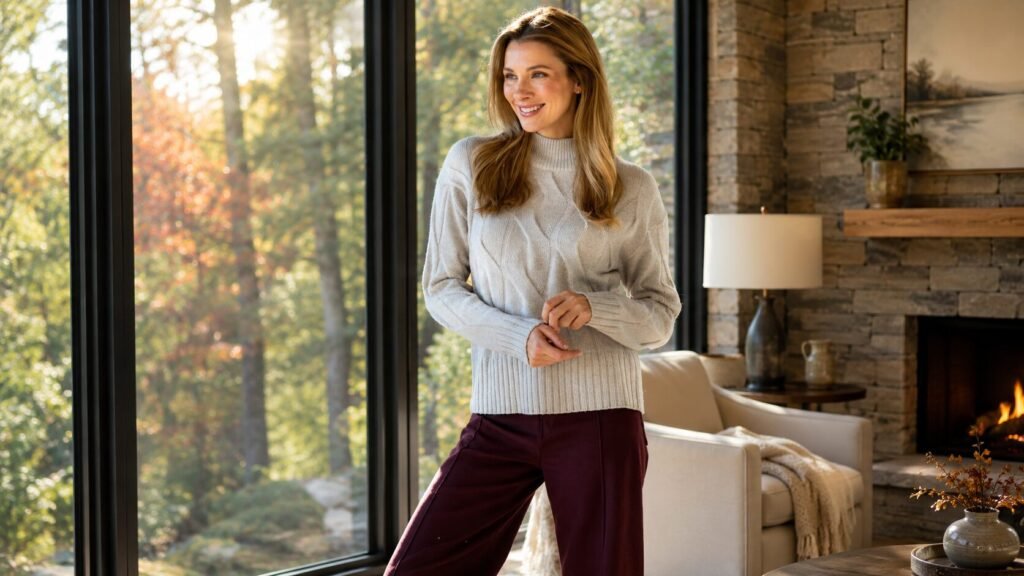
The magic of the Inez sweater is all in the tactile experience. When you pull this sweater over your head, there is an immediate, comforting weight that lets you know it’s serious luxury. The chunkier knit means the wide cable details are beautifully pronounced and three-dimensional, giving off that effortless “old money” winter aesthetic.
The mock neck hits at the perfect sweet spot—high enough to keep the chill away but low enough that you don’t feel constantly suffocated or choked. Because it’s made from premium Inner Mongolian cashmere, it feels incredibly silky directly against bare skin. You don’t need to layer a long-sleeve tee underneath just to protect yourself from itching. For a flawless, bulk-free silhouette beneath this cozy knit, pairing it with a smooth, supportive base layer like the Comfelie comfort bra keeps everything entirely seamless and comfortable all day long.
The 23-inch body length provides a slightly cropped, contemporary fit that hits right at the waistband of your favorite high-waisted denim or tailored trousers. It allows you to skip the awkward half-tuck completely, creating clean lines without extra fabric bunching up at your midsection.
Pros and Cons
The Good Stuff:
- Pure Luxury Weight: The heavy yarn delivers incredible insulation without feeling suffocatingly dense.
- Zero Itch Factor: Premium Inner Mongolian fibers ensure complete next-to-skin comfort for sensitive skin types.
- Stunning Craftsmanship: The wide cable knit design is highly unique and visually striking.
- Modern Silhouette: A tailored length makes it incredibly easy to style without looking frumpy.
The Real Talk:
- Serious Investment: The premium price tag requires a significant financial commitment.
- Delicate Care Needed: Professional dry cleaning or careful hand-washing is mandatory to maintain the plush texture.
Who Is This For (and Who Can Skip It)?
Who Should Buy This:
This is a must-have for the conscious capsule-wardrobe collector who values quality over quantity. If you live in a colder climate and want a standout piece that pairs beautifully with upscale casual outfits, this is an excellent match. It’s also perfect if you love accessorizing with high-end statement items—imagine styling this cream knit with rich textures and elegant brown diamond huggie hoop earrings for a beautifully balanced, quiet-luxury vibe.
Who No Need:
If you live in a year-round warm climate, a heavy knit will simply sit in your closet gathering dust. It’s also not ideal for anyone looking for a low-maintenance sweater you can throw into a standard washing machine with your activewear.
Golden Pro-Tips for Cashmere Longevity
- The Storage Rule: Never hang a heavy sweater on a traditional hanger. The weight of the luxury yarn will stretch out the shoulders within days, leaving you with awkward bumps. Always fold it loosely and store it flat in a breathable cotton garment bag.
- Style It Up: For a chic winter date night look, wear this chunky pullover over a pleated mini skirt paired with high-quality stay-up thigh-high stockings and knee-high leather boots. Throwing on some viral shades like the SOJOS sunglasses collection adds an instant boost of modern attitude to your cozy winter fit.
- Pilling Control: All natural fibers pill slightly in high-friction areas like under the arms. Skip the cheap electric fabric shavers that can slice the delicate threads, and use a dedicated cashmere comb to gently lift away fuzz.
Let’s face it: the sweater market is a total wild west right now. You can walk into a big-box discount store and find a “100% cashmere” crewneck sitting on a plastic hanger for the price of a couple of fancy avocado toasts. Then, you open up a luxury lookbook and see a gorgeous chunky knit like the Alashan Inez Wide Cable Mock Neck retailing for hundreds of dollars.
The Ultimate Cashmere Quality & Pricing FAQ
How much should a 100% cashmere sweater actually cost?
For a genuinely good, durable, mid-weight cashmere sweater, the sweet spot usually lands anywhere between a couple hundred dollars to around four or five hundred dollars. When you enter this price bracket, you are paying for longer, stronger raw fibers that won’t fall apart or look instantly ragged after three wears. High-end masterpieces like the Inez Wide Cable sit on the higher end of this scale because they use an incredibly dense yarn layout that requires significantly more raw material to create.
Why can a cashmere sweater cost thousands of dollars while another costs under fifty bucks?
It all boils down to the grade of the hair, the ply count, and the manufacturing ethics.
- The Hair Grade: Cheap sweaters use short, stubby fibers scraped from the underbelly of low-grade herds. This hair breaks easily and pills the second you move. Luxury brands source ultra-long, super-fine hairs from Inner Mongolian goats that naturally lock together to resist fuzzing.
- The Ply and Gauge: A budget sweater is almost always a thin, sheer two-ply knit. The Inez Mock Neck, by comparison, uses a substantial six-ply setup. This means multiple premium strands are twisted together before knitting, giving it an incredibly heavy, wind-blocking feel that cheap brands could never replicate.
Is “100% Cashmere” always a guarantee of good quality?
Spoiler alert: No. The “100% Cashmere” label on a clothing tag is a measure of fiber purity, not fiber quality. A factory can take leftover, swept-up short hairs, spin them into a flimsy yarn, and legally label it pure cashmere. If a sweater feels suspiciously thin, looks shiny under store lights, or feels overly fluffy and powdery before you’ve even washed it, it has likely been treated with heavy chemical softeners to hide low-grade construction.
What is 100% cashmere really worth to the everyday consumer?
If we are talking about genuine, high-grade cashmere, it is worth every single penny in terms of cost-per-wear. Real luxury cashmere is incredibly insulating yet completely breathable, meaning it regulates your body temperature so you never feel sweaty. When you learn how to spot authentic quality and stop overpaying for mid clothes, a premium knit becomes a foundational wardrobe staple that outlives dozens of cheap synthetic alternatives.
Behind the Inez Wide Cable Mock Neck Trend
Is the Inez Wide Cable Mock Neck available on sale?
Because Alashan is a boutique luxury house that prioritizes small-batch production over mass manufacturing, deep discounts on core items like the Inez are rare. Your best bet for catching a seasonal sale is checking high-end boutique stockists during early spring clearance windows. However, keep in mind that classic shades sell out long before the price drops.
Does this premium mock neck come in a classic black color option?
Yes. While the intricate, three-dimensional look of the custom wide cable pattern looks absolutely stunning in rich neutrals like camel and cream, the black version offers an incredibly sleek, high-end “matrix-meets-mountain-lodge” vibe. It is a brilliant choice if you want maximum styling versatility.
Is there a men’s version of the Inez Wide Cable sweater?
The specific Inez model with its tailored, twenty-three-inch body length is specifically designed for a modern women’s silhouette, giving it that perfect no-bulk look with high-rise denim. While this exact cut is a women’s staple, luxury purveyors often offer similar heavyweight, multi-ply cable options in traditional men’s sizing for a more relaxed, classic fit.
Golden Insider Pro-Tips for Cashmere Hunters
The Squeeze Test: When shopping in person, bunch a handful of the sweater up in your palm and let go. High-quality cashmere should spring right back to its original shape immediately with zero wrinkles. If it stays crumpled like a piece of paper, keep walking.
- Look for Tension: Gently pull the fabric apart horizontally. A high-tier sweater will have a tight, uniform grid that snaps back together. Low-grade knits will look loose, uneven, and leave semi-permanent gaps between the threads when stretched.
- Beware the “Instant Softness” Trap: True heirloom cashmere actually gets softer and loftier after its first few gentle washes. If a brand-new sweater feels intensely plush and velvety right on the store shelf, it is often a sign of short fibers that are already beginning to unravel and break down.
- The Perfect Pairing: To elevate a chunky mock neck into an elite styling moment, let the cozy texture do the heavy lifting. Pair it with crisp tailoring or a sleek satin slip skirt, and accent the neckline with a clean hair updo to highlight the beautiful collar shape.
The Reality Check: Investment Cashmere vs. Budget High-Street Knits
Is an investment piece like the Inez Wide Cable Mock Neck worth it compared to cheap high-street alternatives?
It entirely depends on what you want out of your wardrobe. If you are looking for a standalone winter piece that provides heavy, substantial warmth and a gorgeous three-dimensional cable pattern, a luxury 6-ply knit is absolutely worth it. Budget options are notorious for being paper-thin and strictly meant for layering under office blazers. If your goal is to curate a lasting collection and stop overpaying for mid clothes, investing in premium yarn structure will always save you money in the long run compared to replacing disposable alternatives every winter.
Why do some brand-new cashmere sweaters feel intensely itchy or scratchy against the skin?
This is the ultimate giveaway of lower-grade manufacturing. Budget brands often use short, stubby fibers scraped from the lower half of the herd to cut costs. These short hairs don’t spin cleanly; instead, the tiny ends stick out of the yarn weave, creating a constant prickling sensation against your skin. Multiple shoppers report needing a heavy long-sleeve undershirt just to survive a day in cheap knitwear. With premium Inner Mongolian cashmere, the fibers are exceptionally long and fine, allowing them to lay completely flat for a buttery-smooth, next-to-skin feel.
How does the thickness of the knit affect how fast a sweater ruins or pills?
Thickness and construction are everything when it comes to durability.
- The Budget Problem: High-street options are almost always single-ply, loose-gauge knits. Because the threads are spun loosely to make the garment feel superficially fluffy on the store rack, the fibers rub against each other during normal movement, leading to severe surface fuzzing and pilling within just a couple of wears.
- The Luxury Advantage: A heavy, multi-ply design like the Inez Mock Neck utilizes tightly twisted strands woven at a dense gauge. This tight structure locks the premium fibers into place, dramatically reducing friction and ensuring the garment maintains its shape without bagging out at the elbows or thinning at the seams.
Is it true that newer versions of mall-brand cashmere are declining in quality?
Yes, this is a major complaint across style platforms. While many fashion enthusiasts have older high-street sweaters from several years ago that are still holding up beautifully, recent production runs feel noticeably cheaper, lighter, and more prone to unraveling. Mass-market brands are facing rising material costs, which means they are stretching their yarn supply thinner than ever. If you want that true, heritage-level heft, you unfortunately have to look past the standard mall racks.
Smart Styling & Care FAQs
How should I style a chunky, heavyweight mock neck without looking bulky?
The key is balancing your proportions. Because a heavy cable knit has a beautiful, structural presence on top, keep your bottom half streamlined. A tailored trouser, a sleek satin skirt, or a high-waisted denim pair works beautifully. For an ultra-chic, cozy-yet-elevated winter look, try pairing a textured cream pullover with a pair of sleek, reliable stay-up thigh-high stockings and structured leather boots. Top off the outfit with a modern accessory like a pair of classic SOJOS sunglasses to effortlessly bridge the gap between mountain-lodge cozy and city street style.
Should I dry clean or hand-wash my premium cashmere garments?
Despite what the care label says, most textile experts actually recommend avoiding the dry cleaner whenever possible. The harsh chemicals used in commercial dry cleaning strip away the natural protective oils from cashmere fibers, leaving the wool feeling brittle and dry over time.
Instead, fill a clean basin with lukewarm water and a capful of gentle baby shampoo or specialized wool wash. Submerge the sweater, gently squeeze the soapy water through the fibers without twisting or wringing, and rinse thoroughly.
Golden Insider Pro-Tips for Your Best Cashmere Ever
The Washing Machine Hack: If you absolutely must use a washing machine for your knits, turn the sweater completely inside out and place it inside a high-quality zippered mesh laundry net. Run the machine on a strict, cold “wool” or “delicate” setting using a low spin cycle to protect the integrity of the seams.
- Never Wrinkled, Never Hung: Always lay your wet cashmere completely flat on a clean, dry towel over a drying rack. Never hang it by the shoulders while wet—the weight of the trapped water will permanently stretch out the neckline and leave you with irreversible fabric distortion.
- The Undergarment Secret: To ensure a flawless silhouette underneath a thick, luxurious knit, wear a smooth, low-profile base layer. Opting for a seamless, ultra-comfortable option like a wireless Comfelie comfort bra prevents any awkward bunching or lines, letting the beautiful, heavy texture of your cable pattern take center stage.
- The Piling Reality: Even the most expensive cashmere in the world will experience light surface friction fuzz under the arms over time. Invest in a wooden cashmere comb rather than an electric fabric shaver, as manual combs gently lift away loose surface fuzz without risking any accidental cuts to the structural yarn.
Ever look at a premium piece of knitwear and wonder what actually goes on behind the scenes to justify that investment? The world of luxury fabrics can feel a bit mysterious, especially when trying to decode what makes one sweater a lifetime heirloom and another a disposable seasonal piece.
To clear up the confusion, we have completely demystified the essentials of cashmere production, quality grading, and preservation so you can shop like a total insider.
The Raw Truth: What Is Cashmere?
Cashmere isn’t actually wool at all—it’s downy under-armor hair from a specific breed of goat adapted to survive the brutal, freezing winters of the Asian steppe.
Every spring, as the weather warms, herders gently comb this incredibly soft undercoat from the goats. This raw material is a mix of ultra-fine insulation fibers, coarse outer guard hairs, dirt, and natural grease. Top-tier brands partner directly with herder cooperatives in regions like Inner Mongolia to procure the absolute finest white raw fiber before it undergoes a meticulous cleaning and refinement process.
Why True Cashmere Commands a Premium
It comes down to extreme scarcity and an incredibly intense, hands-on refining process. While common materials like cotton and synthetic fabrics are mass-produced by the tens of millions of tons globally every single year, pure cashmere represents a microscopic fraction of the world’s textile supply.
The Global Fiber Matrix
- Synthetics & Cotton: Flooding the global market by the tens of millions of tons annually.
- Traditional Sheep’s Wool: Abundantly available and harvested in massive volume worldwide.
- Pure Cashmere: A tiny drop in the bucket, restricted to specific remote regions and strict seasonal yields.
On top of being incredibly rare, the processing is a true test of patience. The raw material must be sorted by color and grade by hand, scoured to remove dirt, and carefully dehaired to pull out the coarse outer coat. By the time this processing is finished, the usable yield drops by nearly half of its original weight. Because a single goat only yields a few ounces of clean, usable fiber a year, it takes the annual combed coats of multiple goats just to create one single high-quality sweater.
Cashmere vs. Traditional Sheep’s Wool
While both are excellent natural insulators, cashmere provides a completely different level of performance. Despite being remarkably lighter in weight than standard wool, cashmere provides several times the insulation efficiency.
Because the individual goat hairs are microscopically fine and wavy, they trap significantly more dead air pockets close to your body. This creates an incredibly efficient thermal barrier that keeps you perfectly warm without adding any bulky weight or causing that uncomfortable, stifling heat.
Decoding the “100% Cashmere” Label & Quality Grades
The Purity Illusion: A tag that reads “100% Cashmere” simply means no other fibers are blended into the yarn—it says absolutely nothing about the quality of the fiber used.
Lower-grade pure cashmere utilizes short, stubby hairs that feel rough to the touch, shed constantly, and pill almost immediately. The absolute gold standard is Grade A Cashmere. This classification is reserved for the longest and thinnest fibers available. These long hairs weave tightly and securely together, which is why a premium sweater feels unbelievably buttery against sensitive skin, holds its structural shape over time, and resists surface friction far better than low-tier alternatives.
Golden Insider Pro-Tips for Cashmere Longevity
- The Squeeze, Don’t Wring Rule: When hand-washing your knits in lukewarm water with a gentle shampoo or specialized wool wash, never wring the fabric like a washcloth. Instead, gently press the sudsy water through the fibers, rinse thoroughly with cool water, and roll the sweater tightly inside a clean, dry towel to absorb excess moisture before laying it flat to dry in its natural shape.
- The Moth Defense Trick: Never store your luxury knitwear away at the end of a season without cleaning it first. Moths aren’t actually attracted to the cashmere fibers themselves; they are drawn to microscopic traces of perfume, body oils, and skin cells left behind on unwashed fabric.
- Ditch the Hangers Completely: Gravity is the ultimate enemy of heavy luxury knits. Always fold your premium sweaters and store them flat in a drawer or on a shelf. Hanging a heavy sweater will permanently warp the shoulders and stretch out the neckline, ruining the tailored silhouette. To keep the surface looking flawless, use a dedicated sweater stone or comb to gently sweep away any minor surface fuzz that develops over time.
You’ve finally done it—you invested in a gorgeous, high-end cashmere piece. But right after that initial rush of stepping out in an incredibly soft sweater comes the inevitable wave of panic: How on earth do I wash this without ruining it?
Taking care of luxury knitwear can feel incredibly intimidating, but it doesn’t have to be a stressful chore. When you are focusing on building a beautiful wardrobe and trying to stop overpaying for mid clothes, learning the art of fabric preservation is the ultimate superpower.
With the right routine, your favorite pieces won’t just survive the winter—they will actually get softer and loftier with every single passing year. Here is the foolproof, step-by-step blueprint to washing, storing, and de-pilling your cashmere like an absolute pro.
Step 1: The Master Class in Washing Cashmere
First things first: step away from the harsh commercial detergents. Standard laundry soaps are far too aggressive for delicate natural fibers and will strip away the natural protective oils that give cashmere its signature buttery feel.
Instead, opt for a specialized, cold-water cleanser designed explicitly for fine fabrics, such as Le Blanc® Silk & Lingerie Wash. It gently lifts away dirt and skin oils while completely protecting the integrity of the weave. If you’re in a pinch, a high-quality, clear baby shampoo works beautifully too.
The Hand-Wash Process
- Prep the Bath: Fill a clean basin or sink with lukewarm water and add a small capful of your gentle cleanser. Swish it around so the soap is evenly distributed.
- The Gentle Soak: Submerge your garment completely. Instead of scrubbing, rubbing, or twisting the fabric—which causes instant friction damage and pilling—gently massage the suds through the fibers. Let it soak for about ten to fifteen minutes.
- The Clean Rinse: Drain the soapy water and refill the basin with cool, clean water. Press the garment down gently to rinse out the soap. Repeat this until the water runs completely clear.
- The Towel Burrito Trick: Never wring out your sweater like a wet rag. Instead, lightly squeeze out the excess water, then lay the sweater flat on a clean, dry white towel. Roll the towel up tightly with the sweater inside like a burrito to absorb the remaining moisture.
- The Flat Dry: Unroll the towel, reshape the sweater gently into its original silhouette, and lay it completely flat on a drying rack away from direct sunlight or heat sources.
Step 2: Storage Secrets to Defeat Moths and Sagging
How your knitwear sits in your closet during the off-season is just as important as how you wash it.
The Golden Storage Rule: Never, under any circumstances, hang a heavy luxury sweater on a clothes hanger. Gravity will inevitably pull the weight of the yarn downward, permanently stretching out the neckline, warping the hem, and leaving you with those awkward, pointy bumps on the shoulders.
Always fold your sweaters neatly and store them flat on a shelf or inside a breathable drawer.
The Ultimate Moth Defense
Before you pack your knitwear away for the warmer months, ensure every single piece is freshly cleaned. Moths aren’t actually attracted to the natural wool fibers themselves; they are drawn to invisible traces of perfume, deodorant, hairspray, and microscopic body oils left behind on worn clothing. Storing a soiled sweater is an open invitation for pests, so wash everything first to guarantee your pieces stay pristine.
Step 3: How to De-Pill Like a Pro
Here is a quick reality check that surprises a lot of people: all natural fibers pill. Seeing those tiny, fuzzy balls develop under the arms or along the sides of your sweater isn’t a sign that your garment is defective or cheap; it’s simply a natural byproduct of friction from everyday movement.
To restore that crisp, brand-new look, skip the cheap electric fabric shavers, which can easily snag a thread and slice a permanent hole right through the knit. Instead, grab a dedicated sweater stone or a fine-tooth sweater comb.
Gently glide the tool over the affected areas in one continuous direction. The textured surface will effortlessly lift away the loose, tangled surface fuzz without disrupting the underlying structure of the yarn. A quick two-minute refresh at the start of the season is all it takes to keep your cashmere looking incredibly sharp and luxurious for years to come.
Ever look at a luxury cashmere sweater and wonder how a piece of clothing can feel so incredibly soft, cost a premium, and completely ruin every other sweater in your closet?
To understand why real cashmere is treated like liquid gold in the fashion world, you have to look past the boutique shelves. The journey from a freezing mountain plateau to a beautifully finished garment is an intense, highly technical process.
Let’s peel back the curtain on the fiber science, the global supply chain, and the technical specs of ply and gauge so you can spot true quality instantly.
Step 1: The Raw Harvest on the Asian Steppe
True cashmere begins with the Capra Hircus Laniger goat. These animals live in the brutal, extreme climates of the Central and East Asian steppe, mountain plateaus, and deserts. To survive sub-zero winters, they grow a double coat: a coarse, weather-resistant outer layer of guard hair and an incredibly fine, insulating underdown close to their skin.
In the spring, herders harvest this underdown by gently combing or shearing the goats. At this stage, it’s known as “greasy cashmere.” It is far from runway-ready—it’s a chaotic mix of ultra-soft fluff, stiff guard hairs, dirt, sand, and natural animal grease.
Step 2: The Sorting and Cleaning Gauntlet
Once the raw fiber is purchased from local herders, it is shipped to specialized processing mills for a strict multi-stage inspection:
- The First Pass: Workers meticulously hand-sort the material to remove low-grade fiber and any synthetic contamination.
- The Color Separation: The clean stock is then separated into four natural color groups: White, Light Grey, Cream, and Brown. White fiber is the most prized because it can be dyed into vibrant pastels without harsh bleaching.
- The Scouring Bath: The sorted fiber goes through a heavy-duty washing (scouring) process to strip away all residual dirt, sand, and grease.
Step 3: Dehairing (Where Quality is Made)
Once washed, the cashmere enters the dehairing phase. This is the ultimate test of a mill’s capability. Massive machines pull the mingled fibers across a series of mechanical heads designed to separate the stiff outer guard hair from the cloud-like underdown.
The goal here is precision: remove the scratchy guard hair without breaking or shortening the delicate underdown.
The Quality Trap: Legally, a mill can leave up to 3% coarse guard hair in a batch and still market it as “commercial cashmere”—but a sweater made from that yarn will feel scratchy and cheap. Elite knitting-grade cashmere requires the coarse hair content to be stripped down to a microscopic 0.2% or lower.
The Cashmere World Map: Origin Matters
Not all cashmere is created equal. The geographical region where the goats are raised drastically changes the properties of the fiber.
| Region | Color Profile | Fiber Length | Fineness (Microns) | Market Value |
| China | Pristine Pure White | Exceptional | Ultra-Fine (Best in class) | Highest Premium |
| Mongolia | Warm Greys & Browns | Superior Length | Slightly Coarser than Chinese | Highly Desirable |
| Iran & Afghan | Deep Dark Earth Tones | Shorter | Coarser | Budget / Lowest Cost |
Historically, raw fiber was shipped directly to traditional textile hubs in the USA, Europe (like Italy and the UK), and Japan for manufacturing. However, the entire global landscape has shifted. Today, the absolute finest spinning, weaving, and knitting mills are heavily concentrated in China, which has also become one of the largest global consumers of luxury finished knitwear.
Step 4: Transforming Fiber Into Premium Yarn
Before the clean, dehaired fiber can be knitted, it must be spun into yarn using one of two primary systems:
The Woolen System
This system keeps the natural, bouncy texture of the cashmere intact, creating loftier, fluffier yarns perfect for classic cozy sweaters.
The Worsted System
If a brand wants to create a super-sleek, lightweight garment, the fiber must go through an extra luxury step called combing. Combing intentionally removes all the short fibers (known as noils) and keeps only the longest, strongest fibers, aligning them perfectly parallel into what textile experts call a top. This premium top is then spun into an incredibly smooth, durable worsted yarn.
Demystifying the Specs: What Is Ply and Gauge?
When shopping for high-end knitwear, you will constantly see terms like “2-ply” or “12gg” thrown around. Here is exactly what those technical terms mean for your wardrobe.
What Does “PLY” Mean?
Ply is simply the number of individual yarn strands twisted together to create a single piece of thread.
- 1-Ply: A single strand. It feels incredibly light but is highly fragile and prone to holes.
- 2-Ply: Two strands twisted together. This is the industry standard for a reliable, durable garment.
- Multi-Ply (4-Ply, 6-Ply, and up): Multiple strands twisted together. Gathering extra strands side-by-side increases the weight of the garment dramatically, creating those incredibly thick, wind-blocking, chunky winter knits.
What Does “GAUGE (gg)” Mean?
Gauge refers to the total number of stitches and rows knitted into one single inch of fabric.
Think of it as the density grid:
- High Gauge (e.g., 12gg): This means there are 12 stitches per inch. The knit is tight, compact, and smooth—perfect for lightweight layering pieces and office wear.
- Low Gauge (e.g., 5gg): This means there are only 5 stitches per inch. If a mill takes a standard thin yarn and knits it on a 5-gauge machine, you get an open, airy, mesh-like summer knit. However, if they scale up to a heavy multi-ply yarn on a 5-gauge machine, it creates that dense, heavy, beautifully structural cable-knit aesthetic built to survive the coldest winter days.
Shopping for luxury knitwear is an investment, and we want to make sure your new favorite piece feels like an absolute dream from the second you pull it out of the box. But let’s be honest—sometimes a color looks different in person, or a fit doesn’t frame your silhouette exactly the way you imagined.
When you want to curating a flawless wardrobe and stop overpaying for mid clothes, knowing a brand has your back with a seamless customer care experience is everything. Here is the complete breakdown of the Alashan Cashmere return policy, precise size guides, and direct contact details so you can shop with absolute confidence.
The Alashan Cashmere Return & Exchange Policy
We want you to be completely obsessed with your purchase. If something isn’t quite right, let’s walk through the return and exchange process so you can get exactly what you need without any unnecessary stress.
The Fast Track to Swapping Styles
- Worry-Free Exchanges: If you decide to exchange an item for a different size or color, the shipping on your replacement piece is completely free.
- Standard Refunds: If you are returning an item for a direct refund, the return shipping costs are the responsibility of the customer, and original shipping fees are non-refundable.
- The Holiday Window: Shopping for someone special? Orders placed during the peak gift-giving season enjoy an extended holiday return window up until January 15th.
The Essential Return Rules
To qualify for a successful return or credit, your items must meet the following baseline standards:
- Pristine Condition: Merchandise must be entirely unworn, unwashed, and returned with all original tags securely attached.
- The 14-Day Rule: Returns received at the warehouse within 14 days of the delivery date will be issued a full refund to your original payment method.
- After 14 Days: Returns received after the initial two-week window will automatically be issued as a convenient merchandise credit to use on a future splurge.
What Can’t Be Returned:
Any items clearly marked as Final Sale are yours to keep and cannot be returned or exchanged. Additionally, we are unable to process returns for Alashan pieces purchased through independent boutiques or third-party retailers. If you bought your sweater through a local shop, please reach out to them directly to navigate their specific store policies.
Received a damaged item? Don’t sweat it—contact the customer care team immediately so they can make it right.
To initiate your process, simply fill out the online request form on the main portal, and a customer care specialist will email your step-by-step instructions directly to your inbox.
Finding Your Perfect Fit: The Official Size Charts
Alashan cuts their garments to reflect a modern, comfortable, and natural American fit. Instead of boxy cuts or overly restrictive European tailoring, these pieces are carefully designed to naturally flatter real curves and proportions.
Women’s True-to-Size Guide
Shaped to frame your natural silhouette with effortless elegance.
| Size | US Dress Size | Bust | Waist | Hip |
| X-Small | 0 – 2 | 33″ – 34″ | 25″ – 26″ | 35″ – 36″ |
| Small | 4 – 6 | 35″ – 36″ | 27″ – 28″ | 37″ – 38″ |
| Medium | 8 – 10 | 37″ – 38″ | 29″ – 30″ | 39″ – 40″ |
| Large | 12 – 14 | 39.5″ – 41″ | 31.5″ – 33″ | 41.5″ – 43″ |
| X-Large | 16 | 42.5″ | 34.5″ | 44.5″ |
Men’s Premium Size Guide
Classic tailoring balanced with absolute everyday comfort.
| Size | Chest | Waist | Sleeve Length |
| Small | 38″ – 40″ | 32″ – 34″ | 32.5″ – 33″ |
| Medium | 40″ – 42″ | 34″ – 36″ | 33″ – 33.5″ |
| Large | 42″ – 44″ | 36″ – 38″ | 33.5″ – 34″ |
| X-Large | 44″ – 46″ | 38″ – 40″ | 34″ – 34.5″ |
| XX-Large | 46″ – 48″ | 40″ – 42″ | 34.5″ – 35″ |
Connect with Customer Care
Have a question about a specific yarn weight, need help picking out the perfect gift, or tracking down an order? The dedicated support team is ready to help you out.
Send a Direct Message
Drop your details into the digital contact form to get a swift response:
- Name
- Email Address
- Zip Code
- Your Message
Traditional Contact Info
If you prefer to skip the form and connect directly with a real human, feel free to use the official corporate channels:
- HQ Address: 866 Broncos Highway, Mapleville, RI 02839
- Toll-Free Phone: (877) 369-2581
- Direct Line: (401) 710-9653
- Fax Line: (401) 710-9654
- Direct Email: info@alashancashmere.com
Final Verdict
The Alashan Inez Wide Cable Mock Neck is undeniably a splurge, but it entirely redefines what high-quality knitwear should feel like. By opting for a heavy yarn structure and premium fibers, it cures the common problem of flimsy, disposable winter wear. If you are ready to invest in a piece that looks stunning, feels like an absolute dream, and stands the test of time, this pullover earns a well-deserved spot in your permanent wardrobe.