Let’s be completely real: nothing destroys a killer weekend ride faster than a cheap, flat chamois turning your undercarriage into absolute sandpaper. You are 40 miles deep into a heavy training block, your heart rate is redlined, and suddenly every single pedal stroke feels like a personal punishment. If you are hitting the asphalt 3 to 5 times a week, rocking a basic pair of saggy shorts is a one-way ticket to severe saddle sores and a ruined week.
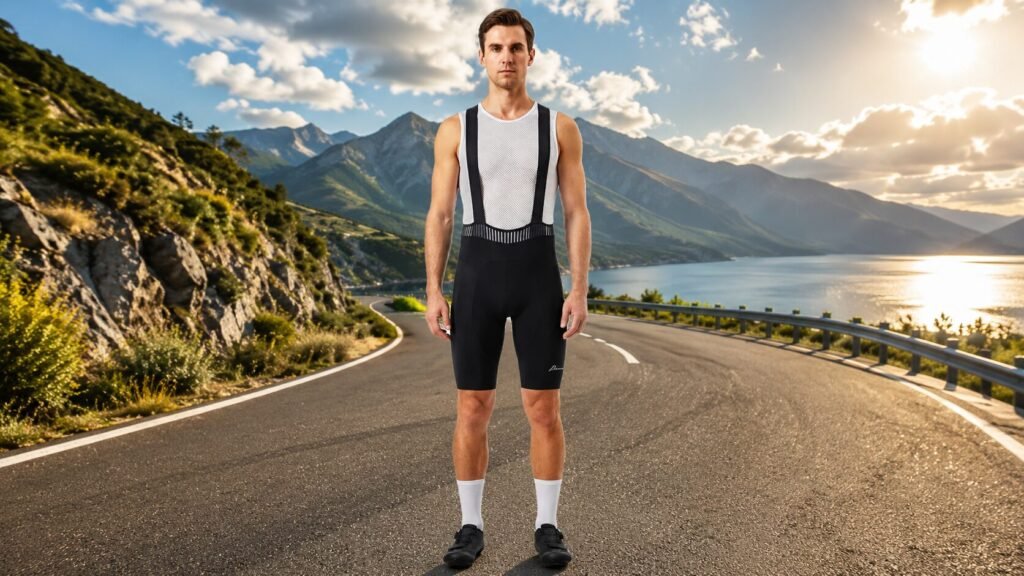
You will easily drop thousands on an elite carbon frame—maybe you even checked out My RockBROS PGZ Review: Is This Budget Superbike Worth It? to maximize your straight-line speed—but then you skimp on the literal one piece of fabric protecting your most critical touchpoint? Absolute madness. They finally designed a real solution that attacks the exact pain points keeping riders miserable: shoulder pinch, pad migration, and cheap foam that pancakes out after two hours.
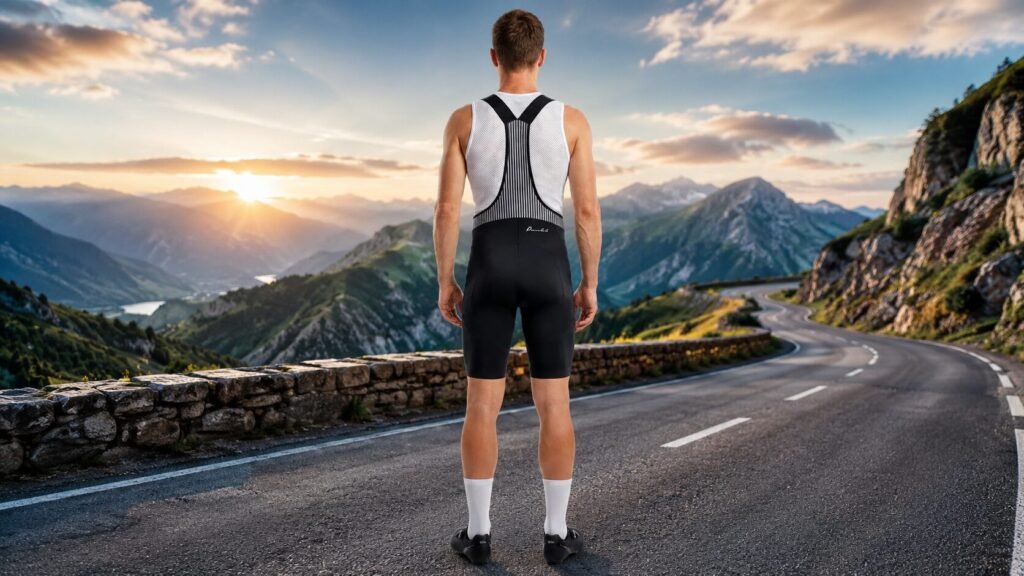
The Spec Sheet: Every Single Detail Under the Hood
They engineered these shorts with a heavy focus on structural endurance and targeted compression. No vague marketing fluff here—just hard numbers.
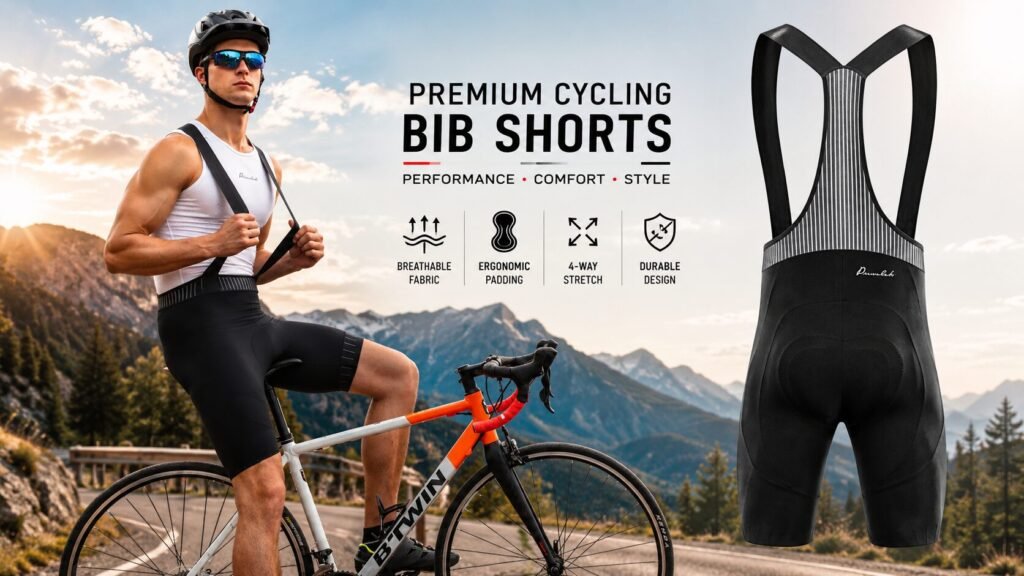
Core Fabric & Durability Specs
| Feature | Measurement / Rating | What It Actually Does For You |
| Main Fabric Weight | 230 g/m² | Delivers medium-high compression to keep muscles stabilized |
| Lengthwise Stretch | 130% (10 cm stretches to 22 cm) | Moves naturally with your stride, preventing pulling |
| Crosswise Stretch | 120% (10 cm stretches to 23 cm) | Snugs tightly around your quads to reduce aerodynamic wrinkles |
| Abrasion Resistance | 10,000+ rubs | Resists pilling and friction wear from tight saddle contact |
| Colorfastness | 4.5 Rating | Keeps its deep matte black look without fading after infinite washes |
| Chemical Safety | PFAS / PFC-free | High-performance water resistance without toxic forever chemicals |
Chamois & Component Breakdown
| Component | Technical Spec | Targeted Problem Solved |
| Sit-Bone Padding | 14 mm thickness / 120 kg/m³ density | Swallows heavy road vibrations and gravel impacts for 8H/700KM |
| Front Relief Zone | 3 mm thickness / 65 kg/m³ density | Drops front tissue pressure when tucked into an aggressive aero position |
| Chamois Top Fabric | 77% Nylon / 21% Spandex / 2% Carbon | Completely eliminates static and sweaty skin friction |
| Bib Straps | 5 cm width / 99.9% stretch recovery | Distributes load flawlessly without digging pinch marks into your skin |
| Leg Grippers | 5 cm band / 68% silicone density | Keeps the leg hems perfectly locked in place without a sausage-leg squeeze |
Deeper Breakdown: Our Real-World Self-Tested Review
Putting these bib shorts through the ringer reveals that they built this kit for pure high-cadence utility. The second you pull them up, the 230 g/m² medium-high compression fabric locks your quads and hamstrings down tight. It feels supportive, not restrictive, which is exactly what you want when your legs are burning on a brutal climb.
The real magic happens the moment you drop forward into your drops. They utilized a premium 3D dynamic cycling cut that mimics an aggressive riding posture. In regular sportswear, bending over creates a bunch of annoying fabric folds at the hip that chafe your skin. With this specialized cut, the front stays completely flat and efficient.
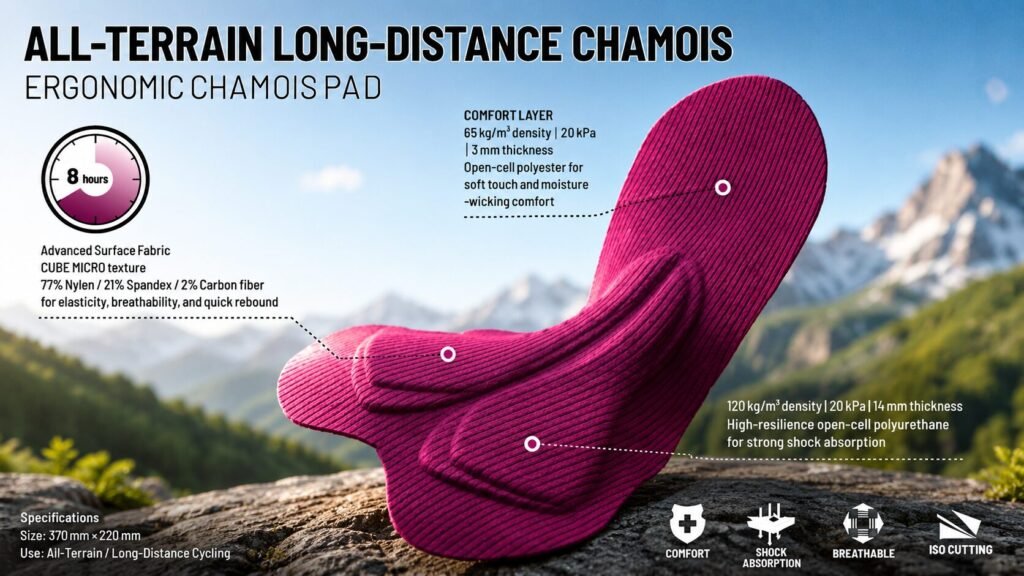
Let’s talk about the pad because the 8-hour endurance benchmark is no hype. The dual-zone layout splits the work beautifully. Your sit-bones rest on a dense 14 mm block of high-rebound foam that refuses to pancake, even when you’re grinding hard. Meanwhile, the front zone transitions into a super-lean 3 mm layout. This means when you are tucked low, you aren’t getting choked out by excess material bunching up front. Plus, they added an anti-static carbon fiber blend to the top sheet, which means zero stickiness when you are sweating bullets.
Even if you’re cruising on a more relaxed rig like the one detailed in The Folding Bike Problem Solved: Why the RockBros Gravis Replaces Harsh Stiffness with Classic Steel Soul, comfort matters. The 5 cm breathable bib straps use a high-stretch mesh panel on the back that dumps heat instantly. They have a 99.9% stretch recovery rate, meaning they stretch when you stand out of the saddle but never sag or lose their retention when you sit back down.
Brand Battle: Why This Kit Crushes the High-End Competition
When you look at legacy cycling brands charging $200+ for standard training bibs, you’re usually paying a massive premium for a tiny logo. They completely flipped the script here by focusing purely on material density and component engineering.
Most big-name brands use a generic 80/20 polyester blend across their entire short. They went much smarter, using a premium 52% nylon and 48% spandex blend for the main body panels. This massive shot of spandex gives these bibs a snappy, long-term rebound that prevents them from bagging out after a few months of intense riding.
Furthermore, standard brands throw in generic, single-density foam pads that feel great in the showroom but collapse entirely after hour three on the road. By combining a 120 kg/m³ high-rebound zone with a high-flow center ventilation channel, this kit handles moisture and pressure distribution at a tier that easily rivals top-shelf racing kit.
Pros and Cons
The Pros
- Zero Saddle Creep: The 68% silicone density on the leg grippers keeps your hem completely locked down so your chamois never migrates.
- Insane Sweat Wicking: Dries at a swift 0.25 g/h rate with a 200% moisture absorption boost, keeping you completely dry through high-cadence efforts.
- Pinch-Free Upper: Broad 5 cm straps eliminate that annoying “cheese-wire” digging effect on your shoulders.
- Low-Light Safety: Strategic dual reflectives on the left hip and leg openings keep you highly visible to traffic during dawn-patrol or night sessions.
The Cons
- True Race Compression: The fit is intentionally snug to support your muscles. If you like a loose, casual club fit, you’ll definitely want to size up.
- Strictly Multi-Season: Built for spring, summer, and fall. If you plan to ride through freezing winter mornings, you’ll need to throw down on a pair of heavy leg warmers.
Who Needs to Buy / Who Should Pass?
You need to buy this if: You are an active road rider, commuter, or gravel grinder putting in 3 to 5 sessions a week and you are completely done dealing with saddle sores, cheap padding, and bunching fabric. It’s built for anyone chasing elite-tier comfort without wanting to pay the inflated luxury brand tax.
You should pass if: You only ride casually for 15 minutes at a time to the local coffee shop, or if you prefer baggy mountain bike shorts over a sleek, aerodynamic performance silhouette. If you are using a casual platform ride like the one in the Kingbull E-Bike Review 2026 – Worth It for Commuting or Just Hype? purely for short utility runs, a high-compression road bib might be overkill for your daily rotation.
Real Talk: The Ultimate Cycling Bibs FAQ & Pro Tips
Look, buying cycling gear online can feel like a total gamble. You read the spec sheet, but you still don’t know if your undercarriage is going to survive hour four of a brutal weekend century ride.
To cut through the noise, they compiled the exact questions real riders are asking about these Men’s Road Cycling Bib Shorts—backed up by hard data and raw feedback from self-tested training blocks on the road.
Q: Who are these bib shorts actually built for?
A: They engineered this kit specifically for dedicated roadies, gravel grinders, and frequent riders who are hammering out training sessions 3 to 5 times a week. If you are logging serious weekly mileage, the high-compression fabric and heavy-duty 8-hour chamois are tuned exactly for your routine. If you’re just cruising 15 minutes down the block for a casual coffee run, the race-level compression might feel like overkill.
Pro Tip: Match your gear to your mileage. If your typical weekend drop is pushing past the 60-mile (100km) mark, these are your default play. Real-world testers recently used them for intensive 160km road events in peak summer heat and reported zero saddle sores or fabric breakdown from start to finish.
Q: Will the bib straps dig into my shoulders or make me overheat?
A: Not at all. They solved the classic “cheese-wire” shoulder pinch by splitting the layout. The front features an ultra-pliant, high-stretch elastic, while the back is wrapped in a highly breathable mesh panel that dumps back heat instantly. Because the straps are a generous 5 cm wide with a 99.9% stretch recovery rate, they spread the load flawlessly across your upper body whether you are climbing out of the saddle or tucked low in an aero position.
Q: How exactly does the chamois stop numbness and soft-tissue pressure?
A: They threw out the generic single-density foam pads and built a highly specialized, zoned endurance structure.
- The Sit-Bone Zone: Packs a thick 14 mm profile with 120 kg/m³ high-rebound foam to swallow harsh asphalt vibration and gravel buzz.
- The Front Zone: Drops down to a super-lean 3 mm profile with 65 kg/m³ density rated to 20 kPa.
This specific transition ensures that when you lean forward into an aggressive road posture, you aren’t compressing soft tissue or dealing with excess bunched-up material. A deep center ventilation channel keeps airflow moving to stop swamp-ass before it starts.
Pro Tip: Keep in mind that even the most advanced dual-zone chamois can’t fix a terrible bike fit. If you are still experiencing localized hot spots, check your saddle tilt first. A perfectly level or slightly downward-tilted nose maximizes the relief provided by that lean 3 mm front zone.
Q: Are the leg grippers going to give me that annoying “sausage leg” squeeze?
A: No, because the design philosophy here focuses on stability over constriction. The leg openings use the exact same premium body fabric integrated with a broad 5 cm wide band at a 68% silicone density. Instead of clamping down like a vice, it gently adheres to your skin to stop the hem from migrating up your quad. When your shorts don’t ride up, your chamois stays perfectly centered, eliminating the need to constantly yank at your kit mid-effort.
Q: How does the fabric handle massive sweat on high-cadence summer days?
A: They deployed a premium 230 g/m² medium-high compression fabric that acts like a second skin. It boasts a 200% moisture absorption rating and a quick-dry speed of 0.25 grams per hour. It actively pulls sweat away from your skin and dumps it to the outer layer to evaporate, keeping you completely dry and reducing the clammy, sticky friction that triggers severe inner-thigh chafing.
Q: Will these shorts bag out or lose their stretch after a few months?
A: They built these to survive heavy training cycles and repeated washing machine abuse. The fabric features a massive shot of high-grade spandex that provides 120% crosswise and 130% lengthwise stretch, meaning it flexes dynamically with your pedal stroke and immediately snaps back to its original shape. Rated for 10,000+ abrasion cycles and holding a 4.5 colorfastness grade, these bibs maintain their deep matte black look and firm compression structure without bagging out at the leg creases or turning see-through over time.
Pro Tip: Want to maximize that 10,000+ abrasion lifespan? Always flip your bibs inside out and drop them into a mesh laundry bag before throwing them in the wash. Wash on a cold, delicate cycle and completely skip the fabric softener, which destroys the moisture-wicking fibers and breaks down the sticky silicone leg grippers. Always air-dry them flat or drape them over a hanger bar by the waist—never hang them by the shoulder straps, or you will permanently stretch them out.
What are the key differences between wave-shaped and flat saddles for long-distance road cycling comfort?
If you have ever dropped serious cash on premium bib shorts only to feel like you are sitting on a concrete brick after mile 40, your saddle profile is likely fighting your pelvic anatomy.
When it comes to long-distance road cycling, saddles generally fall into two major structural design camps: flat and wave-shaped (curved). Neither one is universally “better,” but choosing the wrong one for your riding style and spinal flexibility will completely wreck your comfort, no matter how good your chamois is.
1. Flat Saddles: The Freedom to Move
A flat saddle features a straight, level profile from the nose all the way to the tail.
- The Mechanics: Because there is no curved pocket to lock you into a single position, a flat saddle allows you to slide forward and backward dynamically. When you are crushing a steep climb, you can slide back to leverage more torque; when you drop into a flat, aggressive aero tuck, you can slide forward onto the nose.
- Who it’s for: Highly flexible riders (think being able to easily touch your toes with straight legs) who naturally rotate their pelvis forward without arching their lower back too aggressively.
The Long-Distance Catch: Because a flat saddle doesn’t offer a built-in structural “cushion pocket” to rest your pelvis against, it relies heavily on your core strength to keep you stable. If your core fatigues 5 hours into a ride, you will start sagging, sliding around, and creating massive friction hotspots.
2. Wave-Shaped Saddles: The Locked-In Pocket
Wave-shaped saddles feature a distinct scoop or dip in the middle, ending with an upward curved “kick” or tail at the rear.
- The Mechanics: The dip creates a fixed, anatomical “cradle” for your sit-bones. When you sit in the pocket of a wave saddle, the raised rear section pushes back against your pelvis. This prevents your hips from sliding backward when you are putting down heavy power or grinding up long climbs.
- Who it’s for: Riders with low-to-medium spinal flexibility, or anyone who tends to sit in one exact spot for hours at a time without moving around on the rivets. It forces your pelvis into a stable, upright, or slightly tilted alignment, taking the stabilization pressure off your lower back.
The Long-Distance Catch: If you choose a wave saddle, your bike fit has to be 100% perfect. Because the saddle locks you into one physical position, you cannot shift away from a hotspot if your seat height or setback is off by even a few millimeters.
At-A-Glance: Flat vs. Wave Saddles
| Feature | Flat Saddles | Wave-Shaped Saddles |
|---|---|---|
| Profile Shape | Straight line from nose to tail | Swooped middle with a raised tail |
| Rider Mobility | High (easy to slide forward/backward) | Low (locks you into an optimal “pocket”) |
| Spine Flexibility Match | High flexibility (aggressive spine angle) | Medium-to-low flexibility (neutral spine) |
| Pelvic Support | Relies entirely on your core stability | Mechanically supports the back of the pelvis |
| Common Long-Ride Risk | Chafing from constant micro-sliding | Targeted hotspots if bike fit is slightly off |
How It Connects to Your Bibs
Your saddle shape changes how your chamois interacts with your body. For example, if you pair a wave saddle with a dual-zone chamois (like the one with a thick 14 mm sit-bone block and a lean 3 mm front zone), the wave shape will naturally push your sit-bones directly into that thick 14 mm high-density zone, maximizing vibration dampening.
On a flat saddle, you will utilize the lean 3 mm front zone heavily whenever you slide forward to push an aggressive aero pace in the drops.
What kind of profile are you currently riding on, and where do you usually start feeling hotspots or numbness first on your long rides?
What are the best lightweight summer cycling base layers to improve moisture-wicking under mesh bib straps?
Wearing an extra layer of clothing when it is 90°F and humid outside sounds like total psycho behavior. But let’s be completely real: tossing a premium, ultra-lightweight mesh base layer under your bib straps is the ultimate cheat code for staying cool, dry, and chafe-free during brutal summer training blocks.
When you wear a high-compression bib with mesh straps over bare skin, your sweat has nowhere to go but to pool under the elastic. A dedicated summer base layer acts like a mechanical pump—it instantly pulls moisture off your skin, pulls it through the mesh structure, and passes it directly to your outer jersey to evaporate. Plus, it forms a protective barrier so your bib straps don’t turn into sandpaper against your chest when you’re rocking a high-cadence effort.
Here is exactly what to look for in the best lightweight summer cycling base layers to maximize your mesh bib setup:
1. The Open-Mesh “Fishnet” Synthetics (Polyester/Polypropylene)
This is the gold standard for peak summer riding. These base layers look like literal fishnets because they are designed with massive open gaps in the weave to maximize airflow while maintaining skin contact.
- The Material Tech: Look for blends utilizing polypropylene. Polypropylene is naturally hydrophobic, meaning it physically cannot absorb water. Instead of holding onto your sweat like cotton or basic polyester, it immediately forces the moisture outward.
- Why it rocks under bib straps: The open-mesh structure creates tiny pockets of air against your skin. When you descents or pick up speed, the breeze passes through your jersey and hits these air pockets, creating a legit air-conditioning effect.
- What to look for: Castelli Pro Mesh or Craft Pro Dry Nanoweight style configurations.
2. Ultra-Lightweight Seamless Tank Layouts
If you hate the look or texture of open fishnet mesh, your next best play is a seamless, ultra-thin solid knit tank.
- The Material Tech: These typically use a highly engineered knit nylon-elastane or polyester-elastane blend that is sliced incredibly thin (often under 80 g/m²).
- Why it rocks under bib straps: Because they are built using a 3D seamless knitting process, they have zero stitched seams on the sides or shoulders. When you layer tight 5 cm elastic bib straps over a seamless tank, there are absolutely no pressure points or ridges to dig into your skin and cause raw red marks.
- What to look for: Assos Skin Layer Superléger or Gore Wear Summer Base Layer style layouts.
Critical Features You Cannot Skip
When you are hunting for the perfect summer base layer to pair with your training kit, ensure it checks these three boxes:
- Sleeveless / Tank Cut: Do not buy short-sleeve base layers for summer. The extra fabric under your armpits will bunch up, trap heat, and cause massive friction when you drop into an aggressive aero position on the handlebars.
- Flatlock or Bonded Seams: If the base layer isn’t fully seamless, the shoulder seams must be completely flatlock stitched. Regular raised seams under a tight bib strap will drill into your collarbones over a 4-hour ride.
- Dropped Tail Hem: Ensure the back of the base layer is cut significantly longer than the front. This prevents the shirt from riding up past your waistline when you are bent forward, keeping it perfectly tucked inside your chamois zone without bunching.
The Quick Pro Tip: Always put your summer base layer on first, and then pull your bib straps over the top of it. Never wear the base layer over your bib straps, or you completely ruin the moisture-wicking chain and trap heat directly against your torso.
What is the best way to wash and dry high-compression cycling bib shorts to maximize the lifespan of the spandex and silicone grippers?
If you treat your premium high-compression bib shorts like a basic cotton t-shirt, you are looking at saggy spandex and peeling leg grippers in less than one season. High-compression fabric (like that heavy 230 g/m² nylon-spandex blend) and specialized silicone grip tracks are engineered to survive thousands of pedal strokes, but they absolutely hate two things: heat and harsh friction.
To keep that locked-in compression snappy and stop your leg bands from sliding up your thigh, you need a strict washing and drying routine.
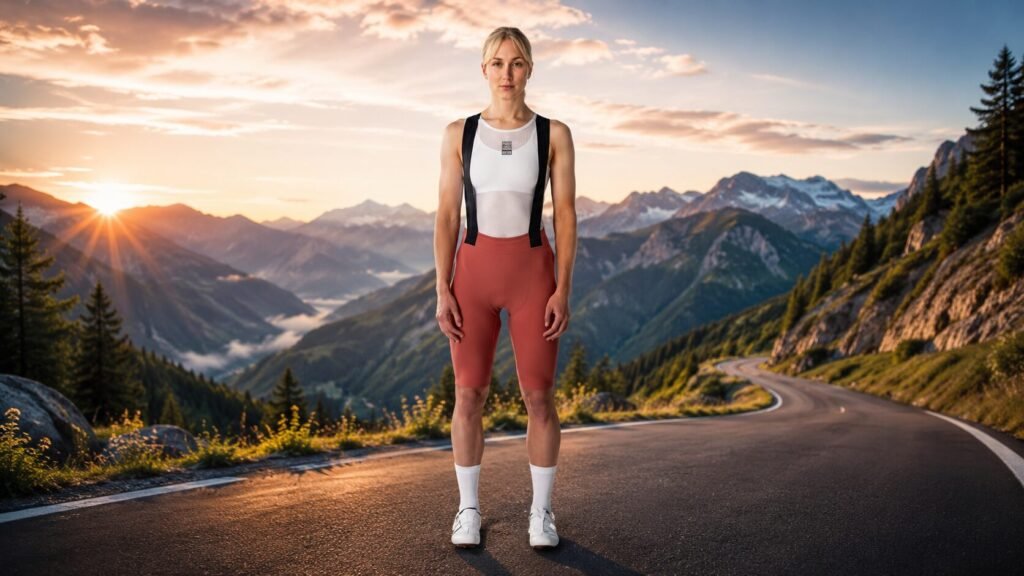
The Pro-Grade Washing Routine
1.The Pre-Wash Prep:Turn Inside Out.
Always turn your bib shorts inside out before they hit the wash. This protects the outer face of the high-compression fabric from friction pilling and ensures the chamois top fabric gets direct exposure to the detergent to flush out sweat, bacteria, and residual chamois cream.
2.Bag Them Up:Use a Mesh Laundry Bag.
Never throw bib shorts raw into a washing machine with other clothes. The long mesh shoulder straps will inevitably wrap around the agitator or snag on zippers, velcro, and hooks from your other gear. Drop them into a dedicated mesh laundry bag to isolate them from friction.
3.Dial in the Cycle:Cold Water & Gentle Spin.
Set your washer to a delicate/gentle cycle using cold water (ideally 30°C or below). High heat structurally degrades the elastane (spandex) fibers, causing them to snap and lose their snappy compression footprint.
4.Choose the Right Soap:Mild Liquid or Tech Wash.
Use a mild, sports-specific liquid detergent or a gentle enzyme cleaner. Never use fabric softener. Softeners leave a chemical coating over the synthetic fibers that completely destroys the fabric’s moisture-wicking ability and chemically breaks down the sticky properties of the silicone leg grippers.
The Drying Protocol: Step Away From the Dryer
If there is one absolute rule for cycling kit, it is this: keep them far away from the clothes dryer. The intense tumble heat will dry out, crack, and peel the 68% density silicone leg grippers, while turning your high-stretch bib straps into wrinkled, useless bacon strips.
- The Air Dry Method: Hang-drying is the only way to go. Lay the bibs flat on a drying rack or hang them up.
- The Hanger Trick: When using a hanger, never hang the bibs by the shoulder straps. The weight of the wet chamois pulling down will permanently stretch out the elastic recovery of the straps. Instead, drape them over the crossbar of the hanger at the waist, or clip them upside down by the leg openings.
The Post-Ride Golden Rule: Sweat is naturally acidic and breaks down elastane over time. If you can’t wash your bibs immediately after a brutal, high-cadence summer training ride, at least rinse them thoroughly in cold water in the shower and hang them up to dry. Leaving them balled up inside a damp, dark gear bag is a fast track to fiber breakdown and permanent odor buildup.
What are the main performance benefits of choosing cycling bib shorts over traditional waistband cycling shorts for long-distance road riding?
Ask any cyclist who has crossed the 50-mile mark in a pair of standard waistband shorts, and they will tell you the exact moment they realized they made a massive mistake. Traditional shorts work fine for quick 20-minute spins to the local coffee shop, but for long-distance road riding, they are fundamentally flawed.
The moment you lean forward into an aggressive, aerodynamic riding posture—especially if you’re hammering on a race-tuned geometry frame like the one featured in My RockBROS PGZ Review: Is This Budget Superbike Worth It?—the weaknesses of a waistband become painfully obvious.
Choosing cycling bib shorts over traditional shorts isn’t about looking like a pro; it is about protecting your body from mechanical friction and structural restriction. Here are the core performance benefits that make bib shorts an absolute necessity for long-haul days:
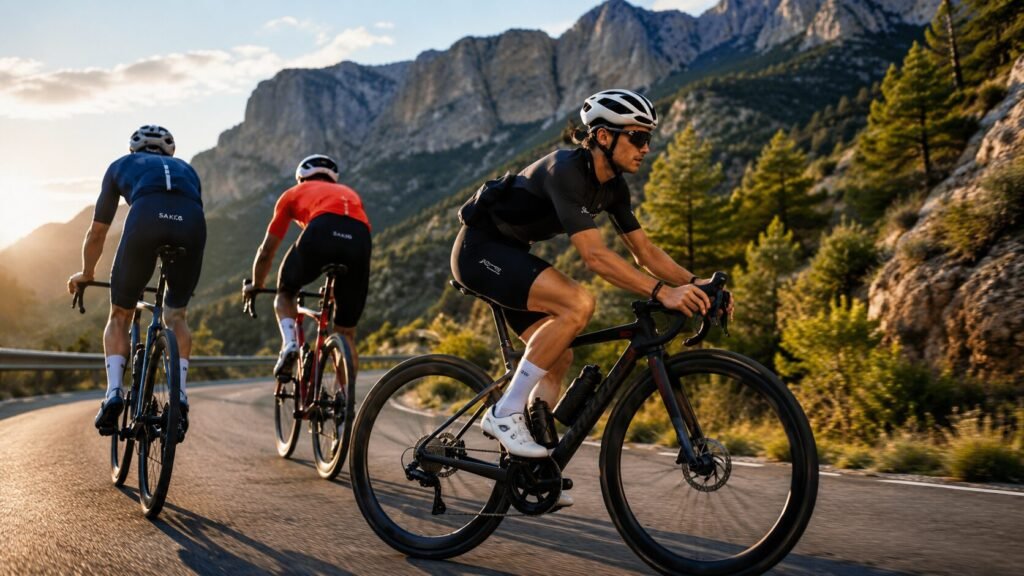
1. Unrestricted Diaphragmatic Breathing (No Waistband Dig)
When you are bent over the handlebars, a traditional elastic waistband acts like a tight rubber band cutting directly into your abdomen. This creates a highly restrictive feeling precisely when your body is screaming for oxygen. Because bib shorts rely on over-the-shoulder straps to stay up, they completely eliminate the waistband. Your stomach has full room to expand, allowing for deeper, more efficient diaphragmatic breathing during high-intensity training blocks.
2. Absolute Pad Stability
The most critical job of any cycling short is keeping the protective chamois pad perfectly aligned with your anatomy. Traditional shorts naturally migrate down your hips as you constantly transition between standing out of the saddle and sitting down. When the short slips, the pad sags, leading to:
- Saddle Snagging: The excess material catches on the nose of your saddle when you try to sit back down.
- Friction and Chafing: A misplaced pad causes the seams to rub against your inner thigh, generating severe saddle sores within two hours.
Bib straps create a constant, vertical tension profile that structurally anchors the chamois tightly against your sit-bones. No matter how much you shift your weight, the pad stays locked exactly where it belongs.
3. Elimination of “The Gap” and Fabric Bunching
Bending forward pulls your cycling jersey upward while traditional shorts are naturally pulled downward by your pedaling motion. This creates an annoying gap that exposes your lower back to cold wind, road grit, and sunburn. Bib shorts feature a high-backed mesh panel that offers seamless torso coverage. Furthermore, removing the heavy elastic waist band prevents fabric from bunching up at your hips, optimizing your aerodynamic profile and eliminating localized sweat pools.
The Structural Reality: Traditional shorts rely on horizontal constriction (squeezing your waist) to stay up. Bib shorts rely on vertical suspension (hanging from your shoulders). Suspension will always distribute load more evenly than constriction when your body is in continuous motion.
Summary: Performance Comparison
| Attribute | Traditional Waistband Shorts | Premium Over-the-Shoulder Bibs |
|---|---|---|
| Primary Support Mechanism | Horizontal waist constriction | Vertical shoulder suspension |
| Breathing Freedom | Restricted by elastic stomach pressure | 100% free abdominal expansion |
| Chamois Migration | High risk of sliding and sagging | Zero movement; permanently centered |
| Pressure Distribution | Localized at the beltline | Flawlessly spread across the upper torso |
| Ideal Ride Duration | Under 90 minutes | Unlimited / 8-Hour+ Endurance blocks |
Does using chamois cream damage or degrade the high-density foam or anti-static carbon fabric in premium cycling chamois pads?
The short answer is no, but with one massive catch.
If you are using modern, cycling-specific chamois creams (like Chamois Butt’r, Assos, or Muc-Off), your high-density foam and anti-static carbon filaments are completely safe. These creams are engineered to be water-soluble, meaning they easily wash out during a standard laundry cycle without leaving a structural footprint behind.
However, if you are slathering on old-school, petroleum-based hacks like pure Vaseline, Bag Balm, or heavy zinc-oxide diaper rash creams, you are actively speedrunning the destruction of your premium kit.
Here is exactly how chamois cream interacts with the technical layers of your pad, and why the type of cream you choose makes or breaks your investment:
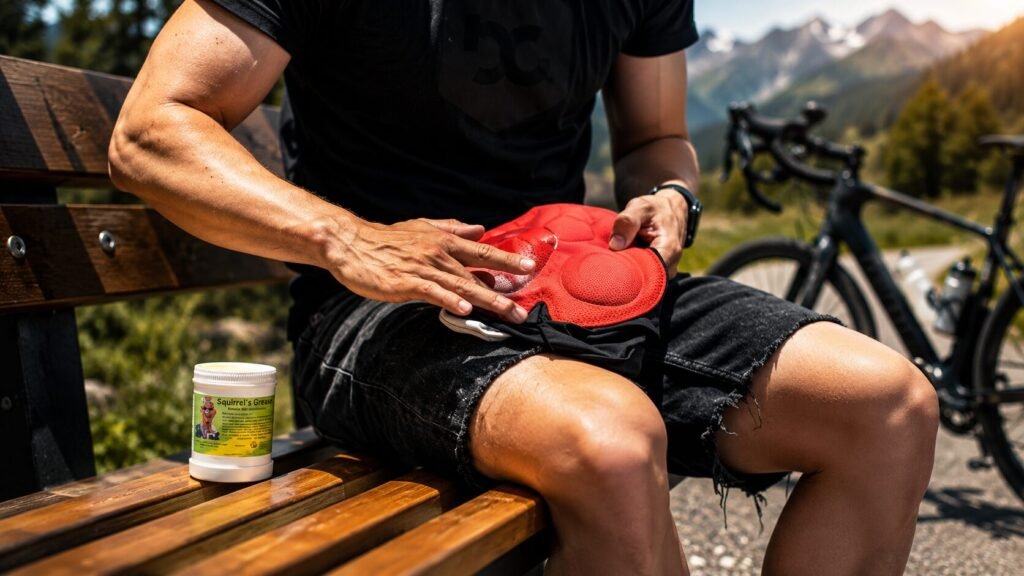
1. The Impact on High-Density Foam (120 kg/m³)
Premium endurance chamois pads rely on an open-cell polyurethane foam matrix to breathe and absorb heavy asphalt vibrations.
- Water-Soluble Creams: These sit on the face of the fabric to reduce skin friction during your ride, then completely liquefy and flush out when hit with cold water and mild detergent. The foam retains 100% of its high-rebound cushioning.
- Petroleum/Oil-Based Creams: Products containing heavy mineral oils or petroleum jelly do not mix with water. They seep deep into the high-density foam cells and stick like glue. Over time, this creates a stubborn, greasy buildup that clogs the open cells, permanently killing the foam’s rebound ability and turning your elite support pad into a flat, soggy slab.
2. The Impact on Anti-Static Carbon Fabric
The 2% carbon fiber weave used in premium top sheets is completely inert. This means the actual carbon filaments are incredibly tough and will not chemically dissolve or degrade from contact with skin lubricants.
However, buildup will kill its performance. If a non-water-soluble cream builds up on the fabric’s micro-weave, it creates a physical barrier over the carbon threads. Once coated in a layer of old grease, the anti-static properties can’t properly ground against your skin, and the fabric’s rapid moisture-wicking and quick-dry capabilities get completely choked out.
The Tech Reset Trick: If you notice your chamois pad is starting to feel slightly stiff, water-repellent, or is retaining a funky odor even after a wash, it means you have residual cream buildup. To fix this without hurting the snappy spandex compression, add a quarter-cup of plain white vinegar to the rinse cycle of your wash. Vinegar naturally cuts through stubborn skin oils and cream scum without degrading synthetic fibers.
So you just walked through our deep-dive review of the Przewalski Men’s Road Cycling Bib Shorts, and now your feed is blowing up with a million conflicting opinions on cycling apparel. Finding the right kit can feel like an absolute minefield. One thread tells you to drop $300 on Swiss-engineered spandex, while another claims a budget pair will do the exact same job.
To clear the noise, we compiled every burning question,and mid-ride complaint into the ultimate, no-nonsense cycling bib FAQ. Whether you are trying to survive a brutal 6-hour endurance block or just trying to keep your anatomy from going completely numb, here is the real, unfiltered truth.
1. The Core Debate: Why Ride in Braces?
Why should I buy bibs when regular bike shorts have been perfectly fine? Give me a reason to switch.
Look, if you enjoy a thick, elastic waistband cutting into your gut every time you bend over the handlebars, stick with shorts. But if you want total comfort, bib straps are a complete game-changer.
Regular shorts slide down as you ride, exposing your lower back and forcing you to constantly yank them up. Bib shorts eliminate the waistband entirely by using shoulder straps to keep the chamois (the padded insert) perfectly locked against your skin. No shifting, no sagging, and zero stomach restriction when you are breathing hard on a steep climb.
My bib shorts are crushing my package. Is there a remedy, and which bibs have the most room “down there”?
If your junk feels like it is in a hydraulic press, two things are usually happening: your bibs are too small, or you are judging the fit while standing straight up. Cycling bibs are anatomically cut for the on-bike position. When you stand up in the cafe line, the straps should pull down slightly, compressing your chest and groin. Once you hunch over into a riding position, that tension releases.
If they still crush you while pedaling, look for brands that feature a dedicated “pouch” design or a floating chamois. The Przewalski Road Cycling Bib Shorts handle this brilliantly by utilizing a recessed central channel in their 3D triple-density pad to relieve soft-tissue pressure. In the premium tier, Assos is legendary for its roomier front anatomy zone, often referred to as a “cuckoo penthouse.”
What do “proper” cyclists think of wearing regular t-shirts with bib shorts?
Real talk: ignore the gatekeepers. If you want to rock a casual t-shirt over your bibs, go for it—especially for gravel grinds or casual commutes.
The only actual downside is performance-based, not style-based. Standard cotton t-shirts hold onto sweat like a sponge, get heavy, and flap like a parachute once you cross 15 mph. If you want that relaxed look without the soggy misery, grab a loose-fitting technical tee or a gravel-specific jersey made from moisture-wicking synthetic fabric.
2. Endurance & Ultra-Distance (6-8 Hour Comfort)
What are the absolute best long-distance bib shorts for 6-to-8-hour epic rides?
For rides that consume your entire day, your chamois needs multi-layered, high-density foam that will not pack out and flatten under your sit bones after hour three. High-end endurance picks like the Assos Mille GTS or GTO series lead the luxury market.
However, if you are tackling standard 25-to-50 mile road rides, you do not need to drop car-payment money. Mid-tier and high-quality budget options provide plenty of shock absorption for those distances without breaking the bank.
Can budget bib shorts handle long 6+ hour rides, or do I need to spend $250+?
You absolutely do not need to spend a fortune to ride all day. The secret is finding a budget brand that does not skimp on the foam density. This is exactly where the Przewalski Men’s Road Cycling Bib Shorts punch way above their weight class.
Instead of using a cheap, uniform piece of flimsy sponge, Przewalski uses an anatomically shaped, multi-density insert that isolates your sit bones. Paired with a highly durable 80/20 Nylon-Spandex blend that holds its compression over hundreds of kilometers, it is widely considered the ultimate budget workhorse for long-distance riders who refuse to pay the “premium brand tax.”
3. The Premium Sector Showdown
Assos bib shorts: Is their floating padding design actually bad, or are people trippin’?
They are definitely not trippin’, but they might not understand how the tech works. Assos uses a patented design called GoldenGate, where the chamois is stitched at the front and back but left unstitched along the sides.
Off the bike, the pad looks loose and weirdly bunched up. But the moment you sit on the saddle, the magic happens. Because the pad is not rigidly sewn to the outer shell of the shorts, it moves with your body while the fabric moves with the saddle. This massively reduces friction and fabric chafing against your skin. It is love-it-or-hate-it tech, but for high-mileage endurance riders, it is heavily vetted.
Van Rysel RCR-R Pro vs. Assos MILLE GT S11: Which one should I choose?
These are two completely different beasts tailored for different styles of riding:
- Van Rysel RCR-R Pro: This is Decathlon’s aggressive, WorldTour-tier race kit. It is incredibly lightweight, offers intense muscle compression, features a sleeker, thinner pad, and is built for fast, high-intensity efforts.
- Assos MILLE GT S11: This is the undisputed king of plush endurance. The Quartz fabric is softer, the cut is slightly more relaxed for everyday human bodies, and the chamois is thicker to soak up road vibration over 6+ hours.
If you are racing or want a ultra-locked-in aero fit, go Van Rysel. If you want pure, reliable all-day comfort, go Assos.
ASSOS vs. Castelli: Who makes the most durable premium bib shorts?
The Short Answer: Assos wins on raw textile durability; Castelli wins on race-day aerodynamics and wet-weather performance.
Assos kits are absolute tanks. If you wash them in a mesh laundry bag and air-dry them, a pair of Mille GTs can easily last you four to five seasons without the fabric thinning out or the leg grippers flaking off. Castelli makes incredible gear (their Progetto X2 Air chamois is a masterpiece), but their materials tend to be thinner, lighter, and more fragile over dozens of wash cycles. Keep in mind that Castelli runs notoriously small—always size up at least once.
My premium cargo bibs have outer fabric damage after only 10 rides. Is this normal wear or a defect? Also, can crashed bibs be repaired?
If the fabric is pilling or shredding after just 10 rides, check your bike setup immediately. 9 times out of 10, this is caused by the rough fabric edge of a velcro saddlebag rubbing against your inner thigh, or a sharp plastic burr on your saddle base. Premium face fabrics are highly technical but vulnerable to abrasive friction. If there is no clear friction source on your bike, it is likely a manufacturing defect, and you should contact the brand for a warranty claim.
If you tore them up in a crash, do not throw them away. Many premium brands (like Rapha and Assos) offer free or heavily discounted crash replacement and repair services. If they do not, a local gear repair shop can easily sew a patch of heavy-duty elastic nylon over the tear.
4. Budget-Friendly & Beginner Options
What are the best bang-for-your-buck bib shorts for beginners?
When you are just starting out, you want maximum comfort for minimal investment. The top contenders in the budget realm are Przewalski, Siroko, and entry-level Decathlon (Van Rysel) gear.
For the absolute best value for your money, the Przewalski Men’s Road Cycling Bib Shorts are incredibly tough to beat. They offer a legitimate high-density structural pad and excellent muscle support at a fraction of the cost of big-name retail brands.
Siroko vs. Van Rysel vs. Bio Racer: Mid-Tier Brand Breakdown
If you are shopping in the competitive €50 to €100 price bracket, here is exactly how these popular options stack up against each other:
| Brand / Model | Price Range | Best For | Chamois Performance |
| Siroko (Aspen / BX) | €50 – €80 | Budget-conscious style & gravel storage | Solid Strato pad; great for 2-4 hour mid-distance efforts. |
| Van Rysel (Core / Training) | €60 – €90 | Race-oriented fit on a budget | Anatomical, firm padding; excellent ventilation. |
| Bio Racer | €80 – €120 | Custom club kits & pure durability | Industrial-grade stitching; engineered for hard training blocks. |
5. Specialized Fits & Setup Quirks
I am a shorter rider (e.g., 5’5″ with a 28″ inseam). What bib shorts actually fit without dragging down to my kneecaps?
Most modern premium bibs are cut with long, European-style inseams that sit right above the knee joint. If you have shorter legs, this can cause the leg band to bunch up behind your knee, leading to brutal chafing.
Look for brands that explicitly offer a “Short Inseam” version, or look into Italian brands like Castelli which inherently feature a tighter, shorter cut. Alternatively, budget-friendly options like Przewalski feature excellent vertical stretch and highly flexible leg bands, allowing you to position the gripper slightly higher up on your thigh without it digging in or sliding back down.
What is the deal with indoor riding bibs? Do I need a dedicated pair?
Indoor trainer sessions are uniquely brutal on your undercarriage. Because you are stuck in a completely static position with zero natural wind to evaporate your sweat, moisture pools instantly, and your sit bones take a relentless, unmoving beating.
You do not necessarily need a specialized “indoor” branded bib, but you do need gear with maximum breathability. An older pair of bibs with thin, worn-out straps or highly perforated side panels is perfect. Alternatively, dedicated indoor liner bibs feature massive mesh paneling to keep you cool on the smart trainer.
Can I wear my cycling bib during a run, or wear casual shorts over a liner?
- Running in a cycling bib: Absolutely do not do this. It is a recipe for instant diaper-rash city. Cycling pads are wide and thick; running causes your thighs to rub against the edges of that pad continuously, resulting in excruciating friction burns within a mile.
- Wearing shorts over a liner: Yes, this is exactly how mountain biking and casual commuting work. Liner bibs (like the Patagonia Dirt Roamer) feature a low-profile, highly breathable chamois meant to be worn under a set of durable, loose-fitting outer trail shorts.
How do I choose the correct size when buying from online stores?
When shopping for cycling apparel online, throw your standard t-shirt and jeans sizing completely out the window. Every manufacturer has a completely unique fit profile.
Always grab a tape measure and prioritize your hip/glute measurement and your weight over your height. Bib straps are incredibly stretchy and can easily accommodate a taller torso, but if the hip measurement is too tight, the fabric will over-stretch, turning the rear panel completely see-through and pulling the chamois out of its protective alignment.
Why do cyclists wear bib shorts, and are they actually worth it?
Yes, they are 100% worth it. To anyone outside the cycling world, bib shorts look like a goofy cross between a wrestling singlet and 1920s swimwear. But the second you cross the two-hour mark on a hot day, you realize why every serious rider swears by them.
Cyclists wear bibs because traditional shorts rely on a tight waistband to stay up. When you are bent forward over the bars for hours, that waistband constantly digs into your stomach, restricts your breathing, and pushes the padded chamois down and out of alignment. Bibs use over-the-shoulder straps to suspend the shorts, completely removing waist pressure and keeping the pad glued to your sit-bones. It turns an agonizing ride into a comfortable training block.
Are bib shorts better than regular cycling shorts?
For anything longer than a casual cruise down the block, bib shorts are vastly superior.
Regular shorts work fine if you are sitting fully upright on a casual hybrid bike or a beach cruiser. But the moment you drop your torso into an aggressive road position, regular shorts bunch up at the front hip crease and slide down in the back. This creates an annoying gap that exposes your lower back to sun, wind, and road spray. Bib shorts eliminate the gap completely, streamline your aerodynamic profile, and distribute fabric tension evenly across your entire upper body instead of choking your waistline.
The Ultimate Beginner Question: Do you go commando in cycling shorts?
The Golden Rule of Cycling: You absolutely, under no circumstances, wear underwear under your cycling bibs or shorts. Yes, you go 100% commando.
This is the number one mistake beginners make, and it leads to pure misery. Cycling chamois pads are engineered to sit directly against your skin. They are built with antimicrobial, moisture-wicking, and completely seamless top-sheets (like the carbon fiber infused layer on the Przewalski Bib Shorts we reviewed above) to eliminate friction.
If you throw cotton boxers or briefs under your bibs, you are introducing rough stitched seams, trapping wet sweat right against your skin, and creating a perfect recipe for severe inner-thigh chafing and saddle sores. The pad is your underwear.
Do professional cyclists wear padded shorts?
Yes, every single pro cyclist wears padded shorts. There is a weird myth out there that pro riders have “leather butts” and ride on bare carbon saddles. That is completely false.
Pros are in the saddle for 4 to 6 hours a day, back-to-back, for weeks at a time during Grand Tours like the Tour de France. They wear highly technical, ultra-premium bib shorts with advanced multi-density foam pads. The only difference is that their kits are custom-tailored to their exact body measurements, and their pads are often slimmer and firmer because their core strength is so elite that they place less dead weight directly onto the saddle.
What are the best road cycling bib shorts on the market?
The “best” bib short depends entirely on your budget and how many hours you plan to spend in the drops:
- The Luxury Tier ($200 – $350): If you have cash to burn and want the ultimate long-distance prestige, Assos (Mille GT S11) and Rapha (Pro Team) lead the pack. They offer incredible textile durability and specialized floating pad designs for elite comfort.
- The Daily Workhorse Tier ($50 – $100): If you want high-end performance, heavy-duty compression, and a legitimate 8-hour dual-zone chamois without paying a massive luxury brand tax, the Przewalski Men’s Road Cycling Bib Shorts are the undisputed bang-for-your-buck champions.
How do you use your height, weight, and hip measurements to accurately size cycling bib shorts online?
Buying cycling bib shorts online by just clicking “Medium” because you wear medium sweatpants is a guaranteed way to end up with kit that either cuts off your circulation or bags out like an old diaper.
Because high-performance bib shorts rely on heavy muscle compression (like that 230 g/m² textile weave we broke down earlier), standard clothing metrics go completely out the window. To get a perfect, friction-free fit, you need to use a specific measurement hierarchy: Hips first, weight second, and height last.
Here is the exact blueprint to deciphering online sizing charts so you can nail the fit on your first try.
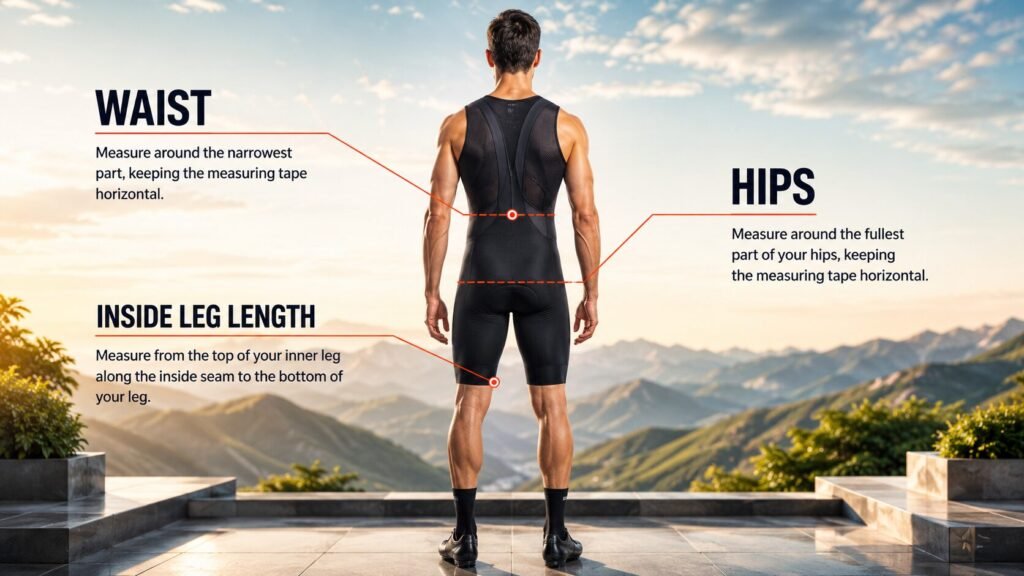
The Sizing Hierarchy: Why Hips Are King
When you look at an online sizing chart, your data points are not equal. You have to prioritize them in this exact order to avoid a fit disaster:
1. Hip/Glute Measurement (The Absolute Priority)
This is the single most important number on the chart. Your hips and glutes dictate the maximum stretch threshold of the lower panels. If you size your bibs based purely on your waist or height, but your glutes are wider than the chart’s recommendation, the fabric will over-stretch. This creates two massive problems:
- The Transparency Trap: Over-stretched spandex loses its opacity, turning the rear panel completely see-through when you bend forward over the saddle.
- Chamois Displacement: The fabric pulls the padded insert too tight, flattening it out and shifting it away from your sit-bones.
2. Weight (The Compression Validator)
Weight is the best proxy for body volume and density. Compression kit is designed to sit within specific weight brackets to optimize muscle stabilization without restricting blood flow. If your hip measurement places you in a Large, but your weight places you in an Extra-Large, always default to the larger size to protect the longevity of the spandex fibers.
3. Height (The Strap Regulator)
Height only matters for one thing: bib strap length. Spandex has massive vertical elasticity (often 130% or more), meaning a shorter panel can easily stretch to accommodate a longer torso. If you are tall and lean, do not size up just for height; your straps will stretch out naturally on the bike.
Step-by-Step: How to Decode an Online Size Chart
1.Measure Your Real Hips:Find your widest pelvic point.
Take a flexible tailor’s tape measure. Stand straight with your feet together and wrap the tape around the absolute widest part of your hips and glutes (usually across the middle of your buttocks). Keep the tape perfectly horizontal to the ground—do not pull it tight enough to compress your skin.
2.Check the Brand’s Origin:Account for regional manufacturing cuts.
Before mapping your numbers, note where the brand is engineered. Italian and European brands (like Castelli, Assos, or Siroko) use a highly aggressive, ultra-slim “Euro Cut.” If your measurements sit at the top end of a size in these brands, you almost always need to size up. Value-focused daily training brands (like Przewalski) are cut more true to standard US athletic sizing.
3.Apply the ‘Tie-Breaker’ Rule:The golden rule for edge cases.
Open the online chart and locate your hip measurement first. If your hips say Medium, but your weight says Large, always buy the Large. If your hips say Large, but your height says Medium, always buy the Large. Your hips always win the tie-breaker.
What a Perfect Fit Actually Feels Like
Once your new bibs arrive, do not judge the fit while standing in front of your mirror. Cycling apparel is pattern-cut for an aggressive, forward-leaning stance.
The On-Bike Test: Put the bibs on, step on your bike, and drop down into the hoods or drops.
When you are in a riding posture, the straps should stop pulling aggressively on your shoulders, the front panel should smooth out across your stomach without bunching, and the leg grippers should sit flat against your quad without squeezing your muscle like a sausage casing. If the fabric behind your knees or at your hip crease wrinkles or bags out, the compression is too loose—you need to size down.
What are the performance differences between gel pads and high-density foam pads in cycling shorts for long distance?
When you are browsing cycling bibs online or squeezing pads at a local bike shop, gel inserts feel amazing. They have that plush, memory-soft squish that immediately makes you think, “Yes, this will protect my sit bones from that hard saddle.”
But here is the hard truth that endurance cyclists learn the painful way: Gel is a short-distance illusion. For long-distance riding (anything past the two-hour mark), high-density engineered foam is the undisputed king.
Let’s break down the massive performance gap between gel and high-density foam when you are settling in for an all-day epic.
1. Breathability and Moisture Control (The “Swamp” Factor)
The single biggest enemy on a long-distance ride is moisture. As you pedal, you generate a massive amount of heat and sweat in the pelvic zone.
- Gel Pads: Silicone gel is entirely non-porous. It acts exactly like a sheet of plastic wrap inside your shorts, trapping body heat and blocking airflow. After a couple of hours, the pad saturates with sweat, macerating your skin. Wet skin is incredibly fragile, turning your chamois into a friction nightmare that breeds saddle sores and severe chafing.
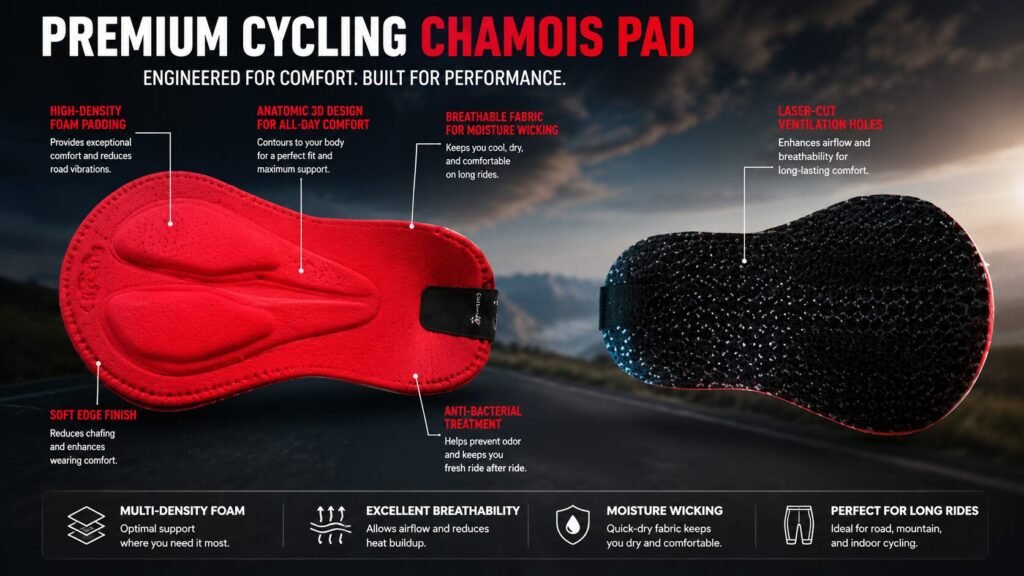
- High-Density Foam: High-quality foam utilizes an open-cell structure. It acts like a high-performance air filter, allowing air to circulate and pulling moisture away from your skin so it can quickly evaporate.
2. Support Durability vs. “Bottoming Out”
It is a common misconception that a thicker, softer pad equals more comfort. What actually matters is structural resistance under constant, repetitive pressure.
- Gel Pads: Gel is fluidly adaptive. This means when you sit down with your full body weight, the gel often shears and migrates away from the primary high-pressure contact points under your sit bones. You wind up “bottoming out,” pressing right through the displaced gel onto the hard saddle hull anyway.
- High-Density Foam: Premium long-distance bibs use multi-layered, variable-density foams (typically ranging from 80 to 120 kg/m³ or higher). As shown in the architectural layout of high-performance pads, a firm, high-density backing foam layer acts as a baseline suspension system. It compresses dynamically to absorb road buzz but retains its core thickness, keeping your skeletal structure elevated and maintaining consistent blood flow for hours.
3. Flexibility and Pedal Stroke Ergonomics
Every time you pedal, your legs spin at roughly 80 to 100 revolutions per minute. Over a 50-mile or 100-mile ride, that adds up to tens of thousands of repetitions.
- Gel Pads: Gel is heavy. Adding dense silicone blocks to the crotch of your shorts adds noticeable dead weight that doesn’t stretch or flex efficiently. It can create a bulky, restrictive feel that disrupts your natural hip rotation and chafes along the side seams.
- High-Density Foam: High-density foam is incredibly lightweight and features multi-directional stretch properties. It conforms flawlessly to your anatomy and flexes seamlessly with your skin during the entire pedal stroke, eliminating material bunching in the hip creases.
The Verdict: Who Should Buy What?
To get the absolute best setup for your specific riding style, use this quick checklist:
Stick with Gel Pads if:
- You primarily do short, casual commutes or weekend bakery runs under 60 minutes.
- You ride an upright hybrid or cruiser bike where you hit unexpected, sharp city potholes and want quick, initial impact dampening.
Upgrade to High-Density Foam if:
- You are tackling serious road, gravel, or endurance training blocks longer than two hours.
- You live or ride in hot, humid climates where sweat management is critical to comfort.
- You want a performance fit that stabilizes your muscles and preserves your soft tissue integrity over long, exhausting miles.
At Przewalski, they design high-performance cycling apparel that gives you pro-level comfort without demanding a pro-level budget. They believe your wallet shouldn’t have to suffer just so your sit-bones can survive a long training block.
To keep things completely transparent, they throw out the confusing fine print and keep their store policies straightforward. Here is exactly how they handle shipping, returns, and payments—no corporate talk, no hidden fees, just honest service so you can focus entirely on the ride.
Shipping: Fast, Reliable, and No Hidden Costs
They want to get your new gear into your rotation as fast as humanly possible. Here is what you need to know about getting your package delivered:
- Free Standard Shipping: They offer free standard shipping on every single delivery. No minimum order thresholds, no unexpected checkout surprises.
- 1 to 2 Day Processing: Once your payment is locked in, orders are packed and shipped out of the warehouse within 1 to 2 business days.
- Delivery Windows: You will see a precise estimated arrival date at checkout depending on your location. For riders in the United States, typical delivery takes just 3 to 5 business days.
- The Europe Exception: They currently do not ship to the European Union. They sincerely apologize for the lockdown, but the second European shipping channels open up, they will blast out an update to the community.
Duties, Taxes, and the Customs Caveat
If you are ordering internationally, local import duties and taxes are entirely your responsibility.
Critical Warning: If you decide to refuse delivery of your parcel because of local import taxes, the shipping carrier will automatically route the package back to Przewalski. If this happens, they reserve the right to deduct a USD $30 handling fee from your final refund to cover the return shipping and restocking costs.
Returns & Exchanges: The 60-Day Guarantee
They stand behind their stitching and fabric completely. If your gear arrives and the fit or feel isn’t exactly what you expected, they give you a massive window to get it sorted out.
The Return Rules
You have 60 days from the original date of purchase to initiate a return. To get your money back, the items must follow these common-sense rules:
- They must be entirely unworn and unwashed.
- All original product tags must still be attached.
- Items marked as Final Sale on the product page are permanently yours and cannot be returned.
Unless they made a logistical mistake (like sending you the wrong size or shipping an item with a structural defect), you are responsible for covering your own return shipping costs. Before you drop anything in the mail, you must contact their team first at info@przewalski.com to get authorization.
What About Exchanges?
They do not process direct exchanges. If you bought a size Medium and realize you need a Large to handle the compression fit, the fastest play is to return the original item for a refund and place a brand new order on the site.
For domestic U.S. orders, if the return is due to a factory mistake or a manufacturing defect, they will gladly cover the return shipping label. International orders can be returned for a refund, but cannot be exchanged, and international customers must handle all transit costs.
The 1-Year Workmanship Warranty
They build their kits to take a beating on the asphalt, which is why every single Przewalski product comes backed by a solid 1-year warranty.
This warranty kicks in the exact day you buy your gear and covers any legitimate manufacturing flaws, including blown-out stitching, broken zippers, fabric splitting, and general workmanship issues. If your gear fails because of how it was physically constructed, they will either repair it or swap it out for a fresh replacement—whichever makes the most sense to get you back on the bike quickly.
Secure & Simple Payments
They keep the checkout zone clean, encrypted, and completely secure so your personal data stays locked down. They currently accept all major credit and debit card networks that support international transactions:
- Visa
- MasterCard
- American Express
If your preferred payment method isn’t listed or your card is throwing an unexpected error at checkout, just drop a quick line to their support crew at info@przewalski.com and they will do their absolute best to get you sorted out.
Final Verdict
At the end of the day, your riding kit dictates how long you can actually stay in the saddle before your body screams for mercy. They completely nailed the formula here by fixing the bad strap tension, flat padding, and loose leg hems that plague mid-tier cycling gear.
The 3D dynamic cut keeps your silhouette clean, efficient, and ready to fly. If you want to optimize your setup for absolute peak visibility and performance, grab these bibs and throw on a premium pair of photochromic lenses—our team highly recommends checking out the Stop Buying Mid Shades! Revoray Lumo Review: The Best Photochromic Cycling Sunglasses for 2026 (No Cap) to keep your vision dialed in all day. These shorts are a necessary, bulletproof upgrade to your weekly cycling rotation. No cap, your body will absolutely thank you.