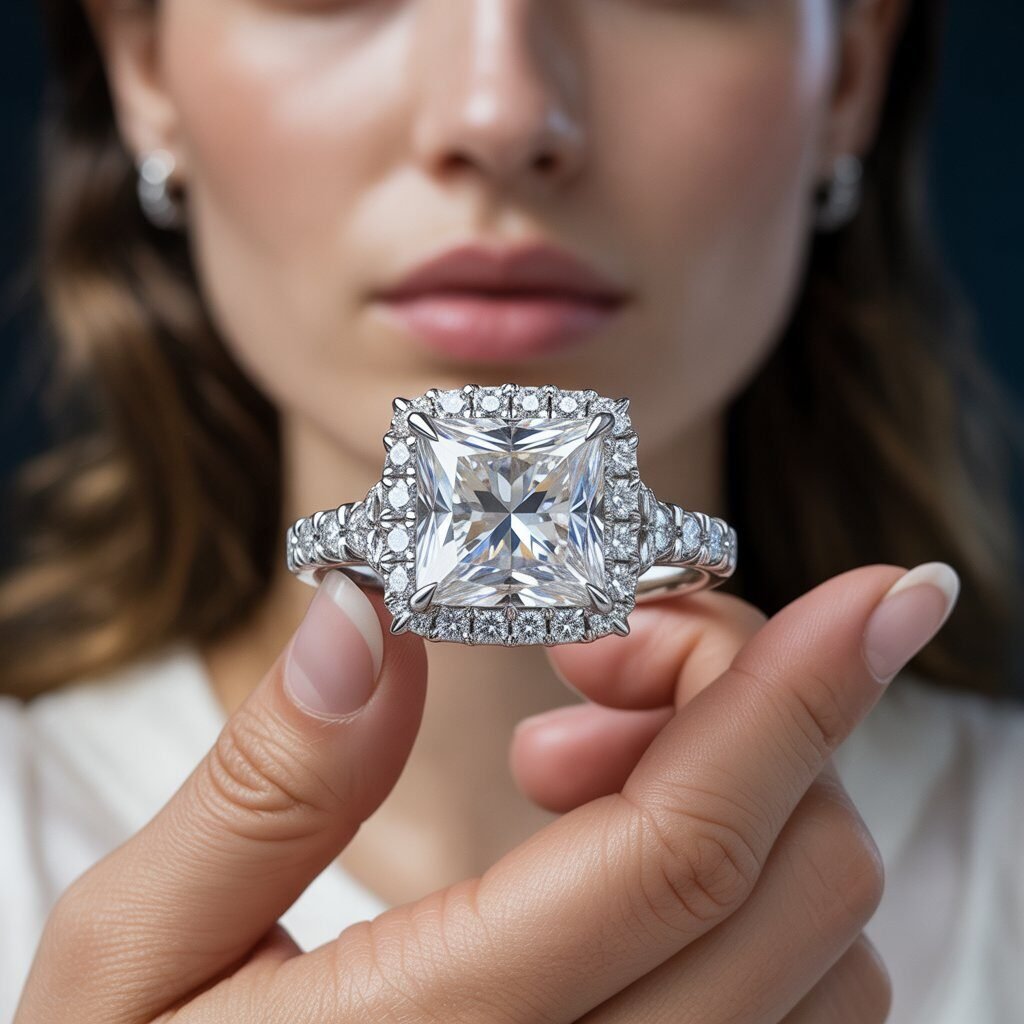
1. Introduction: The Paradigm Shift in Fine Jewelry
For centuries, the allure of a diamond has been inextricably linked with ideas of eternity, romance, and untamed natural luxury. However, as the global collective consciousness evolves, a profound conflict has emerged in the hearts of modern luxury consumers. Today’s discerning individual no longer measures the value of an item solely by its aesthetic brilliance or its price tag; they measure it by its impact on the planet and its inhabitants. The question echoes through the marble halls of traditional high fashion: Can true luxury exist if its creation leaves a scar on the Earth?
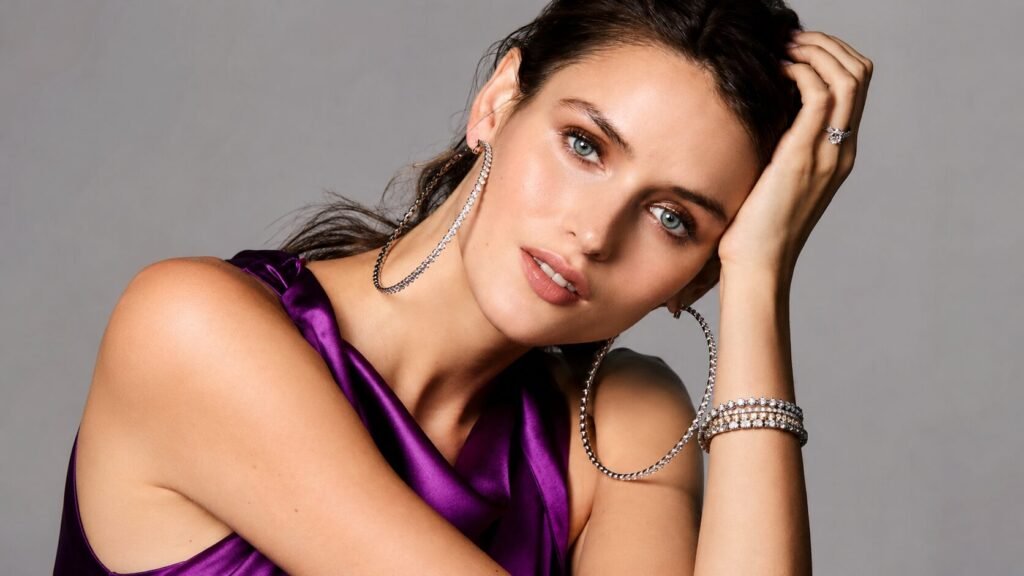
Enter J’EVAR, a luxury fine jewelry brand operating at the cutting edge of an eco-luxury revolution. With their defining ethos, “Diamonds made not born — fine jewelry with a conscience,” J’EVAR is not simply participating in the fine jewelry market; they are completely rewriting its rulebook. Founded on the principle that there should be an absolute zero-compromise relationship between breathtaking beauty and radical environmental stewardship, J’EVAR bridges the gap between old-world artisanal heritage and next-generation green technology.
Stepping away from the opaque supply chains and environmental degradation traditionally associated with earth-mined gemstones, J’EVAR crafts exquisite fine jewelry using sustainability-rated lab-grown diamonds set in 100% recycled gold and sterling silver. Every curve of their necklaces, every flash of light from their earrings, and every intricate detail of their bracelets tells a story of radical transparency, technological innovation, and artistic mastery. This comprehensive, investigative editorial looks deep into the universe of J’EVAR, examining the brand’s origins, its pioneering ecological parameters, its stunning design collections, and how it has firmly established itself as the premier destination for the modern, conscious connoisseur.
2. The Visionary Behind the Brilliance: Amish Shah’s 90-Year Legacy
To understand the soul of J’EVAR, one must first look at the heritage of its creator. J’EVAR is the brainchild of Amish R. Shah, a pioneering force in the lab-grown diamond ecosystem whose roots in the luxury gemstone industry span nearly a century. The Shah family legacy dates back to 1933, a storied history defined by designing magnificent, custom high-jewelry pieces for Indian royalty. For generations, the family mastered the traditional arts of gemstone cutting, metal casting, and the complex aesthetics of classic luxury jewelry.
Growing up within this deep-seated heritage, Amish Shah developed an intimate reverence for the artistry of fine jewelry. However, he also recognized the systemic vulnerabilities, ethical opacity, and heavy environmental toll of traditional diamond mining. Rather than remaining bound to the status quo of a 90-year lineage, Shah chose to innovate, believing that true reverence for heritage requires adapting it to safeguard the future.

Shah became a true trailblazer, pioneering the commercial lab-grown diamond space by introducing the world’s very first lab-grown diamond jewelry collection to the trade back in 2006. In 2016, he incubated ALTR Created Diamonds, a globally recognized powerhouse that systematically dismantled old industry myths regarding the exclusivity and monolithic pricing of mined diamonds.
With the launch of J’EVAR in early 2023, Shah achieved the ultimate culmination of his life’s work. Collaborating with world-renowned creative director and marketing icon David Lipman, Shah infused J’EVAR with a unique blend of New York City’s vibrant, high-fashion energy and India’s timeless artisanal jewelry-making heritage.
| Year | Milestone | Core Focus |
| 1933 | The Shah Family Legacy Begins | Designing magnificent fine jewelry for the opulent courts of Indian royalty. |
| 2006 | Pioneer Trade Collection | Amish Shah changes the luxury landscape by pioneering the first lab-grown diamond jewelry collection. |
| 2016 | Incubation of ALTR Created Diamonds | Developing an advanced global infrastructure for Type IIa purity and light refraction. |
| 2023–2026 | Launch of J’EVAR | Bringing together high-end technology, strict eco-ethics, and luxury wearable art. |
“J’EVAR is a revolutionary fine jewelry brand dedicated to creating sustainable and beautiful jewelry,” Shah noted during the brand’s historic debut. By combining a deep understanding of historical luxury with an unwavering commitment to cutting-edge technology, Shah has proven that a legacy does not have to be mined from the ground; it can be grown under controlled, ethical, and entirely transparent conditions.
3. The Science of Pure Radiance: Decoding Type IIa Lab-Grown Diamonds
One of the most persistent misconceptions in consumer luxury is the nature of lab-grown diamonds. Skeptics often mistake them for diamond simulants like cubic zirconia or moissanite. J’EVAR’s comprehensive educational framework directly targets and dispels these myths.
From a scientific, physical, chemical, and optical standpoint, J’EVAR’s lab-grown diamonds are 100% genuine diamonds. They feature an identical atomic structure composed of tightly crystallized carbon atoms arranged in a cubic crystal lattice. On the Mohs scale of mineral hardness, they score a perfect 10, meaning they possess the exact same durability, scratch resistance, and structural integrity as any diamond pulled from an underground mine.
| Material Type | Chemical Composition | Mohs Hardness Rating |
| Mined Diamond | Crystallized Carbon (C) | 10.0 (Perfect) |
| J’EVAR Lab Diamond | Crystallized Carbon (C) | 10.0 (Perfect) |
| Moissanite | Silicon Carbide (SiC) | 9.25 |
| Cubic Zirconia | Zirconium Dioxide (ZrO2) | 8.5 |
However, J’EVAR goes significantly further than the industry baseline. The brand exclusively utilizes Type IIa diamonds sourced directly from the House of ALTR. To put this in perspective, Type IIa diamonds represent the top 2% of all diamonds found on Earth. They contain no measurable nitrogen impurities within their crystal structure, which gives them an extraordinary transparency and an exceptional ability to refract and transmit light. Historically, the world’s most legendary and priceless mined diamonds—such as the Koh-i-Noor and the Cullinan—were categorized as Type IIa due to this absolute atomic purity.
J’EVAR achieves this standard of purity through the advanced Chemical Vapor Deposition (CVD) process. Inside a highly controlled vacuum chamber, an ultra-pure diamond seed is placed amid carbon-rich gases. When subjected to intense energy fields mimicking the natural, thermodynamic forces found deep within the earth’s mantle, the carbon atoms detach from the gas molecules and crystallize, layer by single atomic layer, onto the seed.
Once grown, these raw crystals are placed in the hands of master diamond cutters at the House of ALTR. The quality metrics of J’EVAR diamonds speak for themselves:
- Color Grade Range: D to G (Colorless to Near-Colorless)
- Clarity Grade Range: VVS1 to VS2 (Very, Very Slightly Included to Very Slightly Included)
By maintaining these exacting standards, J’EVAR ensures that every single stone set into their collections possesses a level of internal fire, scintillation, and luminosity that far exceeds the minimum grading criteria used by conventional luxury legacy houses.
4. Radical Openness: The Five Pillars of J’EVAR’s Uncompromising Sustainability
The jewelry industry has a long history of hiding behind confusing terminology and complex supply lines. J’EVAR breaks away from this practice through a commitment to radical openness. Every single product listed on their platform contains a detailed, transparent breakdown of its components, including the precise carat weights, gold or silver masses, the origin of the gems, and the specific ecological metrics of production.
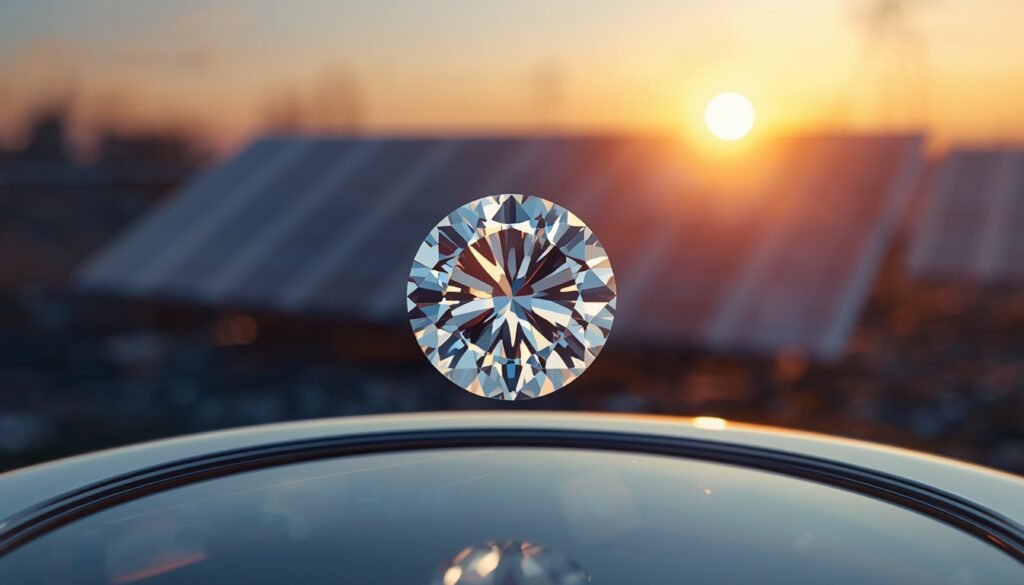
This transparency is built upon five foundational pillars of environmental stewardship and social ethics, aligned with rigorous global standards.
| Sustainability Pillar | Operational Metric | Core Environmental Impact |
| Net-Zero Carbon & Solar Grid | 100% Clean Energy Powered | Eliminates reliance on fossil fuels by running diamond growth chambers entirely on renewable solar energy configurations. |
| Water Re-Use Metric | Less than 25% Virgin Moisture | Employs advanced closed-loop filtration systems to recycle water, drastically reducing resource depletion compared to traditional mining. |
| Zero Soil Disruption | 0 Sq. Ft. Excavated | Protects fragile ecosystems, local topsoil, and natural habitats by eliminating heavy earth-moving machinery and strip-mining. |
| Recycled Precious Metals | 100% Post-Consumer Sources | Handcrafts luxury settings using verified recycled gold and sterling silver, bypassing the carbon-heavy virgin extraction process entirely. |
| Social Ethic | Zero Worker Injury Rate | Upholds pristine labor standards with verified third-party auditing to guarantee safe, fair, and hazard-free working environments. |
Net-Zero Carbon Footprint & Solar Infrastructure
Traditional diamond mining relies heavily on heavy industrial equipment, massive excavation vehicles, and fossil-fuel-driven processing plants that release immense amounts of greenhouse gases into the atmosphere. J’EVAR counteracts this by keeping its entire manufacturing and administrative ecosystem under a strict carbon-neutral mandate.
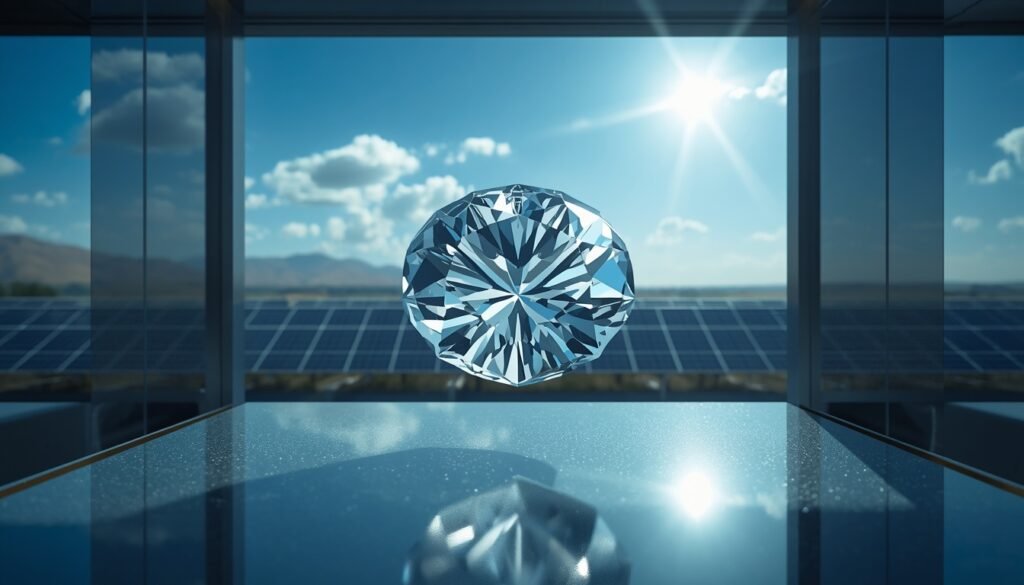
J’EVAR’s diamonds are grown using 100% renewable energy, largely driven by dedicated solar power installations. The brand’s operational spaces undergo exhaustive environmental audits to maintain compliance with the United Nations’ Greenhouse Gas (GHG) Protocol Scope 1 and Scope 2 emissions standards.
This commitment extends deep into the digital space: even the data servers hosting J’EVAR’s e-commerce storefront are powered entirely by renewable energy. To complete the circle, every delivery shipped within the United States is fully carbon-neutral by design.
Water Conservation: Preserving a Precious Global Resource
Water scarcity remains one of the most pressing ecological crises of our time, affecting billions of people worldwide. Traditional open-pit and alluvial diamond mining operations require immense volumes of water—averaging a staggering 126 gallons of water to extract a single carat of gem-quality diamond from the earth. This process often leaves local ecosystems stripped of vital water resources and vulnerable to toxic runoff.
J’EVAR addresses this challenge by implementing closed-loop, highly efficient cooling systems inside their CVD growth chambers. Consequently, a J’EVAR lab-grown diamond requires less than 25% of the water consumed by its mined counterpart. By prioritizing water preservation, J’EVAR treats water resource management as an essential part of its core brand identity.
Zero Soil Disruption: Leaving the Earth Untouched
To fully appreciate J’EVAR’s minimal impact on the earth, consider the physical reality of traditional diamond mining. To unearth just one single carat of a traditional diamond, mining companies must excavate, blast, and move approximately 100 square feet of topsoil and rock. This process creates massive, irreversible craters that alter regional topographies, destroy local biodiversity, and cause long-term soil erosion.
J’EVAR’s jewelry-making process leaves the earth’s landscape entirely undisturbed. Because their diamonds are grown from seeds within highly efficient laboratory footprints, zero inches of natural soil are displaced. Wildlife habitats remain intact, forests are preserved, and ecosystems continue to thrive without human interference.
The Metamorphic Power of Recycled Metals
The environmental damage caused by mining is not limited to gemstones; extracting precious metals like gold and silver from virgin ore involves open-pit mining, intense chemical leaching, and massive carbon output. J’EVAR addresses this by choosing to use recycled gold and sterling silver across almost all its jewelry lines, from delicate initial pendants to heavy high-jewelry bracelets.
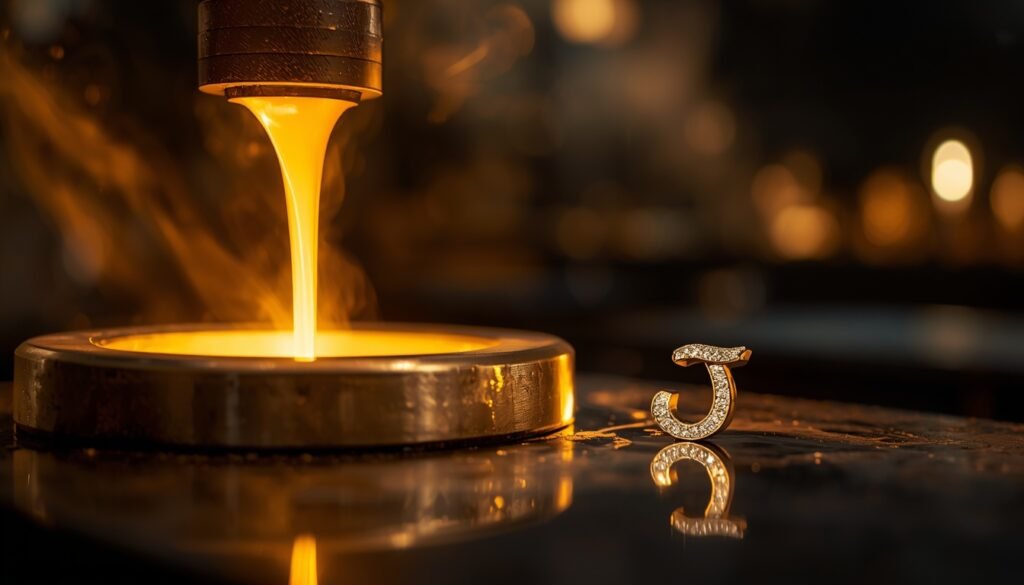
By melting down and refining pre-existing post-consumer and post-industrial precious metals, J’EVAR avoids the energy-intensive processing, chemical refining, and heavy machinery required for newly mined metals. This sustainable choice comes with absolutely zero compromise on quality: the refined 14K gold, 18K gold, and sterling silver used by J’EVAR are chemically and structurally indistinguishable from virgin metals, retaining their classic luster, weight, and luxurious durability.
Social Ethics & Human Dignity: A Zero-Injury Workplace
Beyond environmental stewardship, true sustainability must prioritize human welfare. The traditional mining industry has long faced serious challenges regarding labor exploitation, dangerous working conditions, and high occupational health hazards. Statistically, traditional underground mining operations see a serious injury rate of approximately one out of every 1,000 workers annually.
Inside J’EVAR’s advanced laboratory and artisan production facilities, the occupational injury rate is zero. The brand maintains a strictly safe, climate-controlled, and highly regulated workplace. To back up their ethical claims, J’EVAR conducts regular third-party facility audits in compliance with SMETA (Sedex Members Ethical Trade Audit) standards. These comprehensive evaluations verify strict adherence to fair labor standards, worker health and safety regulations, ethical business conduct, and responsible environmental practices.
5. The Art of Design: An In-Depth Exploration of J’EVAR’s Signature Collections
While J’EVAR’s industry-leading ethical standards form the backbone of the company, it is the spectacular design work that defines its presence in high fashion. Under the creative guidance of Amish Shah and David Lipman, the brand focuses intensely on art, architectural lines, and everyday wearability. J’EVAR pieces are not meant to sit hidden away in velvet boxes; they are designed to be part of a fluid lifestyle, moving effortlessly from casual morning wear to formal evening galas.
The TYPE Solitaire and Alphabet Initial Collection
Personalized jewelry has seen a major resurgence in contemporary fashion, but J’EVAR elevates this trend to a high-art form with its TYPE Solitaire Initial Pendants. Available in two distinct structural formats—a delicate 7mm profile and a bold, statement-making 9mm layout—these alphabet pendants are sculpted from solid 18K yellow or white gold.
| Feature | 7mm Alphabet Solitaire Pendant | 9mm Alphabet Solitaire Pendant |
| Diamond Carat Range | Mid-Tier Luxury | High-Tier Luxury |
| Precious Metal Options | 18K Solid Yellow / White Gold | 18K Solid Yellow / White Gold |
| Price Point | $3,495 | $7,495 |
| Ideal Wardrobe Use | Everyday Statement Piece | Runway / Editorial Feature |
Rather than using a simple pave arrangement of tiny diamonds, the TYPE collection integrates a spectacular, high-carat ALTR lab-grown solitaire diamond seamlessly into the architectural structure of each letter. The balance between the polished 18K gold lines and the brilliant flash of the Type IIa solitaire diamond shows incredible attention to proportion. At $3,495 for the 7mm version and $7,495 for the 9mm version, these pieces serve as modern heirlooms, bridging individual identity with clean, modern luxury.
The Lotus Petals Collection
The lotus flower has long been a revered symbol of purity, spiritual rebirth, and beauty rising gracefully above adversity. The Lotus Petals Collection translates these organic motifs into stunning geometric designs. The pieces use fluid, repeating metal lines shaped like delicate petals, studded with exceptionally brilliant lab-grown diamonds.
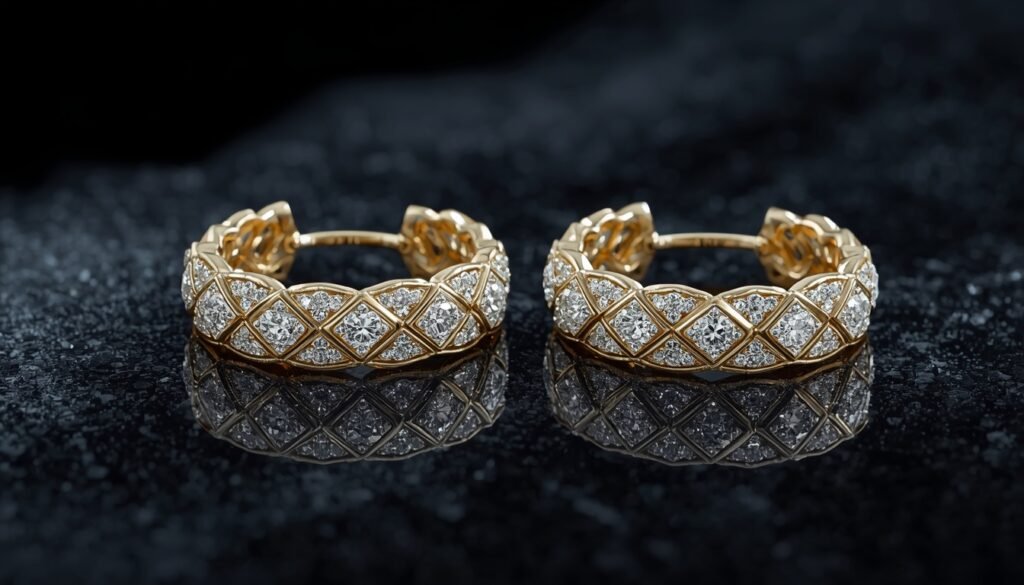
The collection features standout items like the Lotus Petals Diamond Hoop Earrings ($2,425), which arrange these shimmering metal petals into a clean, circular design that catches light from every possible angle. For a truly grand statement, the Lotus Petals Diamond Tennis Bracelet ($4,900) updates the classic, single-strand tennis bracelet by surrounding every individual diamond with a finely sculpted lotus petal setting. This design choice adds impressive texture and creates a striking interplay of light across the wrist.
The Beating Hearts Collection
Jewelry is ultimately driven by emotion, serving as a tangible symbol of love, connection, and milestones. The Beating Hearts Collection is designed around this emotional connection, featuring pieces created from the heart, for the heart.
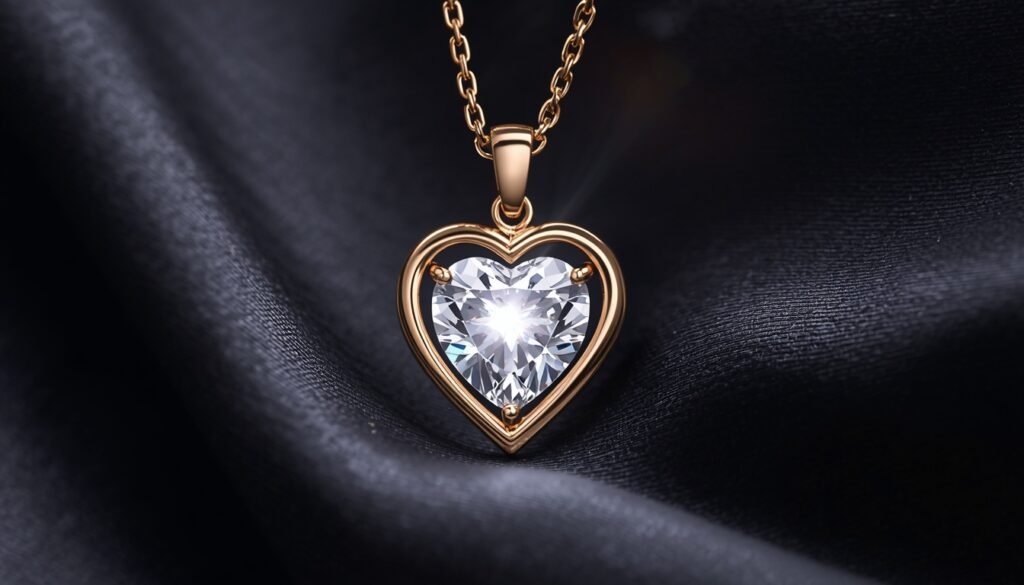
This collection uses innovative design techniques that allow the center diamond to move subtly with the wearer’s movements. This continuous kinetic motion causes the diamond to catch the light with every breath and heartbeat, producing a beautiful shimmer. The collection includes diamond necklaces, pendants, and delicate bracelets that balance clean, modern romance with high-level technical engineering.
The Eclat and Elements Collections
For the minimalist collector drawn to clean geometric shapes and modern forms, the Eclat and Elements collections offer exceptional choices.
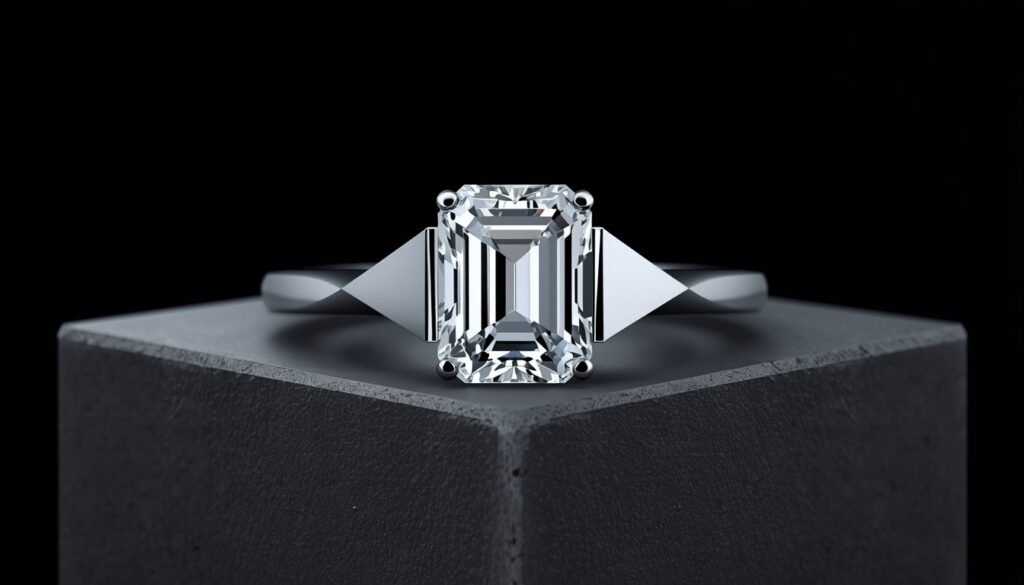
- Eclat: Focuses on classic silhouettes updated with bold, modern structural details. The pieces feature high-polish metal surfaces juxtaposed with striking, perfectly cut lab-grown diamonds.
- Elements: Draws inspiration from clean architectural lines and natural forms. It features structured, geometric pieces that look beautiful layered together or worn alone as a subtle everyday statement.
6. Curated Showcase: Iconic J’EVAR Pieces Examined
To truly understand how J’EVAR brings its design philosophy to life, we can look closely at several specific pieces from their current collection. Each item highlights the brand’s balance of competitive pricing, high metal purity, and exceptional diamond clarity.
| Product Name | Price | Primary Material |
|---|---|---|
| 9mm Alphabet Solitaire Initial Pendant | $7,495 | 18K Gold / ALTR Diamond |
| Lotus Petals Diamond Tennis Bracelet | $4,900 | 14K Gold / ALTR Diamond |
| 7mm Alphabet Solitaire Initial Pendant | $3,495 | 18K Gold / ALTR Diamond |
| Lotus Petals Diamond Hoop Earrings | $2,425 | 14K Gold / ALTR Diamond |
| Certified Diamond Stud Earrings (Guardian) | $1,300 | 18K Gold / ALTR Diamond |
| By The Yard Diamond Necklace | $1,400 | 14K Gold / ALTR Diamond |
| Solitaire Diamond Necklace | $850 | 14K Gold / ALTR Diamond |
| Sterling Heart Charm Toggle Diamond Bracelet | $750 | Recycled Silver / 0.4ct Diamond |
| Lotus Petals Diamond Stud Earrings | $450 | 14K Gold / ALTR Diamond |
| Sterling Silver Heart & Clover Bracelet | $350 | Recycled Sterling Silver |
1. TYPE by J’EVAR 9MM Alphabet Solitaire Diamond Initial Pendant ($7,495)
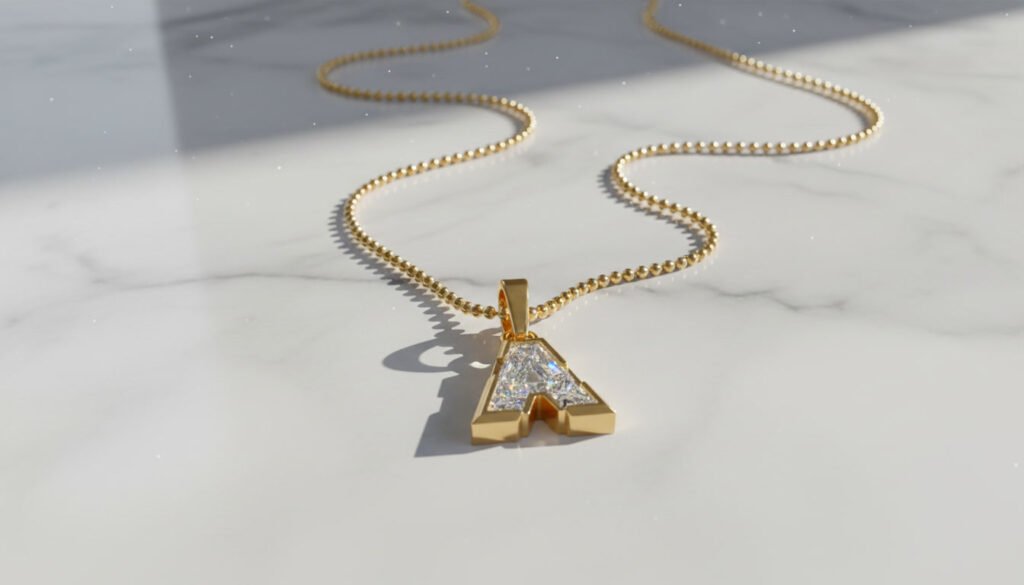
The absolute pinnacle of the TYPE collection, this striking pendant is crafted in 18K yellow or white gold. The 9mm size gives it an elegant, authoritative presence on the neckline. It features a large, ultra-premium ALTR lab-grown solitaire diamond integrated directly into the character’s form. This design choice strikes a perfect balance between personal expression and high-fashion luxury, making it an excellent statement piece for editorial layering.

2. J’EVAR 14KT Gold Lotus Petals Lab-Grown Diamond Tennis Bracelet ($4,900)
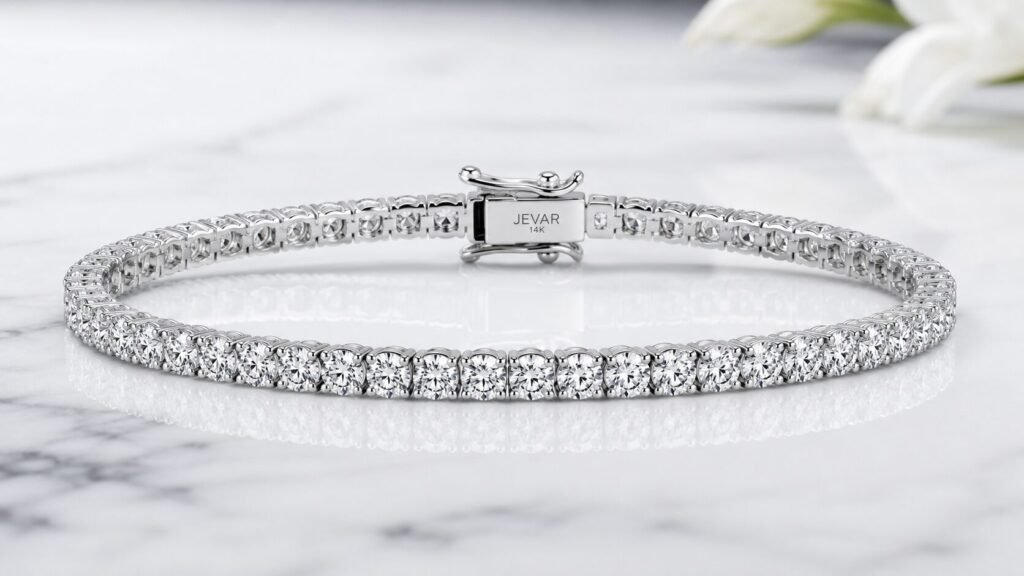
A beautiful upgrade to a classic jewelry staple. Crafted in 14K yellow or white gold, this piece replaces the traditional four-prong setting with individual, hand-sculpted lotus petals that cradle each diamond. The brilliant Type IIa diamonds form a continuous ribbon of fire around the wrist, secured by an elegant, low-profile safety lock. It offers a perfect balance of fluid comfort and high-end glamour.

3. J’EVAR 18KT Gold Certified Diamond Stud Earrings with Guardian Backs ($1,300)
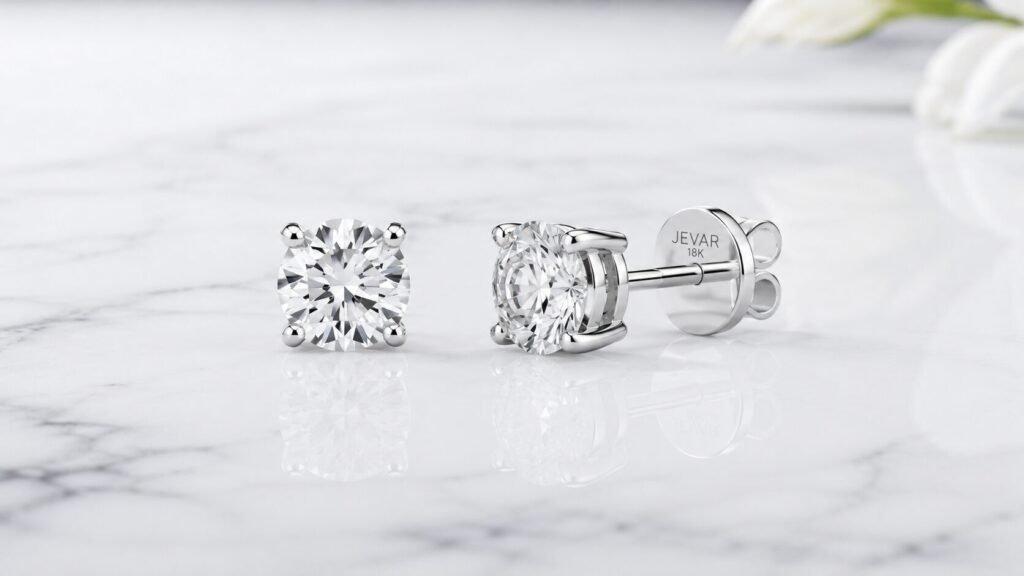
The essential foundation of any curated jewelry collection. These classic studs feature hand-selected Type IIa lab-grown diamonds set in rich 18K yellow or white gold. To protect this investment, J’EVAR fits each earring with premium Guardian Backs—a patented, secure lock-and-release mechanism that prevents the earring from slipping off unexpectedly. They are incredibly comfortable, elegant, and perfect for daily wear.
4. J’EVAR 14KT Gold By The Yard Lab-Grown Diamond Necklace ($1,400)
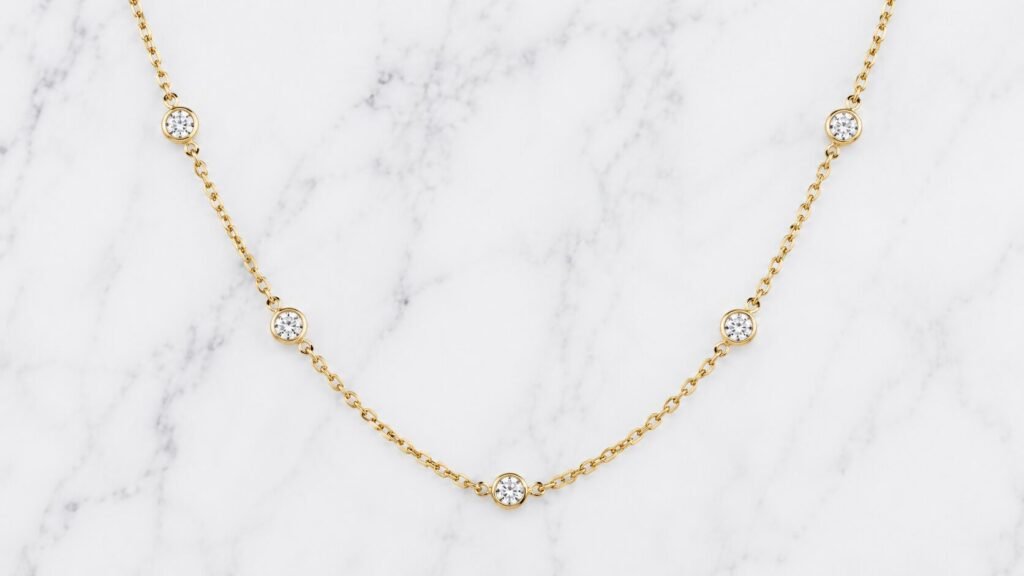
Embodying the essence of understated luxury, this necklace features brilliant-cut lab-grown diamonds bezel-set at precise intervals along a delicate 14K gold chain. It is an incredibly versatile piece, catching the light beautifully when worn alone over a silk blouse or layered alongside bolder pendants.
5. J’EVAR Sterling Heart Charm Toggle ALTR Lab-Grown Diamond Bracelet ($750)
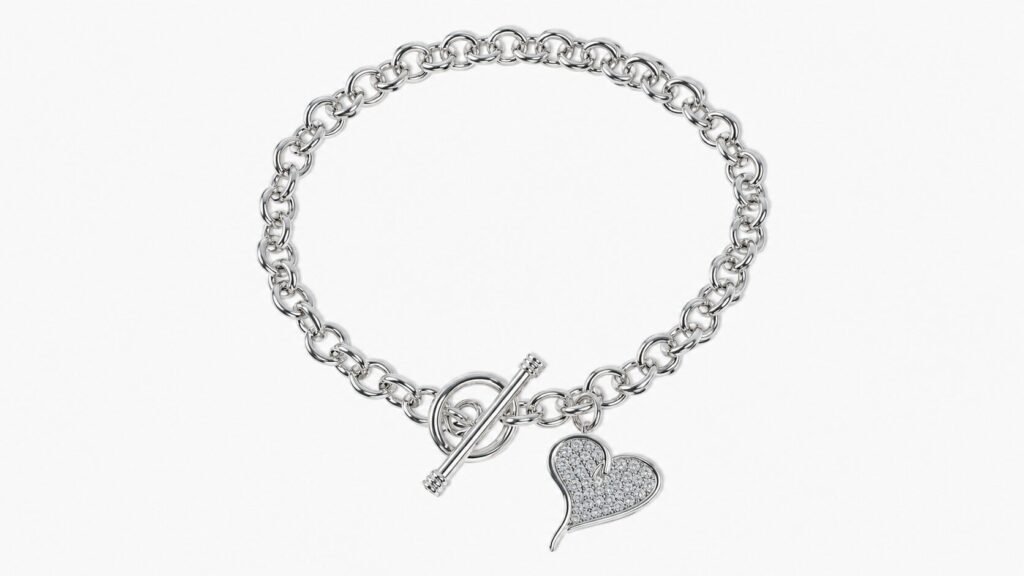
Proving that exceptional style can be accessible, this piece is crafted from high-purity recycled sterling silver. It features a heavy, modern toggle clasp paired with a beautifully sculpted heart charm containing 0.40 carats of brilliant ALTR lab-grown diamonds. This design offers an elegant blend of contemporary streetwear style and fine luxury.
7. The Conscious Luxury Gifting Guide: Curated Excellence Across Price Points
Finding a truly meaningful luxury gift can be a challenge. J’EVAR simplifies this by curating their collections into clear, accessible price tiers. This structural breakdown helps buyers find the perfect piece for any occasion while keeping environmental responsibility at the forefront.
| Gifting Tier | Target Budget | Curated Selected Pieces |
|---|---|---|
| Accessible Luxury | Under $500 |
|
| Mid-Tier Luxury | $500 – $1,500 |
|
| High Luxury | $1,500+ |
|
Accessible Luxury: Under $300 to $500
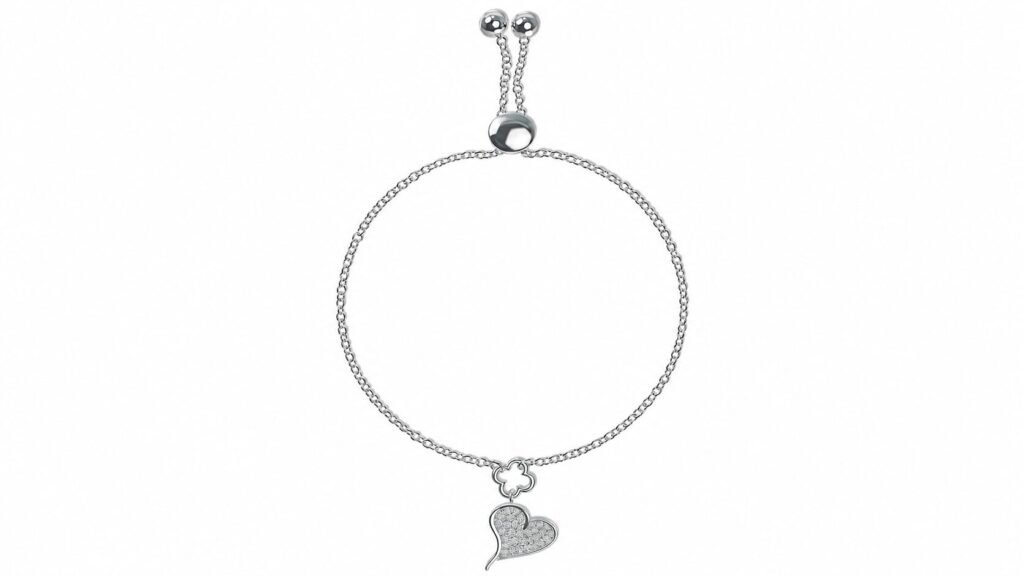
Perfect for birthdays, graduations, or a self-gift milestone, this tier showcases J’EVAR’s commitment to premium design at an accessible entry point.
- The Sterling Silver Heart & Clover Diamond Bracelet ($350): A playful design featuring protective motifs set with brilliant lab-grown diamonds.
- The Lotus Petals Diamond Stud Earrings ($450): Crafted in 14K gold, these earrings offer an elegant introduction to the brand’s signature lotus aesthetic, providing a subtle sparkle for everyday wear.
Mid-Tier Sophistication: $500 to $1,500
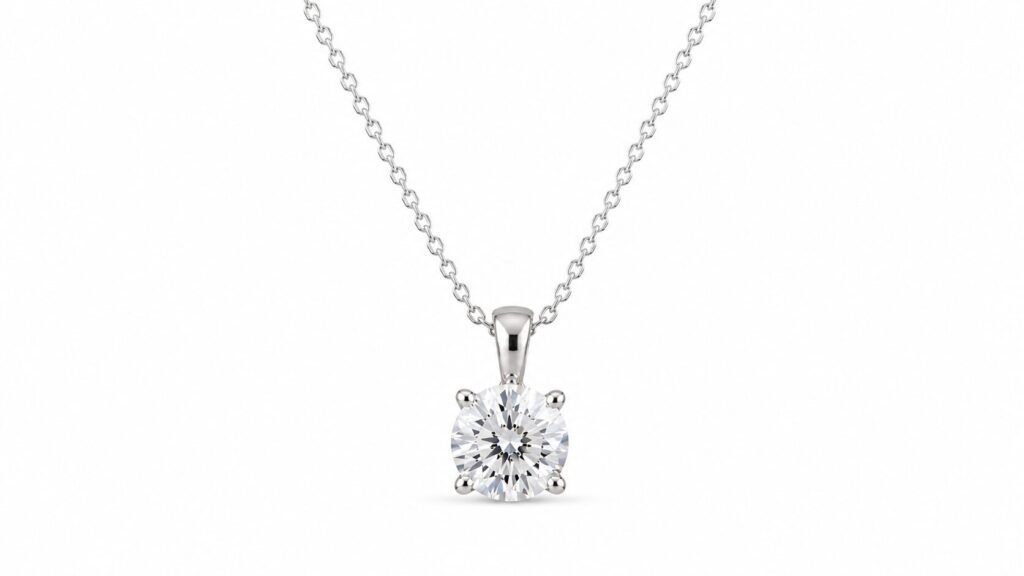
This tier features timeless investment pieces designed for significant anniversaries or key professional milestones.
The Solitaire Diamond Necklace ($850): Features a pristine Type IIa diamond suspended on a delicate 14K gold chain, offering a clean, minimalist silhouette.
The 14K By The Yard Necklace ($1,300): Classic style essentials that provide unmatched brilliance and versatile wearability.
Signature High Luxury Masterpieces: $2,000 to $3,000+
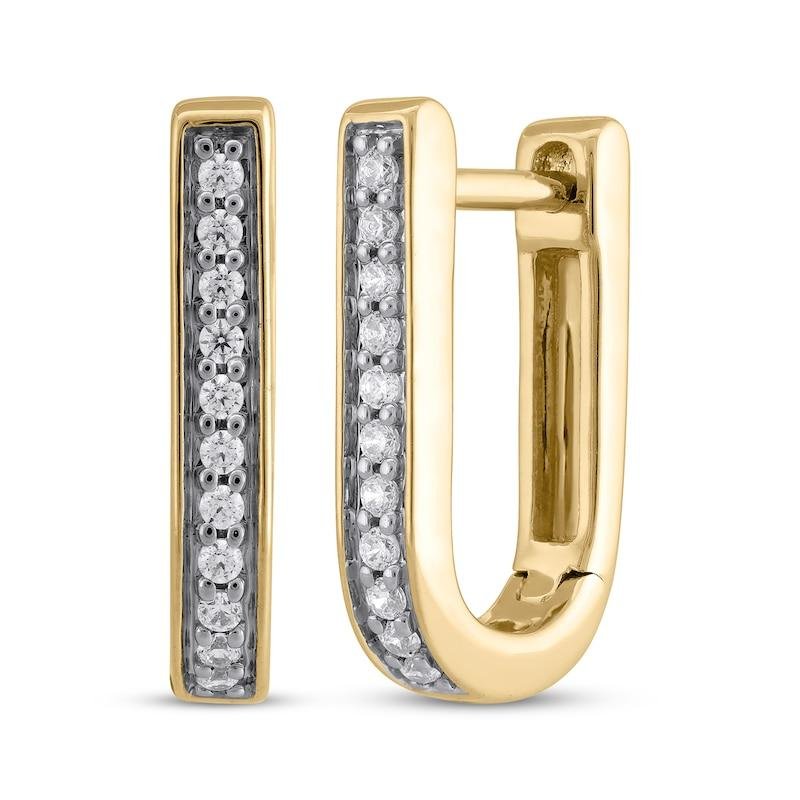
Designed for the true luxury collector, this premier tier features J’EVAR’s most intricate and statement-making designs.
- Lotus Petals Diamond Hoop Earrings ($2,425): Bring sculptural, light-catching artistry to a classic hoop design.
- The TYPE Solitaire Initial Pendants ($3,495 – $7,495): Offer a bold statement of identity and refined style.
- The Lotus Petals Diamond Tennis Bracelet ($4,900): The ultimate expression of modern eco-luxury, combining striking design with brilliant, sustainable craftsmanship.
8. The Future of the Diamond Industry: Why Conscious Craftsmanship Wins
The global fine jewelry landscape is reaching a critical turning point. Historic diamond mining operations face diminishing yields, rising extraction costs, and increasing resistance from a consumer base that values corporate transparency and climate action.
| Traditional High Jewelry Houses | The J’EVAR Next-Gen Standard |
| • Opaque, multi-layered supply chains with untraceable roots | • 100% transparent component disclosures detailing exact origins |
| • Heavy dependence on fossil fuels and carbon-heavy earth extraction | • Grown using 100% clean solar energy and renewable power setups |
| • Massive global topsoil destruction, cratering, and wildlife habitat loss | • Absolutely zero soil disruption, preserving delicate regional ecosystems |
| • Higher risk of structural workplace injuries in deep underground mining | • Safe, third-party audited labor conditions with a certified zero injury rate |
J’EVAR’s rapid emergence demonstrates that prioritizing sustainability does not mean sacrificing luxury or heritage. By combining a 90-year family history with next-generation CVD technology and a commitment to zero-carbon manufacturing, J’EVAR offers a blueprint for the future of the luxury market.
This approach changes the consumer’s emotional relationship with their jewelry. When someone wears a J’EVAR piece, its beauty is amplified by the knowledge that its creation required zero soil disruption, used minimal water resources, and maintained fair, safe working conditions. J’EVAR has transformed fine jewelry from a simple status symbol into a beautiful reflection of personal values.
9. Final Verdict: The Conscience of Elegance
To explore J’EVAR is to see the future of high luxury. From the breathtaking fire of their Type IIa lab-grown diamonds to the clean architectural lines of their recycled gold settings, every piece shows a deep commitment to uncompromising beauty and environmental care.
Led by Amish Shah’s generational expertise and David Lipman’s creative direction, the brand successfully dispels the myth that sustainable jewelry is somehow lesser than its mined counterparts. Instead, J’EVAR delivers an elevated luxury experience—one rooted in radical openness, carbon-neutral production, and exceptional artisanal design.
For the modern style enthusiast, collector, or thoughtful gift-giver, J’EVAR offers something truly unique: fine jewelry that is as gentle on the planet as it is stunning to look at. Discover the collections for yourself and join the conscious luxury movement by visiting their official digital flagship at jevar.co.
Style Tip for New Members: Subscribe to the official J’EVAR newsletter at their digital store to join a community of conscious luxury enthusiasts. New subscribers receive complimentary expedited shipping directly to their door using the exclusive checkout code JEVARFASTSHIP, allowing you to experience the future of fine jewelry with a clear conscience.
10. The Objective Editorial Lens: Weighing the Pros and Cons of J’EVAR
To maintain true editorial integrity in a magazine-style feature, we must analyze J’EVAR through an objective lens. While the brand is undeniably a market leader in sustainable luxury, discerning consumers should weigh all facets before investing.
The Pros
- Uncompromising Visual Brilliance: By exclusively utilizing Type IIa diamonds (representing the top 2% of pure carbon structures globally), J’EVAR pieces offer a level of internal fire, clarity, and luminosity that matches or outperforms the world’s elite legacy jewelry houses.
- Flawless Eco-Credentials: J’EVAR sets a gold standard for sustainability with its verified carbon-neutral footprint, zero soil disruption, and reliance on 100% renewable energy and recycled precious metals.
- Unmatched Price Transparency: Unlike the opaque pricing structure of traditional luxury markets, J’EVAR breaks down the exact carat weight, gold purity, and source origin for every piece transparently on their platform.
- Patented Safety Features: High-use daily items like their $1,300 certified studs feature advanced, patented Guardian Backs, offering invaluable peace of mind against accidental loss.
The Cons
- Lack of Historical “Mined” Rarity: For ultra-traditional collectors who associate luxury exclusively with stones formed in the earth over billions of years, lab-grown diamonds—regardless of their atomic perfection—can require a shift in mindset.
- Investment Limitations: While J’EVAR pieces maintain exceptional long-term manufacturing quality, lab-grown diamonds do not fluctuate or appreciate in the secondary speculative asset market the way exceptionally rare, ultra-high-carat mined diamonds do.
- Curated Premium Selection: Because J’EVAR adheres to strict ethical sourcing and small-batch artisan assembly, certain high-demand custom layouts or unique initial characters can occasionally face waitlists during peak holiday gifting seasons.
The Ultimate 2026 Diamond Buying Guide: Market Prices, The 2-1-1 Jewelry Rule, and How to Never Get Duped
The Diamond Dilemma in 2026: Solving Your Biggest Jewelry Problems
Welcome to the most comprehensive, highly detailed, and definitive diamond buying guide for the year 2026. Here at our publication, we know that stepping into the world of fine jewelry can feel completely overwhelming. You are faced with aggressive salespeople, wildly fluctuating market prices, and a barrage of confusing terminology. Whether you are looking to purchase a breathtaking engagement ring, searching for the perfect anniversary gift, or simply upgrading your personal collection with some serious main character energy, the stakes are incredibly high.
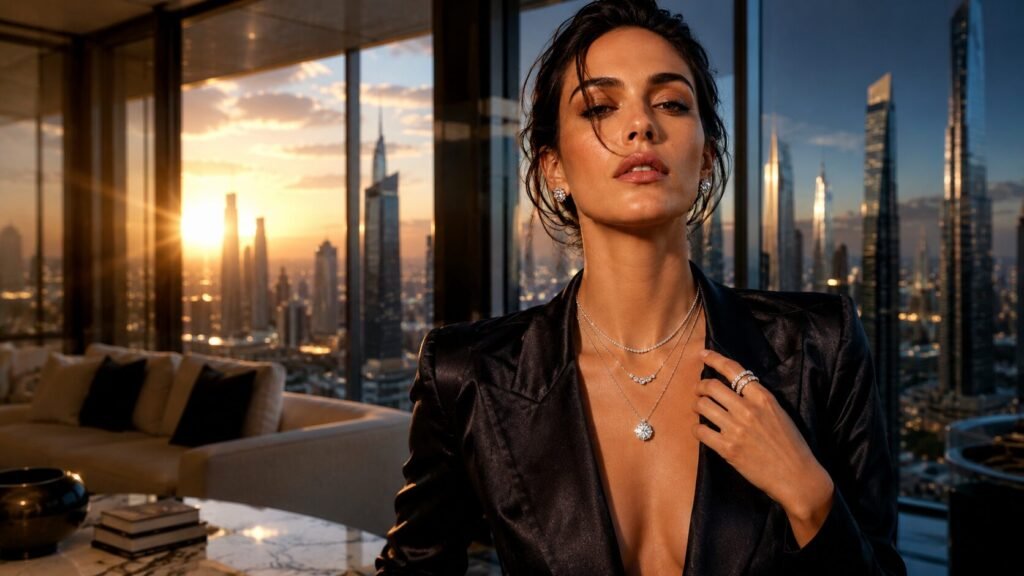
We have heard your frustrations. We have seen the countless questions flooding internet forums. People want to know if diamond prices are finally crashing. They want to know the absolute truth about lab-grown versus natural stones. They want to know how to style their pieces without looking cluttered, and most importantly, they want to know how to spend their hard-earned dollars without getting scammed.
This mega-guide is designed to be your ultimate problem-solving resource. We are going to break down everything you need to know before making a purchase. We will explore global market trends, teach you the closely guarded styling secrets of high-fashion editors, and provide you with a bulletproof blueprint for buying diamonds safely online. Grab a cup of coffee, settle in, and let us embark on this journey to true luxury.
Market Analysis: Are Diamond Prices Going Down in 2026?
If you have been watching the news, you have likely seen the sensational headlines declaring that the diamond market is collapsing. But what is actually happening behind the scenes?
The truth is that the year 2026 has brought a massive, unprecedented shift in how we value and purchase these precious stones. We are currently witnessing a dual-market reality. On one side, we have natural, earth-mined diamonds. On the other side, we have the rapidly expanding universe of lab-grown diamonds.
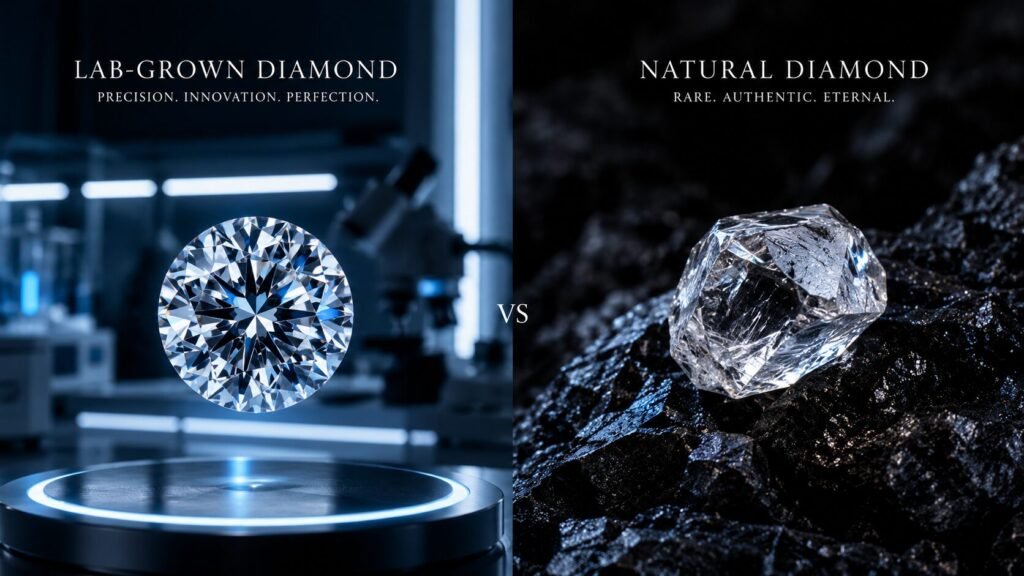
The prices for lab-grown diamonds have experienced a dramatic, steep decline. In fact, industry analysts report that lab-grown stones have dropped roughly seventy-four percent in value over the last five years. Because the technology used to create these stones in controlled laboratory environments has become incredibly efficient, the market is flooded with high-quality, visually perfect gems. This oversupply has driven the retail cost down to historically low levels. For the consumer looking for massive size and flawless clarity on a strict budget, this is a certified W.
However, the natural diamond market tells a slightly different story. While prices for natural stones have softened, dipping roughly twenty-five percent from their peak a few years ago, they are not experiencing a total crash. The world’s largest mining operations have strategically reduced their production to manage the global supply. Because natural diamonds are a finite resource formed billions of years ago, their inherent scarcity creates a floor for their pricing.
So, to answer the burning question: Yes, overall diamond prices are down in 2026, making it an absolute buyer’s market. But the amount you save depends entirely on whether you choose a stone grown in a lab or a stone pulled from the earth.
The Honest Truth: Do Earth Diamonds Hold Value?
When our readers ask us if earth diamonds hold their value, we always advocate for complete transparency. A natural diamond is a retail product, not a liquid financial asset like gold or real estate. The moment you walk out of a jewelry store, the resale value of a natural diamond immediately drops.
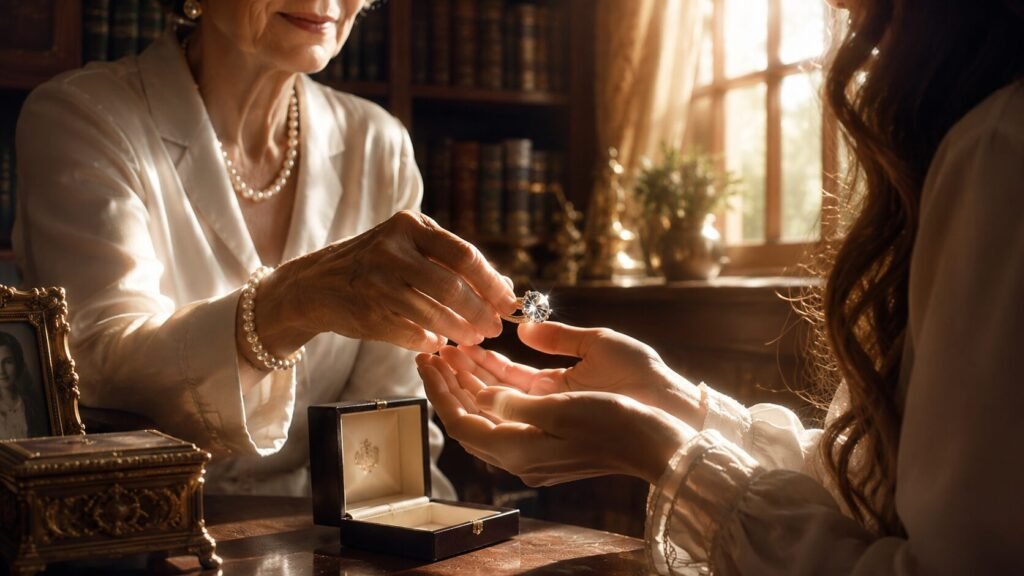
However, over a long period of time, natural diamonds do retain a significant portion of their intrinsic value compared to manufactured alternatives. Because there is a limited supply of high-quality natural diamonds in the world, they maintain a historical prestige. If you purchase a high-quality, natural diamond over three carats with excellent color and clarity, it will hold its value remarkably well over the decades. They are generational assets meant to be passed down.
What is the Downside to Lab-Grown Diamonds?
Lab-grown diamonds are visually, chemically, and physically identical to natural diamonds. They slay when it comes to brilliance and fire. But there is one major downside that every buyer must understand: they have virtually zero resale value.
Why Can’t We Sell Our Lab-Grown Diamond?
Many consumers receive a harsh reality check when they attempt to upgrade or sell their lab-grown jewelry. Because factories can produce an infinite number of these stones on demand, secondary buyers and pawn shops have no incentive to purchase a used lab-grown diamond. You cannot sell your lab-grown diamond because the cost of producing a brand new one is incredibly low. When you buy a lab-grown stone, you should view it as a beautiful piece of wearable art, not a financial investment.
Budgeting: How Much Should We Spend on an Engagement Ring if We Make One Hundred Thousand Dollars a Year?
For generations, the diamond industry pushed a very specific marketing rule: you must spend two months of your gross salary on an engagement ring. If you make one hundred thousand dollars a year, that old rule dictates you should spend roughly sixteen thousand dollars.
We are here to tell you that in 2026, that rule is completely obsolete. No cap.
The modern consumer is far more financially savvy. Today, the focus is on personal financial health, minimizing debt, and choosing a ring that fits your specific lifestyle goals. If you earn one hundred thousand dollars annually, we recommend budgeting anywhere from three thousand to seven thousand dollars. This range allows you to secure a truly breathtaking ring—especially if you opt for a lab-grown center stone—while still allowing you to save for a home, travel, or your future together.
Do not let outdated marketing tactics pressure you into unnecessary debt. The true value of the ring is the commitment it represents, not the price tag.
The Masterclass: What Are the 5 Cs of Diamond Buying?
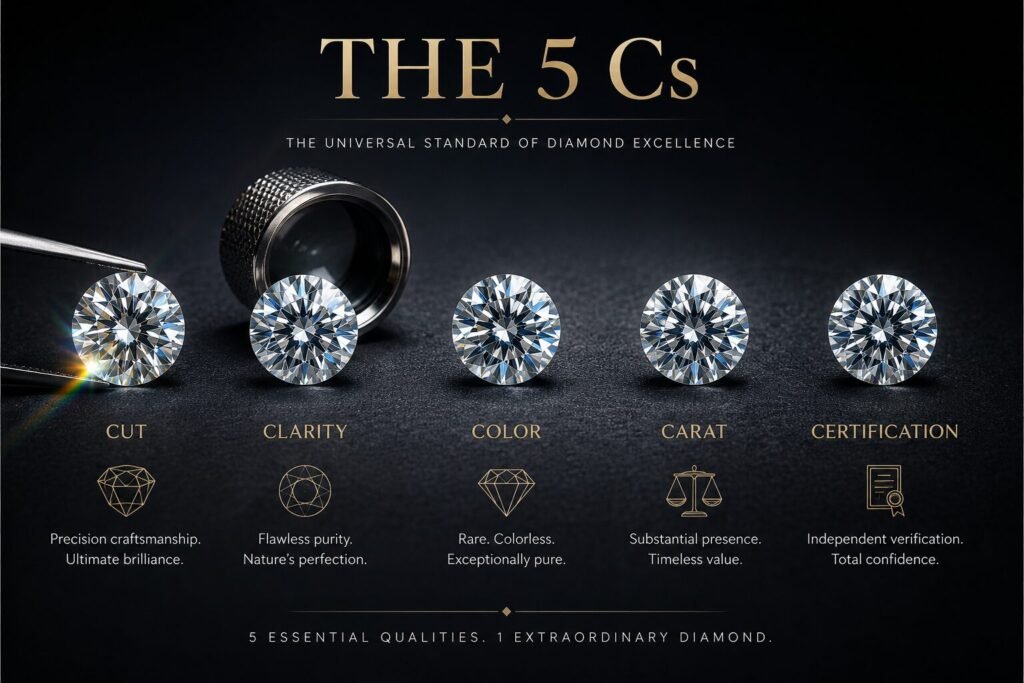
Before you even think about clicking “add to cart” or stepping into a boutique, you must master the fundamental grading system of diamonds. These are the elements that dictate the beauty, rarity, and price of every stone.
- Carat: This refers to the actual physical weight of the diamond, not the visual size. While a higher carat weight means a larger stone, the way the diamond is cut can make a smaller carat weight appear much larger on the finger.
- Cut: This is arguably the most critical factor. The cut determines how the diamond interacts with light. A masterfully cut diamond will reflect light internally and shoot it back to your eye, creating that blinding, beautiful sparkle. Even a diamond with perfect color and clarity will look dull if the cut is poor.
- Color: This measures the absence of color in the stone. The scale ranges from D (completely colorless) to Z (noticeably yellow or brown). For the best value, we recommend looking at stones in the G to I range, which appear colorless to the naked eye but cost significantly less than D-flawless stones.
- Clarity: As diamonds form, they develop tiny internal characteristics called inclusions, and external characteristics called blemishes. The fewer the inclusions, the higher the clarity grade. We suggest looking for a “VS” (Very Slightly Included) grade, where the imperfections are completely invisible without a magnifying loupe.
- Certification: The crucial fifth C. Never purchase a diamond without an independent grading report from a respected laboratory, such as the Gemological Institute of America or the International Gemological Institute. This document is your ultimate proof of authenticity and quality.
How to Buy a Diamond Ring Without Getting Duped
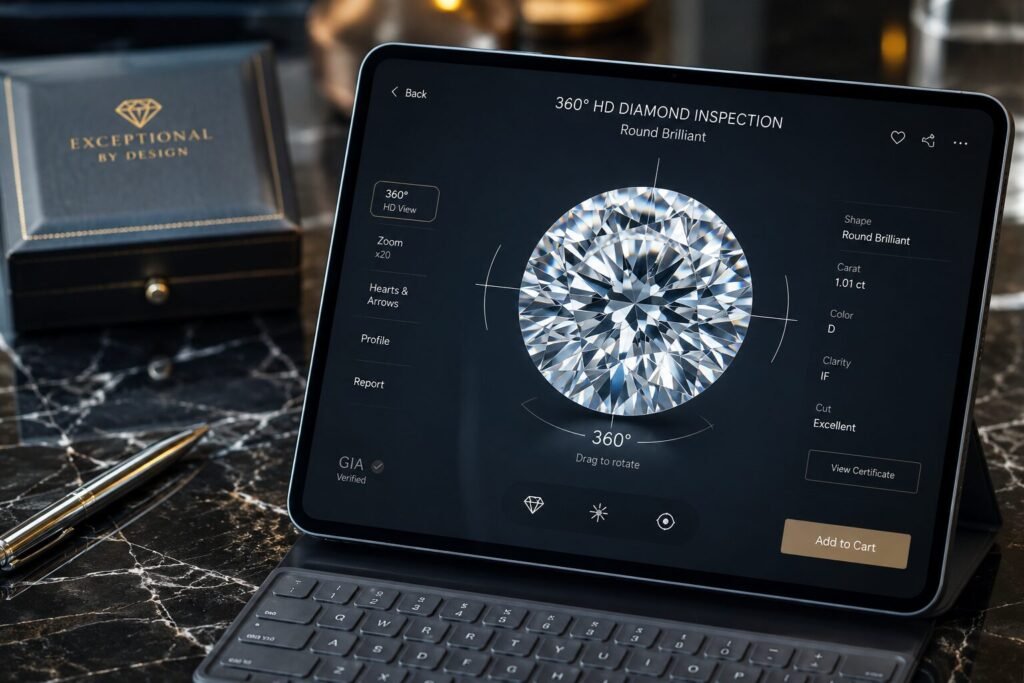
The internet is filled with incredible deals, but it is also filled with pitfalls. To ensure you are buying safely online, follow our strict protocol:
First, always verify the certification. If an online retailer cannot provide a high-resolution scan of the grading certificate before you buy, close the browser immediately.
Second, look for high-definition, three-hundred-and-sixty-degree video imaging. You need to be able to spin the digital representation of the exact diamond you are buying to look for dark spots or visible inclusions. Never buy a diamond based on a generic stock photo.
Third, check the return policy. The most trusted online jewelry shops offer a generous thirty-day, no-questions-asked return policy. This gives you the time to take the ring to a local, independent appraiser to verify that the stone matches the certificate perfectly.
Styling Secrets: What is the 2-1-1 Rule for Jewelry?
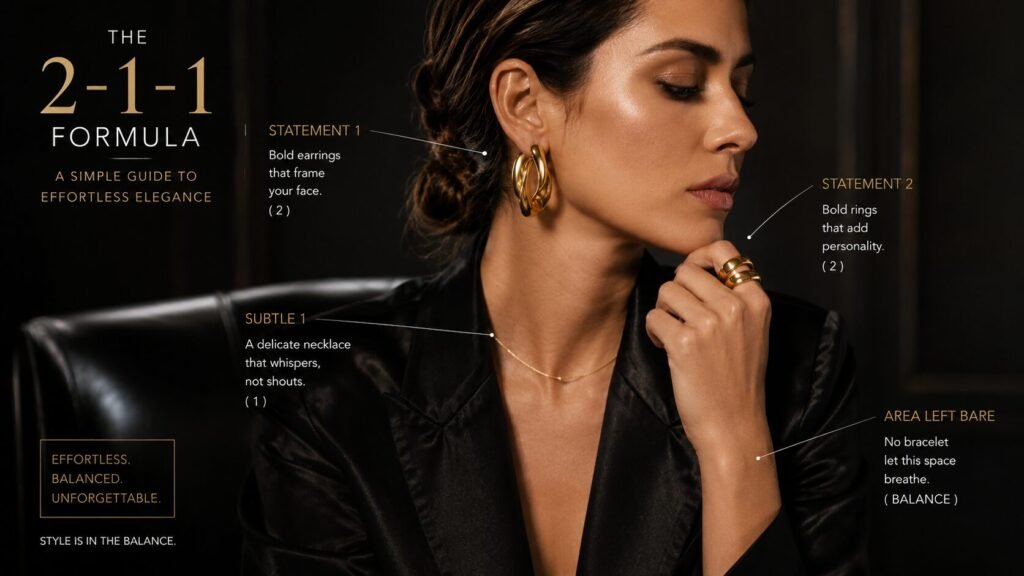
Once you have acquired your stunning jewelry, the next challenge is learning how to wear it without looking like a walking chandelier. This brings us to the ultimate fashion editor secret: The 2-1-1 Rule.
What exactly is the 2-1-1 rule for jewelry? It is a foolproof styling formula that guarantees a perfectly balanced, effortlessly chic look every single time. It prevents your accessories from clashing and ensures that your outfit maintains a polished elegance.
Here is how the formula works:
- Two Statement Pieces: You choose two areas of your body to highlight with bold, attention-grabbing pieces. For example, you might wear a pair of heavy gold hoops and stack several chunky rings on your fingers.
- One Subtle Piece: You choose a third area to feature a delicate, whisper-thin accessory that complements the bold pieces without fighting for attention. If your ears and hands are bold, you might add a very fine, simple chain around your neck.
- One Area Left Bare: You intentionally leave a fourth zone completely empty. If you are wearing earrings, rings, and a necklace, you leave your wrists bare.
This rule creates visual breathing room. It allows your jewelry to elevate your outfit rather than overwhelming it.
Completing Your Look: Our Top Style Recommendations
Building a wardrobe around your fine jewelry requires attention to detail. We have curated a list of our absolute favorite essentials that pair perfectly with high-end accessories.
For the modern bride looking for the ultimate sustainable option, you must check out the 2 1/4 Carat Princess Halo Lab Grown Diamond Bridal Set in 14K White Gold – A Brilliant Choice for Modern Brides. This piece offers massive visual impact without the massive environmental toll.
If you are styling around the ears, avoid cheap metals. We highly recommend reading our guide, Stop Buying Hollow Hoops: The 3.37g Secret of These 10mm Brown Diamond Huggies, to understand why solid construction matters for daily wear.
Preparing for a big event where you will be showing off your new diamonds? Skincare is just as important as the jewelry. Achieve a flawless, glassy complexion with our Medicube PDRN Pink Peptide Serum Review: Is the 2026 Salmon DNA Glow Worth It?. To maintain that beauty rest, protect your skin overnight by exploring The Strategic Integration of Premium Sericulture in the 2026 US Beauty-Sleep Market: A Comprehensive Analysis of EverSilk.
For the gentlemen looking to match the sophistication of a new luxury timepiece, we dive deep into aesthetic perfection in The 2026 Deep Dive: Is the KNOPF NY-405 Blue Steel the Ultimate “Indie” Daily Driver?. Pair that watch with a sleek travel wardrobe by consulting our Best Men’s Travel Clothes for Summer 2026: The Real-World Guide to Looking Good, Staying Cool, and Packing Light.
Ladies, creating a seamless silhouette under formal wear is mandatory when you are dripping in diamonds. Ensure absolute comfort with our top foundation garments. Read the Comfelie Review 2026: The Ultimate Comfort Bra Women in the USA Are Loving, and for those long event days, rely on our DeepFlow Leakproof Underwear Review 2026 — Worth It for Heavy Flow?. Complete the classic leg-line with our Thigh-High Stockings 2026 Review — Stop Rolling & Find the Right Fit.
When stepping out into the sun, your eyewear should match the luxury of your jewelry. Check out the sporty Stop Buying Mid Shades! Revoray Lumo Review: The Best Photochromic Cycling Sunglasses for 2026 (No Cap) or capture the ultimate street style with our 2026 Aura Check: Why SOJOS Sunglasses are the Ultimate Rizz for Your Fit.
Finally, if you want to afford high-end jewelry, you need to save money on your wardrobe. Learn our extreme saving tactics here: USA STYLE ALERT: How I’m Stacking BOGO + 15% OFF for the Ultimate 2026 Capsule Wardrobe, and keep your athletic gear sharp with The Secret Weapon on the Baseline: Is the ASICS GEL-Resolution X Your New Advantage?.
Global Buying: In Which Country is Diamond Very Cheap?
Many of our readers ask us if flying overseas to purchase a diamond is a smart financial strategy. The truth is, the raw diamond market is controlled globally, so massive discounts on the actual stones are rare. However, when you factor in labor costs for cutting and polishing, as well as local taxation, certain countries do offer significant savings.
India is currently considered one of the cheapest places in the world to buy diamonds. The city of Surat handles the cutting and polishing for roughly ninety percent of the world’s diamonds. Because you are buying directly at the source of the manufacturing hub, you avoid multiple layers of middleman markups.
The United Arab Emirates, specifically Dubai, is another exceptional destination. Dubai has aggressively positioned itself as the “City of Gold” and operates with extremely favorable tax structures for luxury goods. Finally, Antwerp in Belgium remains a historic powerhouse. While not necessarily “cheap,” Antwerp offers the largest concentration of wholesale diamond dealers on the planet, giving you incredible negotiating power through sheer volume of choice.
What is a Poor Man’s Diamond Called?
If you are on a strict budget and even lab-grown diamonds are out of reach, there are several stunning alternatives that have historically been referred to as a “poor man’s diamond.”
The most famous is Cubic Zirconia. This is a synthesized crystalline material that is hard, optically flawless, and usually colorless. While it looks brilliant when brand new, it is softer than a diamond and will eventually scratch and cloud over time with daily wear.
A much superior alternative is Moissanite. Originally discovered in a meteor crater, Moissanite is now created in laboratories. It is incredibly durable, scoring a nine and a quarter on the hardness scale. Interestingly, Moissanite actually has a higher refractive index than a diamond, meaning it throws off more colorful, rainbow-like flashes of light.
White Sapphires are another excellent natural alternative. While they do not possess the same fiery sparkle as a diamond, they are incredibly tough and offer a cool, icy elegance that many modern buyers prefer.
The J’EVAR Revolution: Luxury With a Conscience
Throughout our research into the modern jewelry landscape, one brand consistently stands out for those seeking uncompromising luxury combined with radical environmental ethics: J’EVAR.
J’EVAR is entirely rewriting the rules of the high jewelry industry. They recognized that the modern consumer wants breathtaking beauty without the heavy guilt associated with massive carbon footprints and topsoil destruction. Every piece crafted by J’EVAR utilizes spectacular, Type IIa lab-grown diamonds. These stones represent the absolute highest tier of chemical purity, completely free of nitrogen impurities.
Furthermore, J’EVAR operates on a strict zero-carbon framework, utilizing solar energy and closed-loop water conservation systems. They exclusively use recycled solid gold and sterling silver, ensuring that no new mining is required to create their masterpieces. If you want to invest in jewelry that is as gentle on the earth as it is stunning on the body, J’EVAR is the ultimate destination.

The Objective Editorial Lens: Weighing the Pros and Cons
To maintain our commitment to honest, balanced journalism, we must look at the modern diamond buying landscape objectively. Here is our breakdown of the advantages and disadvantages facing buyers today.
The Pros
- Unprecedented Affordability: The rise of lab-grown technology has made large, flawless center stones accessible to the average consumer.
- Environmental Responsibility: Choosing lab-grown options and recycled metals dramatically reduces the destruction of natural habitats and eliminates the ethical concerns of conflict mining.
- Global Access: Trusted online retailers provide three-hundred-and-sixty-degree imaging, allowing buyers to inspect stones better than they could with the naked eye in a traditional store.
- Style Innovation: With lower material costs, designers are taking bolder risks, creating intricate, modern settings that slay the traditional market.
The Cons
- Value Depreciation: Lab-grown diamonds are a depreciating retail product, offering zero secondary market resale value.
- Market Confusion: The sheer volume of synthetic options, simulants like Moissanite, and fluctuating natural prices can overwhelm inexperienced buyers.
- Online Risks: Despite trusted retailers existing, the internet is still rife with uncertified stones and deceptive marketing practices designed to dupe consumers.
Frequently Asked Questions (FAQ)
What are the 5 C’s of diamond buying?
The 5 C’s are Carat (the physical weight of the stone), Cut (how the stone is faceted to reflect light), Color (the absence of yellow or brown tints), Clarity (the absence of internal and external flaws), and Certification (the independent laboratory report verifying the first four C’s).
Are diamond prices going down in 2026?
Yes. Lab-grown diamond prices have dropped substantially due to efficient manufacturing and market oversupply. Natural diamond prices have also softened, though their decline is stabilized by controlled mining output and natural scarcity.
Gem Jewelers Co.
What is the 2-1-1 rule for jewelry?
The 2-1-1 rule is a styling formula to ensure visual balance. It dictates wearing two statement pieces in one area, one subtle piece in another area, and leaving one area completely bare to avoid a cluttered appearance.
bubs & sass
How much should I spend on an engagement ring if I make one hundred thousand dollars a year?
The outdated rule of spending two months’ salary is no longer applicable. We recommend a practical budget of three thousand to seven thousand dollars, prioritizing your overall financial health while still securing a stunning ring, especially by utilizing lab-grown options.
What is a poor man’s diamond called?
Historically, Cubic Zirconia has been the most common simulant. However, today, Moissanite and White Sapphires are considered the premium alternatives for buyers seeking the diamond look without the diamond price tag.
Which online jewelry shop is the most trusted?
While many exist, we recommend shops that provide high-definition video of the exact stone, offer independent GIA or IGI certifications, and provide a strict thirty-day return policy. Brands like J’EVAR are highly trusted for their radical transparency regarding materials and sourcing.
Do earth diamonds hold value?
Earth-mined diamonds retain a significant portion of their value over long periods of time due to their natural scarcity. However, they are retail products, and you will not receive your full purchase price back if you attempt to resell them immediately.
Why can’t I sell my lab grown diamond?
Because lab-grown diamonds can be manufactured infinitely and inexpensively in a factory, there is no scarcity. Consequently, jewelers and pawn shops have no secondary market demand for used lab-grown stones.
Gem Jewelers Co.
In which country is diamond very cheap?
India is globally recognized for offering the lowest prices on cut and polished diamonds, as the city of Surat is the central hub for the world’s diamond manufacturing, effectively eliminating middleman markups.
How to spot a fake diamond?
The most reliable method is to check for an independent grading certificate. At home, you can use a jeweler’s loupe; real diamonds usually have tiny natural imperfections, while fakes like Cubic Zirconia often look too perfect. Furthermore, real diamonds disperse heat quickly, so breathing on a real diamond will cause the fog to vanish almost instantly.
Is diamond good for Taurus man?
Yes. In astrological traditions, the diamond is the primary gemstone associated with the ruling planet Venus, which governs the zodiac sign of Taurus. It is believed to bring prosperity, creative energy, and emotional balance to Taurus individuals.
How Much Jewelry Should YOU Wear? 2-1-1 rule – YouTube This short video offers a great visual breakdown of the 2-1-1 styling concept, helping you perfectly balance your jewelry pieces for an effortless, everyday look.
Are J’EVAR lab-grown diamonds real diamonds?
Yes. From a physical, chemical, and optical standpoint, J’EVAR lab-grown diamonds are 100% genuine diamonds. They feature an identical cubic crystal lattice of pure carbon atoms and score a perfect 10 on the Mohs hardness scale. They are chemically identical to mined diamonds, not simulants like cubic zirconia or moissanite.
What makes Type IIa diamonds special?
Type IIa is the highest chemical purity rating a diamond can achieve, representing less than 2% of all diamonds found on Earth. These stones have no measurable nitrogen impurities, resulting in exceptional transparency and a brilliant capacity to refract light. Legendary mined stones like the Koh-i-Noor are Type IIa; J’EVAR uses this standard across its collections.
How does J’EVAR ensure its sustainability claims are real?
J’EVAR practices radical transparency. Their production processes undergo third-party auditing to comply with SMETA (Sedex Members Ethical Trade Audit) standards for fair labor, safe working conditions, and ecological compliance. Furthermore, their diamond growth processes run on 100% renewable solar energy configurations.
What precious metals does J’EVAR use?
J’EVAR exclusively uses premium 14K and 18K solid yellow or white gold, alongside high-grade sterling silver. To prevent further mining excavation damage to the Earth, nearly 100% of these precious metals are sourced from certified post-consumer and post-industrial recycled metal refineries.
Can I track the exact components of my specific piece of jewelry?
Yes. Every product listing on the official J’EVAR digital flagship contains a transparent breakdown detailing the exact stone carat weight, metal mass, diamond clarity grade range, and environmental metrics behind that specific design.
What is the shipping and return policy when ordering from jevar.co?
J’EVAR offers carbon-neutral shipping within the United States. New members can access complimentary expedited shipping options directly at checkout by utilizing official promotional channels. Full details on return windows and satisfaction guarantees are clearly mapped out on their customer service matrix at jevar.co.
The Heritage & The Vision
What is the story behind J’EVAR and its place in jewelry history?
J’EVAR isn’t just another modern startup; its DNA is steeped in generations of genuine high-jewelry heritage. The brand’s founder, Amish R. Shah, is globally recognized as a visionary pioneer who helped seed and shape the modern lab-grown diamond ecosystem.
The technical and artistic core of J’EVAR stems from the House of ALTR, an institution whose elite jewelry-making journey actually dates back to 1933 amidst the opulent royal courts of India. Back then, the family handled legendary, historic Golconda diamonds for royalty. Today, that exact same royal lineage and eye for breathtaking beauty inspire the Type IIa lab-grown diamonds crafted by ALTR exclusively for J’EVAR. It is a flawless marriage between old-world artistry and next-gen green technology.
Does J’EVAR exclusively work with lab-grown diamonds?
Yes, absolutely. J’EVAR focuses entirely on lab-grown diamonds because the brand believes in making aspirational, red-carpet-level luxury both attainable and deeply ethical.
However, J’EVAR is far more than just a gemstone company. They operate as a high-concept, sustainable fashion house where wearable art, architectural fluid structures, and extreme comfort come first. Every piece is meticulously designed to transition effortlessly from casual daily wear to an elegant evening soirée.
The Science, Authenticity & Quality
Are lab-grown diamonds real diamonds? Or are they synthetic simulants?
Let’s clear up the confusion once and for all: J’EVAR’s lab-grown diamonds are 100% genuine diamonds. They are not fakes, and they are not diamond simulants like cubic zirconia or moissanite, which are made from entirely different materials.
Because they consist of pure crystallized carbon, lab-grown diamonds are chemically, physically, and optically identical to stones dug out of the earth. They possess the exact same internal fire, atomic structure, and dazzling light refraction.
What are Type IIa diamonds, and why are they so rare?
Type IIa diamonds represent the absolute pinnacle of diamond purity. In nature, they are extraordinarily rare—chemically identical to legendary stones like the famous diamond Richard Burton famously gifted to Marilyn Monroe.
Most diamonds contain trace amounts of nitrogen, but Type IIa diamonds have zero measurable nitrogen impurities within their carbon lattice. This absolute chemical purity allows light to pass through the stone completely uninterrupted, giving J’EVAR’s diamonds their trademark, blinding brilliance.
What quality and color grades can I expect from J’EVAR jewelry?
J’EVAR refuses to compromise on quality. While the mass market is flooded with cloudy or off-color synthetic stones, J’EVAR enforces strict premium benchmarks. Their diamonds exclusively feature an elite color range of D through F (completely colorless) and a clarity range of VVS1 to VS2 (Very, Very Slightly Included). This ensures every stone is visually flawless to the naked eye.
How long does it actually take to grow a diamond in a lab?
It requires a beautiful blend of patience and high-tech precision. Depending on the desired carat size and structural complexity, growing an ultra-pure ALTR diamond takes anywhere from a few weeks to a few months.
Smaller diamonds used for accent settings can grow in as little as two to three weeks, while larger, high-carat showpieces require several months inside highly controlled vacuum chambers to achieve perfect crystallization.
What do HPHT and CVD stand for?
These are the two primary technical methodologies used to grow diamonds. HPHT stands for High Pressure High Temperature, a method that mimics the intense crushing forces deep within the earth’s mantle. CVD stands for Chemical Vapor Deposition. J’EVAR’s premium stones are grown using the advanced CVD process, where carbon atoms are deposited layer by microscopic layer onto a diamond seed inside a specialized vacuum chamber.
Gemological Testing & Durability
Will a J’EVAR diamond pass a standard diamond tester?
Yes, seamlessly. Because lab-grown diamonds share the exact same physical and thermal properties as mined stones, they will successfully pass through standard diamond testers every single time.
Can a lab-grown diamond ever accidentally test as moissanite?
Occasionally, cheaper or lower-tier electronic testers can get confused because diamonds and moissanite conduct electricity in a very similar manner. However, a trained gemologist can instantly tell them apart by examining their optical properties under magnification. Moissanite is double-refractive (meaning it bends light in two different paths), whereas a genuine diamond bends light in just one clean path.
How can an expert tell if a diamond was grown in a lab?
To the naked eye, it is completely impossible to tell the difference. However, professional gemologists utilize three primary forensic methods to verify a lab-grown origin:
- Laser Inscriptions: Premium stones, like those from ALTR, feature a microscopic laser inscription on the outer girdle that can be read under a microscope or a jeweler’s loupe.
- Advanced Spectrometers: Laboratories use specialized light-testing equipment to analyze the stone’s specific growth patterns.
- Growth Inclusions: The microscopic internal characteristics left behind during the rapid factory crystallization process differ slightly from the natural patterns formed over billions of years under the earth.
Do lab-grown diamonds chip, scratch, or damage easily?
Not at all. J’EVAR diamonds score a perfect 10 on the Mohs scale of mineral hardness, making them just as highly scratch-resistant and durable as any earth-mined diamond on the planet. They handle everyday wear beautifully.
With that said, diamonds are not entirely indestructible. Under extreme circumstances—such as a severe, high-velocity impact at a very specific, sharp angle—any diamond can potentially chip or crack along its natural cleavage lines.
Dropping thousands of dollars on a tiny, sparkling rock is terrifying—especially when you realize how much insider jargon is thrown around the jewelry industry. If you are shopping for your first diamond or planning an engagement ring, it is incredibly easy to overpay for features you cannot even see with the naked eye.
Here is the unfiltered, real-world advice most people only learn after they have already bought a diamond.
The Master Rule: Cut is King
If you remember nothing else from this guide, remember this: Never compromise on the cut.
People often obsess over Carat (size) or Color, but Cut is what actually gives a diamond its fire and sparkle. A massive 2-carat diamond with a “Good” or “Fair” cut will look dull, lifeless, and sometimes even glassy. On the flip side, a perfectly cut 1-carat diamond will catch the light from across the room and actually look larger than it is because the light reflects perfectly out of the top.
Always look for a GIA Excellent or AGS Ideal cut grade. It is the one factor that is non-negotiable.
The Hidden Savings: Where to Cheat the 4Cs
Jewelry stores love to show you flawless, colorless diamonds under microscopic lights. But in the real world, nobody walks around with a jeweler’s loupe. You can save thousands of dollars by dropping down the grading scales to where the diamond is “eye-clean.”
1. The Color Sweet Spot
Diamond color is graded from D (completely colorless) down to Z (light yellow). Instead of paying a massive premium for a D, E, or F grade, look in the G-J range. Once a diamond is set in metal—especially yellow or rose gold—a G or H diamond will look bright white to anyone looking at your hand.
2. The Clarity Illusion
Clarity measures internal flaws (inclusions). Instead of buying a Flawless (FL) or Very Very Slightly Included (VVS) stone, hunt for an SI1 or VS2 (Slightly Included) diamond. Ask the jeweler if the stone is “eye-clean”—meaning the flaws cannot be seen by the naked eye from about a foot away. If the inclusions are hidden near the edges where the ring prongs will go, you get a clean-looking diamond at a fraction of the cost.
Read This Before Buying a Lab-Grown Diamond
The debate between natural and lab-grown diamonds comes down to personal values, but you need to know the hard facts before making a decision.
- They are chemically identical: Lab-grown diamonds are not fake. They are not cubic zirconia or moissanite. They have the exact same chemical, physical, and optical properties as natural diamonds.
- The price gap is massive: A lab-grown diamond can cost anywhere from 60% to 80% less than a natural diamond of the same quality. This allows you to get a massive, flawless stone for a fraction of the price.
- The resale value reality check: Natural diamonds hold some residual value over time, though you rarely get back what you retail-paid. Lab-grown diamonds, however, have virtually zero resale value. Because technology scales up and manufacturing costs continue to drop, lab diamonds are priced like tech products, not rare commodities. Buy a lab diamond because you love the look and the savings, not as an investment.
What to Ask When You Walk Into a Jeweler
When you are ready to shop, do not just look at the display case. Interview the jeweler. Here are the three most critical questions to ask:
- “Is this stone certified by GIA or IGI?”
- Why: Do not accept store-certified diamonds. You want an independent, third-party grading report from the Gemological Institute of America (GIA) or the International Gemological Institute (IGI, common for lab-grown).
- “Can I see this diamond under a loupe and in natural daylight?”
- Why: Jewelry store lighting is specifically engineered to make even terrible diamonds sparkle like crazy. Step near a window or look at it under normal counter lighting to see its true personality.
- “What is your return and upgrade policy?”
- Why: If you propose and they want a different style, or if you get home and realize the stone looks different in normal life, you need a no-questions-asked 30-day return window.
The Ultimate Pro-Tip: Buy “Under the Carat”
Diamond prices jump exponentially at whole numbers and half numbers (e.g., 1.00 ct, 1.50 ct, 2.00 ct). This is called the “psychological pricing tier.”
Instead of buying a 1.00-carat diamond, ask your jeweler to find a 0.90 to 0.95-carat diamond. Once it is cut well and set into a ring, a 0.92-carat stone looks completely indistinguishable from a 1.00-carat stone to the naked eye. However, because it falls just under that major threshold, you can save anywhere from 15% to 25% on the price of the stone.
What are the pros and cons of different diamond shapes like Round, Oval, and Cushion cuts in terms of price and finger flattery?
When you are choosing a diamond shape, you are balancing two massive factors: how much visual real estate you get for your money and how the ring actually looks on a hand.
Most first-time buyers assume a 1-carat diamond looks the same size regardless of the shape. That is a massive misconception. Because of how different shapes are cut, some look huge for their weight, while others hide their weight deep in the bottom of the stone.
Here is how the big three shapes—Round, Oval, and Cushion—stack up when it comes to your wallet and finger flattery.
1. The Round Brilliant: The Gold Standard
The round brilliant is the most popular diamond shape on earth, accounting for roughly 70% of all diamond sales.
- The Price Tag (The Premium): This is the most expensive shape per carat. First, the market demand is incredibly high. Second, cutting a round diamond wastes the most raw material—up to 60% of the rough diamond is discarded during the cutting process. You are paying for that wasted rough stone.
- Finger Flattery: Round diamonds are symmetrical and classic, but they do not do much to alter the appearance of the hand. They look neat and balanced on almost any hand, but they won’t make short fingers look longer.
- The Performance: Because the facet pattern is engineered for maximum light return, round cuts hide internal flaws (inclusions) and body color better than any other shape. You can easily drop down to an SI1 clarity and an H or I color grade and still have a blazing white ring.
2. The Oval Cut: The Optical Illusion
If you want the maximum amount of visual impact for your dollar, the oval cut is almost always the winner.
- The Price Tag (The Value): Because it is classified as a “fancy shape,” an oval diamond is typically 15% to 25% cheaper per carat than a round diamond of identical quality.
- Finger Flattery (The Elongation Superstar): Ovals are incredibly flattering on the hand. The elongated shape creates an optical illusion that makes short or wide fingers look long, slender, and elegant.
- The Performance (The “Looks Bigger” Factor): Ovals are cut shallow, meaning more of their weight is distributed on the top surface (the table). A 1-carat oval diamond has a surface area that is roughly 10% larger than a 1-carat round diamond. It looks like a bigger stone than it actually is.
- The Pitfall: Look out for the “bow-tie effect.” Because of how ovals are faceted, almost all of them have a dark, bow-tie-shaped shadow running across the center. A great cut minimizes this; a poor cut makes the diamond look like it has a black stripe through the middle. Always look at an oval from multiple angles in natural light before buying.
3. The Cushion Cut: The Romantic Budget Pick
Cushion cuts—sometimes called pillow cuts—have a square or rectangular shape with rounded corners. They look like a cross between a round diamond and an emerald cut, offering a vintage, antique aesthetic.
- The Price Tag (The Budget Champion): Cushion cuts are among the most affordable shapes on the market, often running 25% to 35% cheaper than a round diamond. Cutters can retain a massive amount of the original rough stone when shaping a cushion, passing those savings directly to you.
- Finger Flattery: Standard square cushions look best on longer fingers because the blockier shape can make shorter fingers look slightly wider. However, if you hunt for an elongated cushion cut (a ratio of 1.15 or higher), you get a unique, flattering look that elongates the finger similarly to an oval but with a cleaner, modern edge.
- The Performance: Cushions have incredible “fire,” meaning they reflect light in flashes of colored rainbow sparkles rather than the bright white brilliance of a round cut.
- The Pitfall: Cushions retain color more than rounds or ovals. If you are setting a cushion cut in a white metal like platinum or white gold, you shouldn’t drop past a G or H color grade, or the stone might look slightly warm or yellow. Also, they carry a lot of their weight in the “belly” (the bottom half), so a 1-carat cushion will actually look physically smaller from the top than a 1-carat round or oval.
Quick Reference Specs Comparison
| Diamond Shape | Price Per Carat | Visual Size (Face-up) | Finger Elongation | Best For Hide-and-Seek (Hiding Flaws/Color) |
|---|---|---|---|---|
| Round | Highest Premium | Average | Neutral | Excellent (Saves money on Clarity/Color) |
| Oval | Moderate (15-25% Less than Round) | Largest (Looks ~10% bigger) | Excellent | Moderate (Watch out for the bow-tie shadow) |
| Cushion | Lowest (25-35% Less than Round) | Smallest (Weight is hidden underneath) | Good (If elongated) | Lower (Retains color; stick to higher color grades) |
The Real-World Verdict
- If you want maximum sparkle and do not mind paying a premium for a classic: Buy a Round.
- If you want your diamond to look massive and want to make your fingers look long and slender: Buy an Oval.
- If you want a vintage, romantic look and want the lowest price per carat: Buy an Elongated Cushion.
What is the difference between GIA and IGI diamond certifications, and does it matter which one I get?
The Direct Answer: It Matters, But It Depends on the Stone
If you are buying a natural diamond, GIA is the non-negotiable standard. If you are buying a lab-grown diamond, the script completely flips, and IGI is often the preferred choice.
The core difference boils down to grading strictness and a massive structural shift in how lab diamonds are certified.
Natural Diamonds: GIA is the Strict Gold Standard
The Gemological Institute of America (GIA) is a non-profit research institution that literally invented the 4Cs grading system. They are notoriously strict, conservative, and consistent.
The International Gemological Institute (IGI) is a commercial, for-profit entity. While completely legitimate, their grading on natural stones has historically been more lenient.
- The Grading Gap: A natural diamond that IGI grades as an E color, VS1 clarity might be graded as an F color, VS2 clarity by the GIA.
- The Financial Impact: Because the market trusts GIA precision implicitly, GIA-certified natural diamonds command a premium price and hold their residual value far better. If you buy an IGI-certified natural diamond, you might think you are getting a deal, but you are often just buying a slightly lower-quality stone masquerading under a higher letter grade.
Lab-Grown Diamonds: The Script Flips
If you are hunting for a lab-grown diamond, you need to know about a massive rule change that took effect. GIA completely overhauled its lab-grown diamond services, completely dropping the traditional 4Cs letter-grade system for manufactured stones.
The New GIA System (Premium vs. Standard)
GIA no longer tells you if a lab diamond is an “E” or an “F”, or if it is a “VVS2” or a “VS1.” Instead, they group lab diamonds into two broad categories:
- Premium: Reserved only for flawless specs (D color, VVS2 or higher clarity, Excellent cut).
- Standard: Covers everything else that hits baseline expectations (E to J color, VS clarity).
Why IGI Wins the Lab-Grown Market
Because GIA traded specificity for broad categories, IGI has become the undisputed market leader for lab-grown certification.
- IGI still provides full, granular 4Cs letter grades for lab-grown stones.
- If you want to compare two different lab diamonds online to see which one has slightly better color or fewer inclusions, an IGI report gives you the exact data you need, whereas a GIA report won’t tell you the precise nuance anymore.
Side-by-Side Comparison
| Feature | GIA (Gemological Institute of America) | IGI (International Gemological Institute) |
| Organization Type | Non-profit educational foundation | For-profit commercial enterprise |
| Natural Diamond Grading | Extremely strict, global benchmark | Slightly more lenient/flexible |
| Lab-Grown Diamond Grading | Broad categories (Premium or Standard) | Granular 4Cs letter grades (D, E, F, VS1, etc.) |
| Market Perception | Unmatched prestige for natural stones | Highly trusted leader for lab-grown stones |
The Ultimate Certification Pro-Tip
When shopping for an engagement ring, let the type of stone dictate the paperwork:
- Going Natural? Insist on a GIA certificate. Do not let a jeweler convince you that an IGI natural stone is “the exact same thing for less money”—it isn’t.
- Going Lab-Grown? Look for an IGI certificate. It provides the granular data you need to ensure you aren’t paying “Top-Tier” prices for a stone that sits at the bottom of its bracket.
How do I read a diamond grading report plot diagram to see where the inclusions are hidden?
Think of a diamond grading report’s clarity plot as a map of the stone’s DNA. It tells you exactly where the microscopic births marks (inclusions) are hiding.
If you are hunting for an “eye-clean” diamond to save money, reading this map is your ultimate superpower. It allows you to check whether a flaw is a minor issue tucked away on the edge or a structural disaster sitting right in the center.
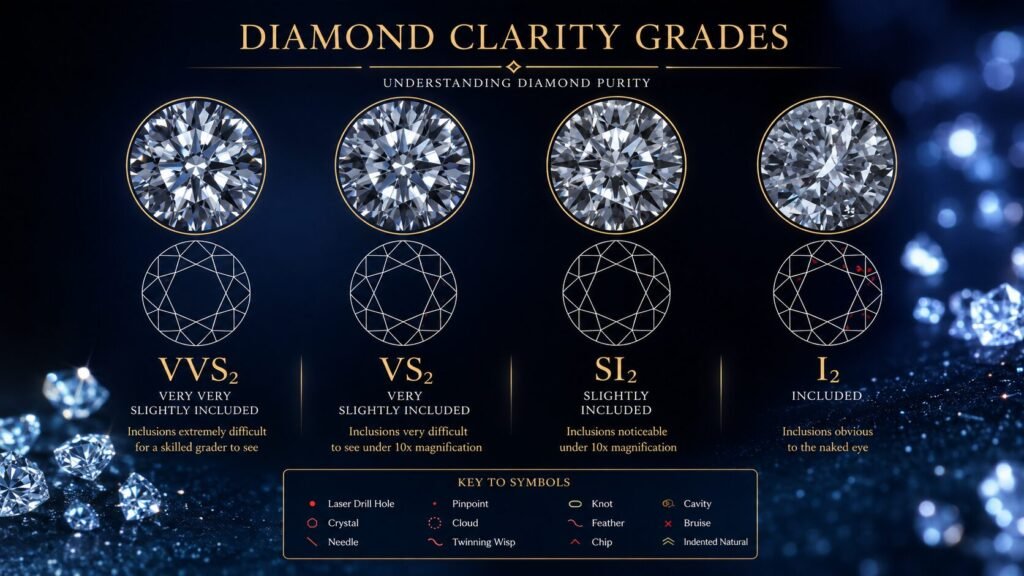
1. The Two Perspectives
Every clarity plot shows two distinct diagrams side-by-side:
- The Left Circle (The Crown): This is a bird’s-eye view looking straight down at the top of the diamond (the table).
- The Right Circle (The Pavilion): This is a view looking up from the exact bottom of the diamond.
Pro-Tip: Focus 90% of your energy on the left diagram (the crown). That is what people will actually see when looking at the ring on a finger.
2. The Color-Coded Language
Diamond labs use two distinct colors on the plot to tell you what kind of flaw you are looking at:
- Red Markings = Internal Inclusions: These are completely trapped inside the diamond structure (e.g., crystals, clouds, feathers).
- Green Markings = External Blemishes: These are surface-level imperfections on the outside of the stone (e.g., natural indents or surface scratches). These are usually less concerning because they can often be polished away or hidden under a metal prong.
3. Decoding the Most Common Symbols
Look below the diagrams on a real report, and you will see a list labeled “Key to Symbols.” This key lists the flaws in order of their severity—the first symbol listed is always the dominant grading factor that determined the stone’s overall clarity grade.
- Crystal (Solid Red Circle): A tiny mineral or even a microscopic diamond trapped inside the stone. If it is tiny and off to the side, it’s harmless. If it is large and dead-center, it will block light or look like a dark spec.
- Feather (Red Jagged Line): This is a tiny internal fracture or crack. Be careful here. If a feather touches the very outer edge (the girdle) of the diamond, the structural integrity could be compromised, making the stone prone to chipping during setting or daily wear.
- Pinpoint (Tiny Red Dot): A microscopic speck that looks like a tiny pinpoint of light under 10x magnification. These are completely invisible to the naked eye. A few pinpoints are a buyer’s best friend.
- Cloud (Cluster of Red Dots): A tight cluster of pinpoints grouped together. A small cloud is fine, but a massive cloud that covers a large chunk of the plot can make the entire diamond look hazy or milky.
Strategy: Good Locations vs. Bad Locations
When looking at the map, treat the center facet (the large octagon in the middle) like a target zone.
The Diamond Target Map
| Zone | Location on the Plot | Visual Impact | Buyer’s Strategy |
| ❌ The Bad Zone | The Table (The large, flat octagon dead-center) | It acts like a giant magnifying glass. Because there are no angled facets to break up the light here, any dark inclusions will stick out to the naked eye immediately. | Avoid. If you are shopping for budget-friendly VS2 or SI1 stones, skip any diamond with a cluster of symbols right in this center ring. |
| ✓ The Good Zone | The Girdle & Edges (The outer perimeter facets) | Hidden in plain sight. The angled side facets reflect light wildly, which naturally camouflages flaws. Plus, this is exactly where the metal prongs of the ring setting will clamp down. | Target This. Look for stones where all the red symbols are pushed out to the margins. A jeweler can position a prong directly over an edge flaw, making it 100% invisible. |
If you see a stone graded as an SI1 where all the red marks are pushed all the way out to the very edges, you have found a bargain jackpot. It will look identical to a flawless diamond to the naked eye, but cost thousands less.
Sustainability & Craftsmanship
What exactly is SCS-007, and how does J’EVAR approach sustainability?
Sustainability isn’t just a marketing buzzword for J’EVAR; it’s the core foundation of their entire business. J’EVAR proudly offers diamonds that carry the prestigious SCS-007 Sustainability Rated certification via ALTR. This means their diamonds are grown in facilities operating with low environmental emissions and powered by 100% clean, renewable energy.
What types of metals does J’EVAR use?
To keep their environmental footprint as close to zero as possible, J’EVAR completely avoids virgin mining for their settings. They craft their luxury necklaces, bracelets, and earrings using exclusively 100% recycled gold and recycled sterling silver. This drastically reduces carbon output and soil disruption while maintaining a highly luxurious, mirror-bright finish.
Can I see the exact specifications of my jewelry?
Yes, J’EVAR believes in radical, unfiltered transparency. Every single piece of jewelry comes accompanied by a comprehensive, detailed product specification sheet. This takes down the typical industry curtains, allowing you to see the exact metal weights, diamond carats, and meticulous steps involved in crafting your heirloom.
Practical Ownership, Gifting & Logistics
How should I clean and care for my J’EVAR diamond at home?
Keeping your jewelry looking brand new is incredibly easy. Simply mix a few drops of mild dish soap into a bowl of warm water and let your jewelry soak for a few minutes. Gently scrub away any lotion, oils, or dust using a very soft-bristled toothbrush.
Pro-Tip: If you are cleaning your pieces over an open bathroom or kitchen sink, always make sure to cover the drain first so nothing accidentally slips down the pipes! Rinse thoroughly with warm water and pat dry with a clean, lint-free cloth to restore that original, blinding sparkle.
Can I order a custom or personalized design?
J’EVAR’s digital flagship storefront offers a stunning, curated array of architectural designs and personal initial collections. However, if you are looking for a highly specific custom modification or a bespoke creation, you can reach out to their design concierge directly to discuss options.
How do I know I am ordering the right size online?
To ensure a flawless fit right out of the box, J’EVAR provides highly detailed, easy-to-use digital size guides alongside explicit measurements on every individual product description page.
What are the shipping, gifting, and return policies?
J’EVAR makes luxury gifting completely seamless. Every piece comes beautifully packaged, with options tailored beautifully to fit a wide range of luxury budgets.
- Shipping: J’EVAR proudly provides fully complimentary, carbon-neutral shipping on all domestic orders within the United States.
- Returns: If a piece isn’t entirely perfect for you or your loved one, J’EVAR offers a clear, secure return window. You can easily review the full details or initiate a return by visiting the customer service hub at jevar.co.
J’EVAR Shipping & Delivery: What to Expect When You Order
When investing in sustainable luxury, a seamless, eco-conscious delivery experience is just as important as the jewelry itself. J’EVAR provides a completely premium, secure, and environmentally responsible shipping protocol for every single order within the United States.
1. The J’EVAR Complimentary Shipping Tiers
J’EVAR offers fully complimentary, carbon-neutral shipping across the USA, scaling up to expedited speeds depending on your luxury purchase value:
- Complimentary Ground Shipping: Available on all orders with an estimated transit time of 4–7 business days (excludes weekends and public holidays).
- Complimentary 2nd-Day Shipping: Automatically unlocked on all orders of $3,000 and above.
- Complimentary Overnight Shipping: Your pieces arrive the next day on orders of $5,000 and above.
2. Critical Shipping Rules & Cut-Off Times
To ensure your diamond jewelry arrives safely and precisely when you need it, keep these core operational rules in mind:
- Same-Day Dispatch: Your order must be placed by 2:00 PM EST Monday through Friday to qualify for same-day processing.
- Business Days Only: J’EVAR only ships packages from Monday to Friday. Orders placed over the weekend or on public holidays will process the following business day.
- Address Restrictions: To ensure security and insurance compliance, J’EVAR cannot ship to P.O. Boxes. Additionally, shipments headed to military APO/FPO addresses will require extra processing time once handed over to the military post office.
- No International Shipping: At this time, J’EVAR focuses exclusively on the domestic market and does not offer international shipping outside the United States.
Tip: If you have questions about changing an order or specific carrier delivery requests, remember that J’EVAR cannot be held liable for lost or stolen packages if specific delivery instructions are left for the local carrier. For direct updates or specialized assistance, you can reach their customer care team directly at concierge@jevar.co.
J’EVAR Return Policy: What to Expect Before You Buy
Shopping for luxury jewelry online requires total peace of mind, which is why a brand’s return process needs to be completely clear before you hit checkout. If your J’EVAR purchase doesn’t completely meet your expectations for any reason, they provide an avenue to secure a full refund, store credit, or a direct exchange.
1. The Ground Rules for J’EVAR Returns
To ensure your return is accepted and processed without any hiccups, your package must meet a few strict criteria outlined in their policy:
- The 30-Day Window: Your return shipment must be officially postmarked within thirty (30) days of your initial purchase date.
- Pristine Condition: Every item must be returned in completely new and unused condition. All original tags and product labels must remain securely attached.
- The Final Sale Rule: Keep a close eye on what you buy, because all sale items are classified as final sale and cannot be returned or exchanged under any circumstances.
2. The Step-by-Step Return Process
J’EVAR has streamlined their mail-in workflow to make it straightforward for the buyer:
- Initiate the Request: To kick off the process, send an email to their customer care team at concierge@jevar.co.
- Secure Packaging: Safely place the jewelry back inside its original packaging to protect it during transit.
- Shipping Options: You can conveniently use the prepaid shipping label enclosed inside your original J’EVAR delivery package. If you choose to mail it yourself, the official destination is: J’evar Co., Attn: Shipping Department, 16 W 46th St 12 Floor, New York, NY 10036.
- Zero Return Shipping Fees: You don’t have to worry about out-of-pocket shipping costs, as return shipping charges are fully paid or reimbursed by J’EVAR.
3. Fees, Timelines, and Refund Processing
Once your piece arrives safely at their New York facility, it undergoes a mandatory inspection. Here is the financial reality of the final steps:
- The Restocking Fee: Be aware that a $50.00 restocking fee is automatically charged for all returns.
- Processing Turnaround: J’EVAR requires at least seven (7) days from the date they receive your item to inspect the condition and process your refund or exchange.
- Bank Posting Times: Once processed on J’EVAR’s end, it can take an additional 1 to 2 billing cycles for the credit to officially show up on your credit card statement, depending entirely on your credit card issuer.
- Email Tracking: You won’t be left guessing; J’EVAR will send you an email notification the exact moment your return has been successfully processed.
- Damaged or Defective Items: If your fine jewelry arrives damaged or defective out of the box, the standard return rules shift. You should immediately reach out to concierge@jevar.co to have them arrange a dedicated refund or exchange for you.
Affiliate Disclosure & Pricing Transparency
Transparency is everything to us. Before you dive into our guides and reviews, we want to share a quick note on how our site works and how we keep the lights on.
Affiliate Link Disclosure
Some of the links featured throughout this article are affiliate links. This means that if you click through and choose to make a purchase, we may earn a small commission from the retailer.
Please rest assured that this comes at absolutely zero additional cost to you. Our editorial reviews are entirely independent, and we only recommend brands and pieces that meet our strict standards for quality, design, and environmental stewardship. These commissions simply allow us to continue producing deep-dive, high-quality, free resources for our readers.
Diamond Pricing Notice
The jewelry market moves fast. Please note that any specific prices listed within our reviews and buying guides (such as specific dollar amounts for collections or carat weights) are accurate only at the exact time of publishing.
Because the value of diamonds and precious metals is tied directly to live global supply and demand, final retail prices fluctuate daily based on current market rates. We highly recommend clicking through to the official retailer’s storefront to view the most up-to-date, real-time pricing before making your final purchase decision.